
The Strange Reason Some Indian Lakes Change Colour With the Seasons

A lake can look like a completely different place depending on when you visit it.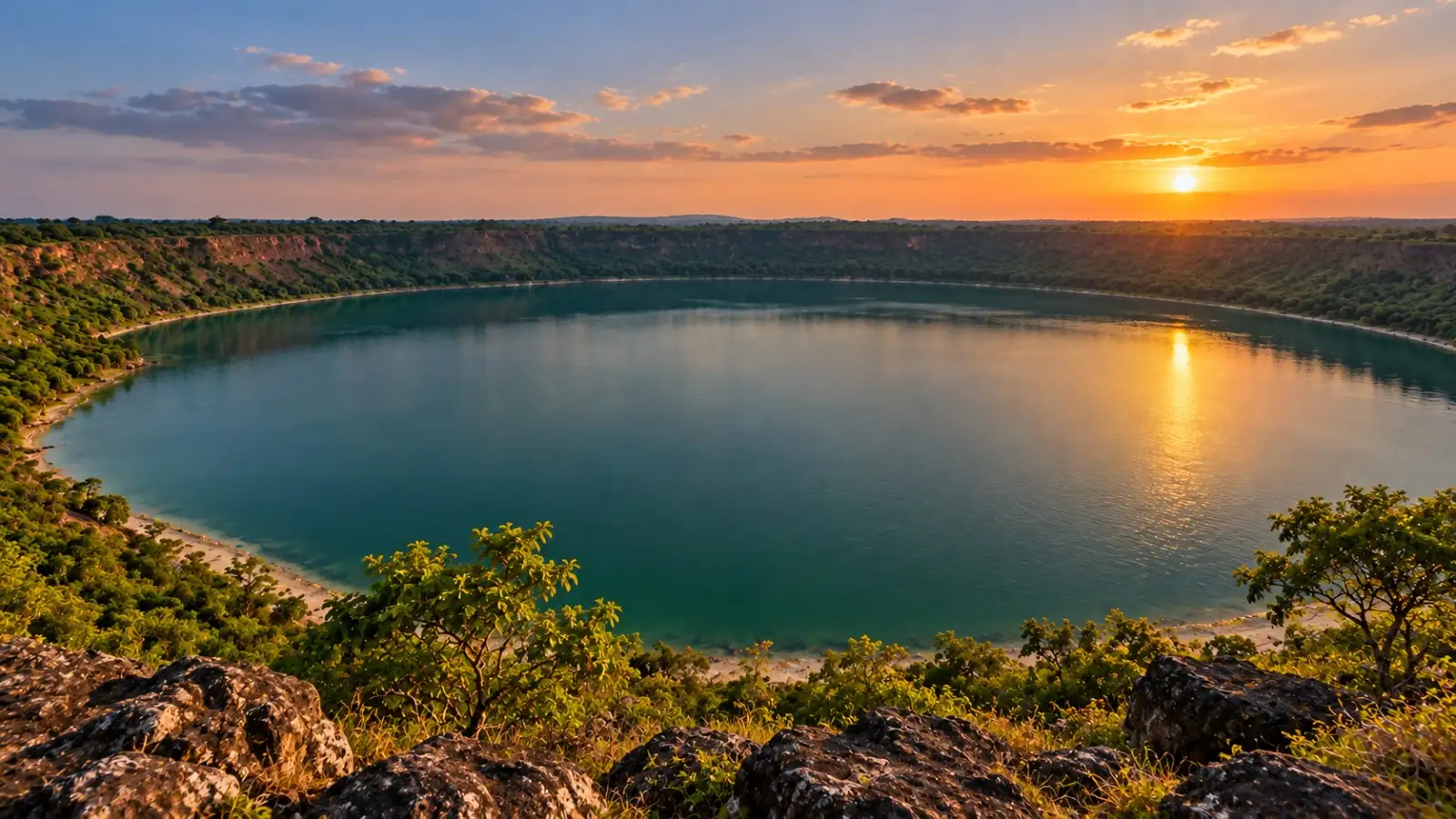
The same water body may appear deep blue under strong sunlight, green after seasonal changes, brown after heavy rainfall or even pinkish under unusual conditions. While photographs can make these transformations look almost magical, there is usually a combination of natural processes behind them.
Changes in sunlight, water level, temperature, sediment, minerals, algae and microscopic organisms can all influence the colour that reaches our eyes.
India has several lakes where seasonal conditions can produce noticeable visual differences. Lonar Lake in Maharashtra is perhaps the most scientifically fascinating example, but the broader story applies to many water bodies across the country.
Water itself absorbs some wavelengths of visible light more strongly than others, while the light reaching the surface is also affected by the angle of the sun, depth, particles and organisms living in the water.
This means the colour we see can change even when the lake itself has not undergone a dramatic physical transformation.
A clear mountain lake under bright sunlight can therefore look completely different from the same lake under cloudy skies.
Seasonal changes make this effect even stronger.
Heavy rainfall can wash soil, leaves, minerals and other particles from surrounding land into a water body. This increases the amount of suspended material in the water and can make it appear brown, grey or greenish.
At the same time, rain can increase the volume of water and dilute dissolved substances.
The lake after the monsoon may therefore have a noticeably different appearance from the same lake during the dry season.
This is particularly important for lakes surrounded by exposed soil, agricultural land or steep slopes where rainfall can carry large quantities of sediment into the water.
Algae contain pigments that absorb particular wavelengths of light. When large populations develop near the surface, those pigments can influence the overall appearance of the water.
Lonar Lake is a striking example.
The Indian Institute of Remote Sensing notes that the lake is normally associated with an emerald-green appearance and that algae and other microorganisms contribute to its changing colour. Satellite observations have also been used to monitor changes in its turbidity and surface characteristics.
The amount and type of algae can change according to temperature, sunlight, nutrients and water chemistry.
That means the same lake can naturally move between different shades over the course of a year.
Certain microorganisms contain pigments that can make water appear pink, orange or red when their populations become sufficiently large.
Lonar Lake famously demonstrated this in June 2020, when its normally greenish water rapidly developed a striking pinkish-red appearance.
Research using satellite imagery linked the event to haloarchaea, salt-loving microorganisms capable of producing red-orange carotenoid pigments in highly saline conditions.
The Indian Institute of Remote Sensing also reported that increasing salinity can favour microorganisms that produce red or pink pigments.
The transformation was so dramatic that it could be observed from space.
During hot and dry periods, water can evaporate faster than it is replaced. If a lake has limited outflow, dissolved salts and other substances can become more concentrated.
This is particularly significant for saline or alkaline lakes.
Lonar's unusual chemistry makes it especially sensitive to these changes. The lake is both saline and alkaline, with its chemistry varying across different parts of the water body.
As conditions change, different microorganisms may become more or less dominant.
That can affect the pigments present in the water and, consequently, the colour visible from the shore or in satellite imagery.
Freshwater entering a lake can dilute dissolved salts. The increased water volume can also change the concentration of nutrients and microorganisms.
This is one reason dramatic colour events can disappear as quickly as they appear.
In the case of Lonar, satellite observations showed the lake turning bright pink and later returning towards green. Scientists examining the event considered changes in salinity and microbial activity important factors.
So the monsoon does not simply make a lake fuller.
It can change the entire chemical and biological environment within it.
Minerals suspended in the water can change its appearance, particularly after heavy rainfall or disturbances around the shoreline.
Fine sediment can make water look brown, yellowish or grey. Mineral-rich water can also produce unusual shades depending on the geological setting.
This is particularly noticeable in mountain regions, where streams flowing over different types of rock can carry mineral particles into lakes.
A glacier-fed lake may also look dramatically different from a rain-fed lake because of the fine rock particles produced by glacial erosion.
The time of day can influence how a lake looks.
Morning sunlight, midday sunlight and evening light reach the water at different angles. Clouds can soften or completely change the illumination.
The surrounding landscape also contributes to what we see.
Green forests, dark mountains, pale rock and nearby vegetation can all be reflected from the surface.
This is why photographs of the same lake taken several hours apart can sometimes appear to show different water colours.
Sediment, aquatic plants and bottom material become more influential in shallow areas, while deeper water can absorb more light and appear darker.
A lake with an uneven bottom can therefore display several colours at the same time.
From above, the contrast can become even more obvious.
Satellite imagery frequently reveals patterns that are difficult to distinguish from ground level, which is why organisations such as the Indian Institute of Remote Sensing use satellite observations to monitor changes in lakes.
Sometimes pollution or excessive nutrient input can influence algal growth, so environmental monitoring is important.
But unusual colour does not automatically mean something artificial has been added to the water.
Lonar's famous pink transformation is a good example. Scientific investigations associated the event with natural changes involving salinity and microorganisms rather than simply assuming an external colouring substance was responsible.
The key is to understand the individual lake's chemistry and ecology rather than judging the water colour alone.
They may look permanent on a map, but the environment inside them is constantly changing.
Water levels rise and fall. Rain introduces new material. Sunlight changes with the seasons. Temperatures rise and decline. Microorganisms multiply or disappear. Nutrient concentrations shift. Sediment enters from surrounding land.
All of these processes interact.
The result can be a lake that looks noticeably different from one season to another.
Sometimes it is sunlight.
Sometimes it is sediment.
Sometimes it is the changing concentration of minerals.
And in unusual cases, microscopic organisms can transform an entire water body with their pigments.
Lonar Lake demonstrates just how dramatic these processes can become. Its colour has been observed changing between green and pinkish-red, with researchers using satellite data to study the relationship between water conditions and microbial pigments.
What looks like a lake changing its mind is actually an ecosystem responding to its surroundings.
The colour is simply one of the most visible signs of that change.
The same water body may appear deep blue under strong sunlight, green after seasonal changes, brown after heavy rainfall or even pinkish under unusual conditions. While photographs can make these transformations look almost magical, there is usually a combination of natural processes behind them.
Changes in sunlight, water level, temperature, sediment, minerals, algae and microscopic organisms can all influence the colour that reaches our eyes.
India has several lakes where seasonal conditions can produce noticeable visual differences. Lonar Lake in Maharashtra is perhaps the most scientifically fascinating example, but the broader story applies to many water bodies across the country.
1. A lake does not actually have one permanent colour
When people describe a lake as blue or green, they are usually describing how the water appears at a particular time.Water itself absorbs some wavelengths of visible light more strongly than others, while the light reaching the surface is also affected by the angle of the sun, depth, particles and organisms living in the water.
This means the colour we see can change even when the lake itself has not undergone a dramatic physical transformation.
A clear mountain lake under bright sunlight can therefore look completely different from the same lake under cloudy skies.
Seasonal changes make this effect even stronger.
2. Monsoon rain can completely alter the appearance
India's monsoon is one of the biggest natural influences on many lakes.Heavy rainfall can wash soil, leaves, minerals and other particles from surrounding land into a water body. This increases the amount of suspended material in the water and can make it appear brown, grey or greenish.
At the same time, rain can increase the volume of water and dilute dissolved substances.
The lake after the monsoon may therefore have a noticeably different appearance from the same lake during the dry season.
This is particularly important for lakes surrounded by exposed soil, agricultural land or steep slopes where rainfall can carry large quantities of sediment into the water.
3. Algae can turn water green
One of the most common reasons for a lake appearing greener is the growth of algae.Algae contain pigments that absorb particular wavelengths of light. When large populations develop near the surface, those pigments can influence the overall appearance of the water.
Lonar Lake is a striking example.
The Indian Institute of Remote Sensing notes that the lake is normally associated with an emerald-green appearance and that algae and other microorganisms contribute to its changing colour. Satellite observations have also been used to monitor changes in its turbidity and surface characteristics.
The amount and type of algae can change according to temperature, sunlight, nutrients and water chemistry.
That means the same lake can naturally move between different shades over the course of a year.
4. Some microscopic organisms can produce pink and red colours
This is where the phenomenon becomes particularly unusual.Certain microorganisms contain pigments that can make water appear pink, orange or red when their populations become sufficiently large.
Lonar Lake famously demonstrated this in June 2020, when its normally greenish water rapidly developed a striking pinkish-red appearance.
Research using satellite imagery linked the event to haloarchaea, salt-loving microorganisms capable of producing red-orange carotenoid pigments in highly saline conditions.
The Indian Institute of Remote Sensing also reported that increasing salinity can favour microorganisms that produce red or pink pigments.
The transformation was so dramatic that it could be observed from space.
5. Summer can make the chemistry of a lake more intense
Temperature and evaporation can have a major influence on certain lakes.During hot and dry periods, water can evaporate faster than it is replaced. If a lake has limited outflow, dissolved salts and other substances can become more concentrated.
This is particularly significant for saline or alkaline lakes.
Lonar's unusual chemistry makes it especially sensitive to these changes. The lake is both saline and alkaline, with its chemistry varying across different parts of the water body.
As conditions change, different microorganisms may become more or less dominant.
That can affect the pigments present in the water and, consequently, the colour visible from the shore or in satellite imagery.
6. Then the monsoon can reverse the effect
After a hot, dry period, the arrival of rain can change the situation again.Freshwater entering a lake can dilute dissolved salts. The increased water volume can also change the concentration of nutrients and microorganisms.
This is one reason dramatic colour events can disappear as quickly as they appear.
In the case of Lonar, satellite observations showed the lake turning bright pink and later returning towards green. Scientists examining the event considered changes in salinity and microbial activity important factors.
So the monsoon does not simply make a lake fuller.
It can change the entire chemical and biological environment within it.
7. Minerals and sediment can create another colour
Not every unusual lake colour is caused by algae.Minerals suspended in the water can change its appearance, particularly after heavy rainfall or disturbances around the shoreline.
Fine sediment can make water look brown, yellowish or grey. Mineral-rich water can also produce unusual shades depending on the geological setting.
This is particularly noticeable in mountain regions, where streams flowing over different types of rock can carry mineral particles into lakes.
A glacier-fed lake may also look dramatically different from a rain-fed lake because of the fine rock particles produced by glacial erosion.
8. Sunlight can make the same lake look different within hours
Seasonal changes are only part of the story.The time of day can influence how a lake looks.
Morning sunlight, midday sunlight and evening light reach the water at different angles. Clouds can soften or completely change the illumination.
The surrounding landscape also contributes to what we see.
Green forests, dark mountains, pale rock and nearby vegetation can all be reflected from the surface.
This is why photographs of the same lake taken several hours apart can sometimes appear to show different water colours.
9. Depth matters more than many people realise
A shallow shoreline can look completely different from deeper water.Sediment, aquatic plants and bottom material become more influential in shallow areas, while deeper water can absorb more light and appear darker.
A lake with an uneven bottom can therefore display several colours at the same time.
From above, the contrast can become even more obvious.
Satellite imagery frequently reveals patterns that are difficult to distinguish from ground level, which is why organisations such as the Indian Institute of Remote Sensing use satellite observations to monitor changes in lakes.
10. Not every colour change means pollution
A dramatic change in water colour can understandably make people suspect contamination.Sometimes pollution or excessive nutrient input can influence algal growth, so environmental monitoring is important.
But unusual colour does not automatically mean something artificial has been added to the water.
Lonar's famous pink transformation is a good example. Scientific investigations associated the event with natural changes involving salinity and microorganisms rather than simply assuming an external colouring substance was responsible.
The key is to understand the individual lake's chemistry and ecology rather than judging the water colour alone.
11. India's lakes are constantly changing ecosystems
The biggest misconception about lakes is that they are static.They may look permanent on a map, but the environment inside them is constantly changing.
Water levels rise and fall. Rain introduces new material. Sunlight changes with the seasons. Temperatures rise and decline. Microorganisms multiply or disappear. Nutrient concentrations shift. Sediment enters from surrounding land.
All of these processes interact.
The result can be a lake that looks noticeably different from one season to another.
The colour is a clue, not a mystery
The next time an Indian lake appears unusually green, blue, brown or pink, there may be a scientific story hidden beneath the surface.Sometimes it is sunlight.
Sometimes it is sediment.
Sometimes it is the changing concentration of minerals.
And in unusual cases, microscopic organisms can transform an entire water body with their pigments.
Lonar Lake demonstrates just how dramatic these processes can become. Its colour has been observed changing between green and pinkish-red, with researchers using satellite data to study the relationship between water conditions and microbial pigments.
What looks like a lake changing its mind is actually an ecosystem responding to its surroundings.
The colour is simply one of the most visible signs of that change.
Next Story