
Why Are Houses in Some Indian Villages Painted in Bright and Beautiful Colours?

Across India, some villages stand out for their brightly painted houses , colourful doors and decorative wall patterns. From the blue homes of Rajasthan to the vibrant murals of Gujarat and the colourful settlements of the Northeast, these buildings create striking landscapes that attract travellers and photographers. However, their appearance is not always simply about decoration. Colours can reflect local traditions, religious beliefs, community identity, available materials and practical needs. In many places, painting a house is also connected with festivals and seasonal celebrations. Understanding these influences reveals why colourful homes remain an important part of India's architectural and cultural heritage.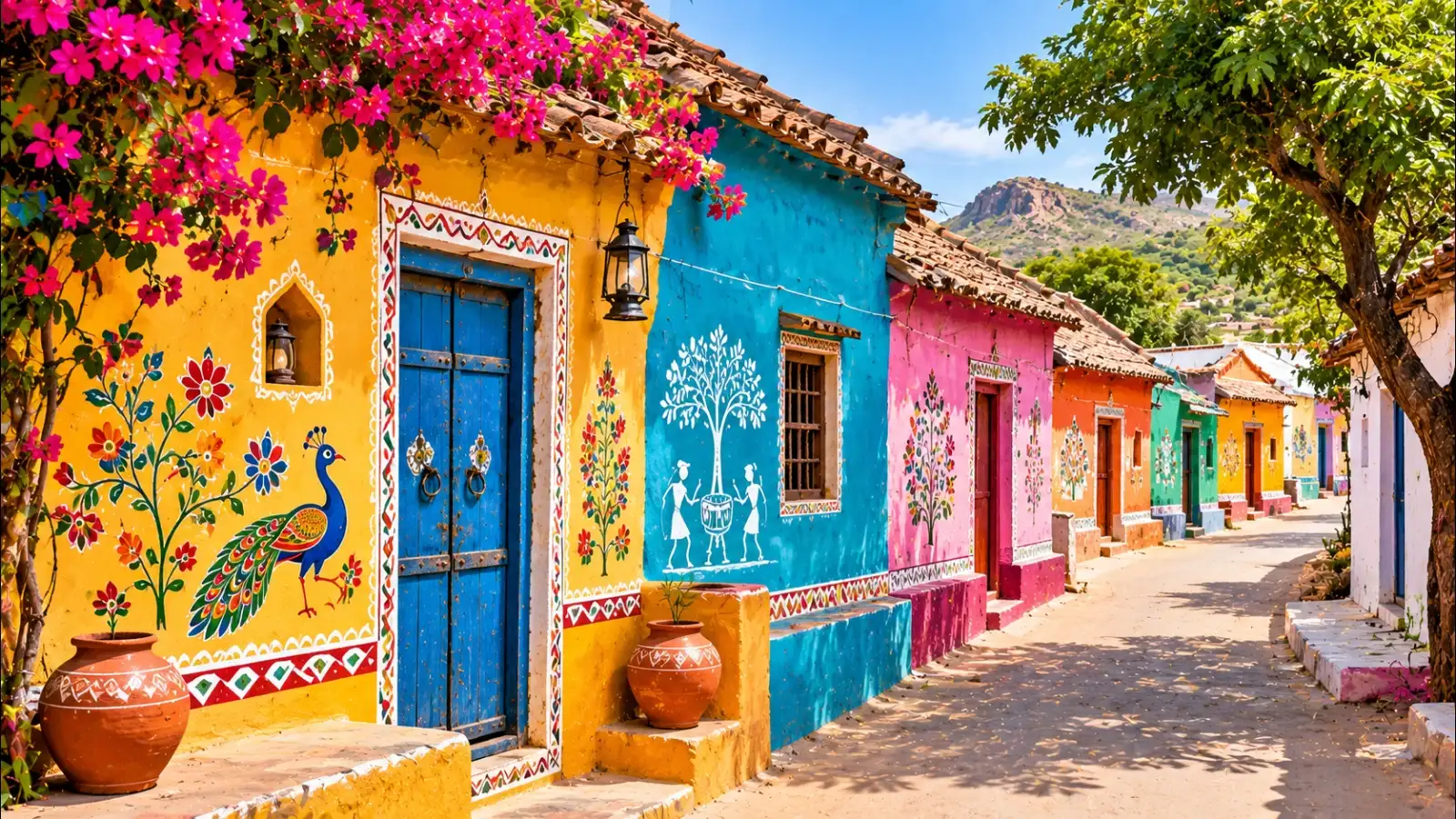
1. Colours Reflect Local Cultural Traditions
In many Indian villages, house colours are influenced by traditions passed down through generations. Communities often use particular shades and decorative patterns because they are familiar elements of local architecture.
For example, houses in parts of Rajasthan may feature blue, white, yellow and earthy shades, while some villages in Gujarat are known for colourful wall paintings and traditional motifs. These choices help preserve a distinctive regional identity.
2. Religious Beliefs Influence Colour Choices
Colours have symbolic meanings in several Indian cultural and religious traditions. Saffron, red, yellow, white and green can carry different associations depending on the community and context.
Some households use particular colours or motifs near entrances, prayer spaces and courtyards during religious occasions. Decorative symbols such as flowers, geometric patterns and traditional religious designs may also appear on walls.
3. Natural Materials Have Shaped Traditional House Colours
Before modern paints became widely available, many communities relied on locally sourced materials to decorate their homes. Natural pigments, clay, lime, minerals and plant-based colours were commonly used in different regions.
In some areas, red and ochre shades came from iron-rich earth, while white finishes were created using lime. These materials gave houses distinctive appearances while connecting traditional architecture with the surrounding landscape.
4. Bright Colours Help Celebrate Festivals and Special Occasions
Festivals and family celebrations often bring fresh decorations to Indian homes. In many villages, people repaint walls, decorate entrances and create colourful patterns before important occasions.
During Diwali, Holi, weddings and harvest festivals, houses may receive additional decorations using flowers, rangoli, painted motifs and traditional designs. These preparations make neighbourhoods look especially vibrant and festive.
5. Colours Can Help Distinguish Homes and Community Spaces
In some settlements, different colours and decorative patterns help give houses an individual identity. This can be particularly noticeable in closely built villages where homes are arranged along narrow lanes.
Traditional designs may also indicate cultural affiliations, family preferences or local craftsmanship. However, there is no single colour system followed across Indian villages, and choices vary considerably between regions.
6. Some Colours Serve Practical Purposes
Traditional house finishes are not always selected for appearance alone. Lime-based white coatings, for example, have historically been used on walls because they are relatively affordable and can help reflect sunlight.
In some dry regions, earthy coatings made from local materials also form part of traditional construction techniques. The practical benefits depend on the materials, climate and method of application rather than colour alone.
7. Decorative Wall Art Preserves Local Art Forms
Many Indian villages feature hand-painted walls that showcase traditional art forms. These designs can include animals, plants, geometric shapes, religious symbols and scenes from everyday life.
Madhubani painting from Bihar, Warli art from Maharashtra and Pithora painting traditions associated with communities in Gujarat and Madhya Pradesh are examples of regional artistic practices. Such artwork can turn ordinary walls into expressions of local identity and storytelling.
8. Tourism Has Encouraged Some Villages to Preserve Colourful Architecture
In several destinations, colourful houses have become important attractions for visitors. Photography, cultural tourism and local heritage initiatives have encouraged communities to maintain traditional architectural styles.
Some villages also organise painting activities and community projects to improve the appearance of public spaces. However, tourism is only one influence, and many colourful homes existed long before they became popular travel destinations.
Examples of Colourful Villages and Settlements in India
1. Colours Reflect Local Cultural Traditions
In many Indian villages, house colours are influenced by traditions passed down through generations. Communities often use particular shades and decorative patterns because they are familiar elements of local architecture.
For example, houses in parts of Rajasthan may feature blue, white, yellow and earthy shades, while some villages in Gujarat are known for colourful wall paintings and traditional motifs. These choices help preserve a distinctive regional identity.
2. Religious Beliefs Influence Colour Choices
Colours have symbolic meanings in several Indian cultural and religious traditions. Saffron, red, yellow, white and green can carry different associations depending on the community and context.
Some households use particular colours or motifs near entrances, prayer spaces and courtyards during religious occasions. Decorative symbols such as flowers, geometric patterns and traditional religious designs may also appear on walls.
3. Natural Materials Have Shaped Traditional House Colours
Before modern paints became widely available, many communities relied on locally sourced materials to decorate their homes. Natural pigments, clay, lime, minerals and plant-based colours were commonly used in different regions.
In some areas, red and ochre shades came from iron-rich earth, while white finishes were created using lime. These materials gave houses distinctive appearances while connecting traditional architecture with the surrounding landscape.
4. Bright Colours Help Celebrate Festivals and Special Occasions
Festivals and family celebrations often bring fresh decorations to Indian homes. In many villages, people repaint walls, decorate entrances and create colourful patterns before important occasions.
During Diwali, Holi, weddings and harvest festivals, houses may receive additional decorations using flowers, rangoli, painted motifs and traditional designs. These preparations make neighbourhoods look especially vibrant and festive.
5. Colours Can Help Distinguish Homes and Community Spaces
In some settlements, different colours and decorative patterns help give houses an individual identity. This can be particularly noticeable in closely built villages where homes are arranged along narrow lanes.
Traditional designs may also indicate cultural affiliations, family preferences or local craftsmanship. However, there is no single colour system followed across Indian villages, and choices vary considerably between regions.
6. Some Colours Serve Practical Purposes
Traditional house finishes are not always selected for appearance alone. Lime-based white coatings, for example, have historically been used on walls because they are relatively affordable and can help reflect sunlight.
In some dry regions, earthy coatings made from local materials also form part of traditional construction techniques. The practical benefits depend on the materials, climate and method of application rather than colour alone.
You may also like
- In a world addicted to scrolling, Brain Rot and Wisdom by Farhat Nasreen and Yusuf Rana Kamal asks if we're losing the art of thinking
- Beyond theatre and music, Pune explores a new art vocabulary
- No more fear of money vanishing from your bank account? Learn about the RBI's 'Emergency Stop Switch'
- RRB NTPC Skill Test Admit Card Released; Check Exam Center Guidelines
- Can Progesterone Cause Pregnancy-Like Symptoms After Ovulation?
7. Decorative Wall Art Preserves Local Art Forms
Many Indian villages feature hand-painted walls that showcase traditional art forms. These designs can include animals, plants, geometric shapes, religious symbols and scenes from everyday life.
Madhubani painting from Bihar, Warli art from Maharashtra and Pithora painting traditions associated with communities in Gujarat and Madhya Pradesh are examples of regional artistic practices. Such artwork can turn ordinary walls into expressions of local identity and storytelling.
8. Tourism Has Encouraged Some Villages to Preserve Colourful Architecture
In several destinations, colourful houses have become important attractions for visitors. Photography, cultural tourism and local heritage initiatives have encouraged communities to maintain traditional architectural styles.
Some villages also organise painting activities and community projects to improve the appearance of public spaces. However, tourism is only one influence, and many colourful homes existed long before they became popular travel destinations.
Examples of Colourful Villages and Settlements in India
- Jodhpur, Rajasthan: Often called the Blue City, its old neighbourhoods are known for clusters of blue-painted houses.
- Kutch, Gujarat: Several settlements feature decorated homes, traditional murals and colourful crafts associated with local communities.
- Nako, Himachal Pradesh: This Himalayan village is known for its traditional houses, stone architecture and distinctive mountain setting.
- Ziro Valley, Arunachal Pradesh: Traditional Apatani settlements are recognised for their distinctive house designs and relationship with the surrounding landscape.
- Raghurajpur, Odisha: This heritage crafts village is famous for traditional artistic practices, including Pattachitra painting.






Loving Newspoint? Download the app now
