
Why Traditional Indian Wooden Palanquins Feature Such Elaborate Carvings and Decorations

Traditional Indian wooden palanquins, often called palkis or palanquins, are remarkable examples of the country's craftsmanship and cultural heritage. Historically used to carry royalty, nobles, religious figures and travellers, these portable structures were designed to be both functional and visually impressive. Their elaborate carvings, colourful paintings, decorative canopies and detailed metalwork reflected the status of the people who travelled in them. In different parts of India, palanquins also became important objects in religious processions and wedding traditions. Their ornamentation was not simply about appearance; it communicated identity, devotion, wealth and artistic skill through carefully crafted wooden details.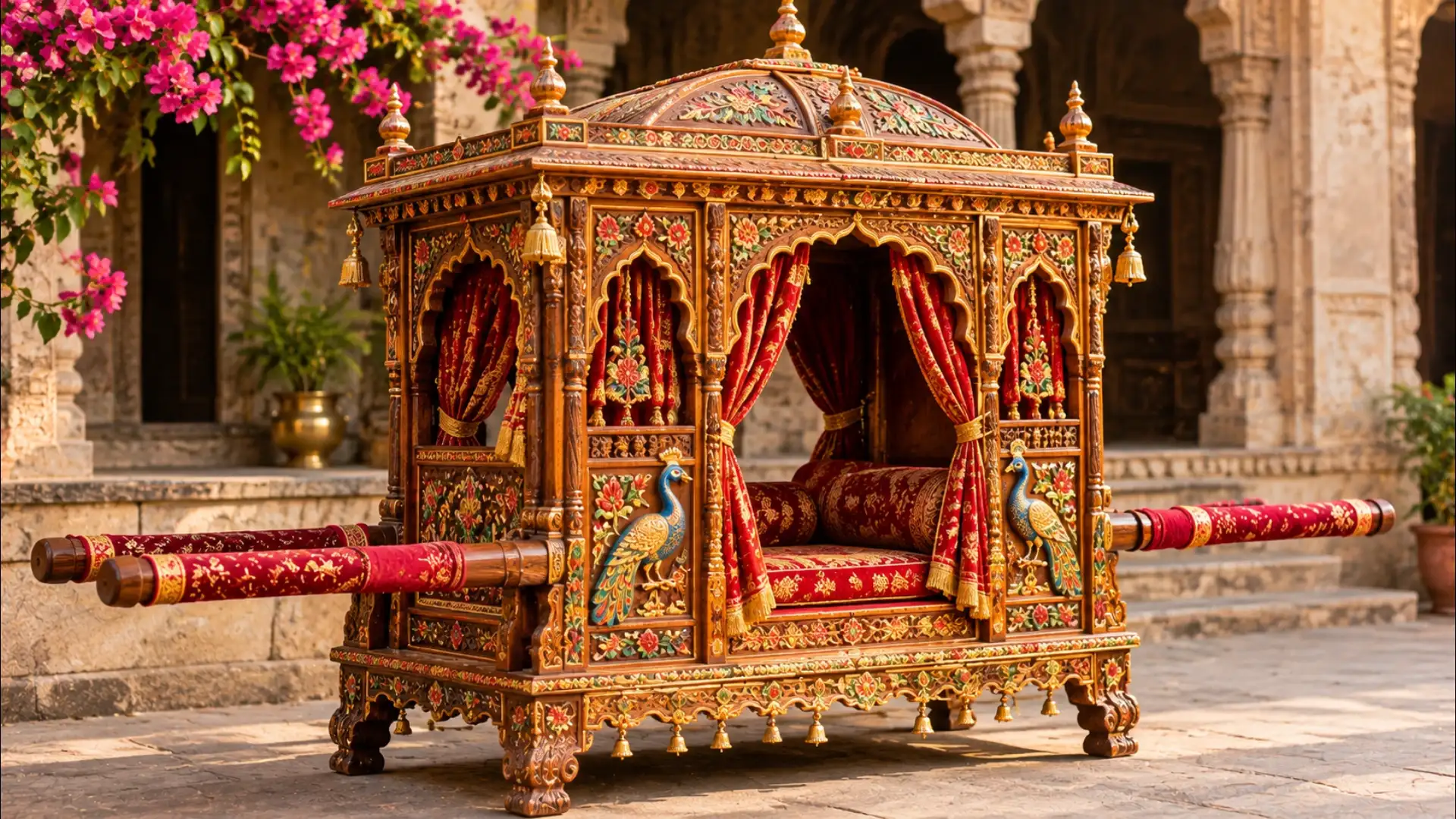
Expensive wood, intricate carvings, polished finishes and decorative fabrics helped distinguish royal palanquins from simpler versions used for everyday travel. Some were designed with domed roofs, carved panels and ornate handles, making them impressive objects during public appearances and ceremonial journeys.
These details required patience, precision and knowledge of traditional woodworking methods. Depending on the region, artisans used locally available woods and distinctive carving styles. The finished palanquin became a demonstration of the craftsmanship passed down through generations.
In Rajasthan, decorative elements could reflect the region's colourful royal aesthetics. In parts of South India, religious motifs and detailed wooden carvings were often prominent. Eastern and northeastern traditions also developed distinctive designs influenced by local craftsmanship. These regional differences made palanquins valuable examples of India's diverse decorative arts.
Lotus motifs, sacred animals, mythological figures and ornamental patterns could be incorporated into the design. Such decorations helped transform an ordinary transport structure into a ceremonial object that reflected devotion and religious identity.
The colours were sometimes selected according to regional customs or the purpose of the event. Decorative borders, painted panels and fabric canopies added movement and visual appeal, particularly when palanquins were carried through crowded streets.
Canopies could be decorated with embroidered fabrics, tassels, borders and ornamental details. In royal settings, elaborate coverings helped create a more private and dignified travelling space. Their appearance also made the palanquin more visually prominent during ceremonial occasions.
Some ceremonial examples also featured bells, hanging ornaments and decorative finials. These additions created a more elaborate appearance and reflected the resources invested in making the palanquin.
In some wedding customs, a groom or bride may be associated with a decorated palki as part of a symbolic procession. During religious festivals, elaborately decorated palanquins may carry deities through temple streets. Their continued presence helps preserve traditional craftsmanship and cultural practices.
Carving and painting are carried out according to the chosen decorative style. Some palanquins may also receive polished finishes, metal fittings and embroidered fabric details. The exact process varies depending on the region and whether the object is intended for ceremonial, religious or decorative use.
Traditional Indian wooden palanquins are decorated elaborately because they have historically represented much more than a means of transportation. Their carvings, colours, religious symbols and decorative accessories communicate social status, regional identity, devotion and artistic excellence. Although modern transport has reduced their everyday use, palanquins continue to hold cultural importance in certain ceremonies and festivals. They remain valuable reminders of India's traditional woodworking skills and the creativity of its artisans.
1. They Represented Royal Status and Prestige
In earlier centuries, palanquins were commonly used by kings, queens, nobles and wealthy families. Their decorations often reflected the social position and influence of their owners.Expensive wood, intricate carvings, polished finishes and decorative fabrics helped distinguish royal palanquins from simpler versions used for everyday travel. Some were designed with domed roofs, carved panels and ornate handles, making them impressive objects during public appearances and ceremonial journeys.
2. Intricate Wood Carvings Displayed Traditional Craftsmanship
Indian artisans developed specialised techniques for decorating wooden palanquins. Skilled craftspeople carved floral patterns, geometric designs, mythical creatures and religious figures into their wooden surfaces.These details required patience, precision and knowledge of traditional woodworking methods. Depending on the region, artisans used locally available woods and distinctive carving styles. The finished palanquin became a demonstration of the craftsmanship passed down through generations.
3. Decorations Often Reflected Regional Art Traditions
India's palanquins were not decorated in one uniform style. Their appearance varied according to local customs, materials and artistic traditions.In Rajasthan, decorative elements could reflect the region's colourful royal aesthetics. In parts of South India, religious motifs and detailed wooden carvings were often prominent. Eastern and northeastern traditions also developed distinctive designs influenced by local craftsmanship. These regional differences made palanquins valuable examples of India's diverse decorative arts.
4. Religious Symbols Added Spiritual Significance
Many palanquins were used to carry idols and sacred objects during temple festivals and religious processions. Their decorations therefore often included symbols associated with particular deities and religious traditions.Lotus motifs, sacred animals, mythological figures and ornamental patterns could be incorporated into the design. Such decorations helped transform an ordinary transport structure into a ceremonial object that reflected devotion and religious identity.
5. Bright Colours Made Processions More Celebratory
Painted designs and colourful fabrics were important elements of many traditional palanquins. Bright shades, including red, yellow, green and gold, helped make them stand out during weddings, festivals and public processions.The colours were sometimes selected according to regional customs or the purpose of the event. Decorative borders, painted panels and fabric canopies added movement and visual appeal, particularly when palanquins were carried through crowded streets.
6. Decorative Canopies Provided Both Beauty and Practical Use
Many traditional palanquins featured covered tops or canopies. These structures offered some protection from direct sunlight and light weather conditions while also contributing to the overall design.Canopies could be decorated with embroidered fabrics, tassels, borders and ornamental details. In royal settings, elaborate coverings helped create a more private and dignified travelling space. Their appearance also made the palanquin more visually prominent during ceremonial occasions.
7. Metalwork and Accessories Added to Their Grandeur
Wooden palanquins were sometimes enhanced with metal fittings, decorative brackets, handles and ornamental elements. Brass and other metals could be used to strengthen joints while adding attractive finishing details.You may also like
- Visa guide for Winter Intake 2027: Documents, application timelines and key requirements students planning to study abroad should know
- Why Is Shani Pradosha Considered So Powerful?
- Astrological Insights: December 2026 Brings Major Planetary Changes Affecting Five Zodiac Signs
- Advika Kasliwal began 'Planting Hopes' as a home-gardening effort during lockdown; it has reached more than 5,000 people, supported 800 low-income families, run 50 workshops and taken nutrition education into 25 schools
- PPF Rules: If you are planning to withdraw money from your Public Provident Fund (PPF) account, avoid these common mistakes.
Some ceremonial examples also featured bells, hanging ornaments and decorative finials. These additions created a more elaborate appearance and reflected the resources invested in making the palanquin.
8. They Became Important Objects in Weddings and Festivals
Although palanquins were once widely used for transportation, their role gradually became more ceremonial in many communities. They continued to appear in traditional weddings, temple celebrations and cultural performances.In some wedding customs, a groom or bride may be associated with a decorated palki as part of a symbolic procession. During religious festivals, elaborately decorated palanquins may carry deities through temple streets. Their continued presence helps preserve traditional craftsmanship and cultural practices.
How Traditional Wooden Palanquins Are Made
The making of a traditional wooden palanquin involves several stages of craftsmanship. Artisans first select suitable wood based on the intended size, strength and design. The main frame is then constructed, followed by the addition of panels, supports and a roof or canopy where required.Carving and painting are carried out according to the chosen decorative style. Some palanquins may also receive polished finishes, metal fittings and embroidered fabric details. The exact process varies depending on the region and whether the object is intended for ceremonial, religious or decorative use.
Traditional Indian wooden palanquins are decorated elaborately because they have historically represented much more than a means of transportation. Their carvings, colours, religious symbols and decorative accessories communicate social status, regional identity, devotion and artistic excellence. Although modern transport has reduced their everyday use, palanquins continue to hold cultural importance in certain ceremonies and festivals. They remain valuable reminders of India's traditional woodworking skills and the creativity of its artisans.






Loving Newspoint? Download the app now
