
The Internet Moves Too Fast Now: Why Trends Die Before We Even Get Them

There was a time when an internet trend actually had time to breathe. A meme could survive for weeks. A song could stay everywhere for months. An aesthetic could completely take over social media before people moved on to something else. Now? You see something on Monday, and by Wednesday everyone's tired of it. A new sound becomes unavoidable. Every creator uses it. Brands jump onto it. Your cousin posts it. Your college group chat starts making jokes about it.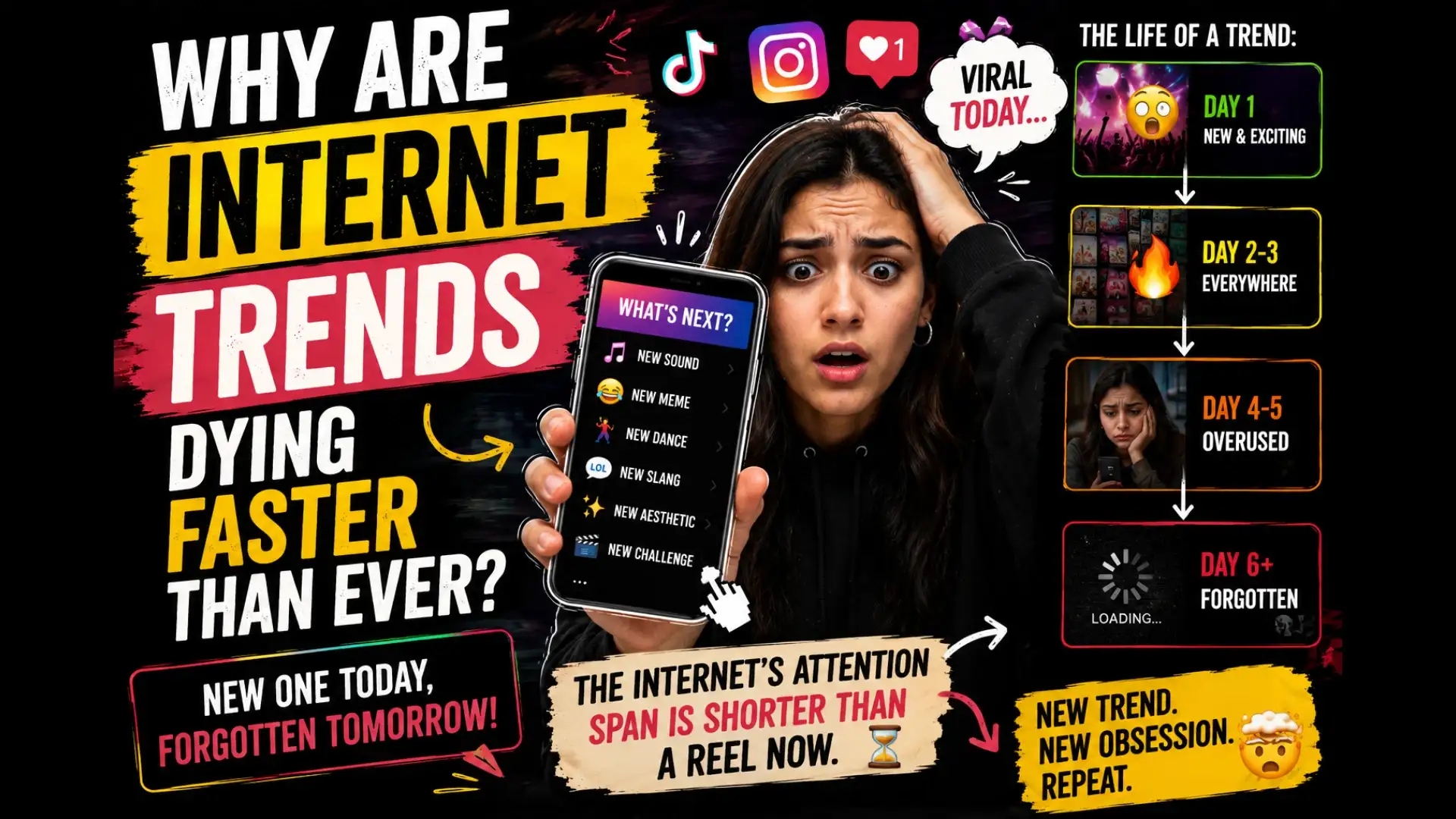
Then suddenly... nothing. The internet has already found something else. And sometimes the strangest part is realising that you were obsessed with something three days ago and genuinely cannot remember why.
But once everyone starts copying it, the magic disappears. You've seen the same joke twenty times. You've heard the sound in every other reel. Suddenly, the thing that made it interesting is exactly what makes it boring. The algorithm moves on. And we move with it.
Nobody wants to feel late to the internet. So people constantly search for what's next. Creators need new formats. Influencers need fresh content. Brands want to appear culturally relevant. Even ordinary users don't want their feed to feel repetitive. The result is a giant machine constantly producing and replacing trends.
This abundance has changed our relationship with entertainment. We don't necessarily finish things anymore. We sample them. A fifteen-second video. Another one. Another sound. Another joke. Another creator. There is always something else to scroll toward.
When everyone joins in, the trend reaches saturation almost immediately. What once took weeks to become overused can now happen in forty-eight hours. That's why the internet can feel like it's constantly introducing us to things and immediately asking us to forget them.
The moment something works, everyone wants to recreate it. And ironically, copying a trend is often what kills it. The more successful something becomes, the faster people become tired of it.
The downside is that nothing gets much time anymore. Trends arrive, we consume them, we recreate them, we get bored, and then we ask, “What's next?” Maybe that's the real change. The internet isn't running out of trends. We're simply moving through them faster than ever.
Then suddenly... nothing. The internet has already found something else. And sometimes the strangest part is realising that you were obsessed with something three days ago and genuinely cannot remember why.
The Algorithm Is Always Looking for the Next Thing
Social media doesn't really reward people for staying interested in one thing forever. It rewards novelty. A new sound gets attention because people haven't heard it a thousand times yet. A new meme works because it still feels unexpected. A new format gives creators something to experiment with.But once everyone starts copying it, the magic disappears. You've seen the same joke twenty times. You've heard the sound in every other reel. Suddenly, the thing that made it interesting is exactly what makes it boring. The algorithm moves on. And we move with it.
Everyone Is Trying to Be Early
There is also a strange status attached to discovering something before everyone else. Being one of the first people to use a sound or understand a meme can feel like having insider knowledge. But once the trend reaches your parents, brands and news channels, it loses some of that cool factor.You may also like
- Modern Parenting Tips: 5 Ways to Raise Confident Kids Without Making Marks and Rank Everything
- Living Room Makeover: 5 Vastu-Inspired Decor Ideas for a Fresh, Calm and Welcoming Home
- Ganesh Chaturthi Rangoli Ideas: 7 Beautiful Designs to Give Your Home a Festive Makeover
- Jennifer Garner's garden isn't just for show: The vegetables, herbs, and hands-on hobby that have become part of the actor's life
- Kendall Jenner turned heads in the simplest golden dress at Venice Film Festival
Nobody wants to feel late to the internet. So people constantly search for what's next. Creators need new formats. Influencers need fresh content. Brands want to appear culturally relevant. Even ordinary users don't want their feed to feel repetitive. The result is a giant machine constantly producing and replacing trends.
The Internet Has Become Too Crowded
Another reason trends disappear quickly is simple: there is just too much content. Every minute, millions of people are posting videos, photos, opinions, jokes and edits. You don't have to wait for one trend to become boring anymore. There are hundreds waiting behind it.This abundance has changed our relationship with entertainment. We don't necessarily finish things anymore. We sample them. A fifteen-second video. Another one. Another sound. Another joke. Another creator. There is always something else to scroll toward.
Going Viral Is Easier. Staying Relevant Is Harder.
A trend can now become huge incredibly quickly. One creator posts something. Someone copies it. Another person puts a twist on it. Suddenly millions of people are participating. But that speed creates its own problem.When everyone joins in, the trend reaches saturation almost immediately. What once took weeks to become overused can now happen in forty-eight hours. That's why the internet can feel like it's constantly introducing us to things and immediately asking us to forget them.
Are We Actually Getting Bored Faster?
Maybe. But it's probably not that simple. Sometimes we're not bored with the trend itself. We're bored with seeing the same version of it everywhere. The internet has made repetition almost unavoidable.The moment something works, everyone wants to recreate it. And ironically, copying a trend is often what kills it. The more successful something becomes, the faster people become tired of it.
Maybe the Internet Isn't Supposed to Slow Down
The strange thing is that this constant turnover isn't necessarily a bad thing. The internet has always been chaotic. That's part of its charm. Something completely random can become popular overnight. A person with no major platform can influence millions. A joke created in someone's bedroom can become part of mainstream culture.The downside is that nothing gets much time anymore. Trends arrive, we consume them, we recreate them, we get bored, and then we ask, “What's next?” Maybe that's the real change. The internet isn't running out of trends. We're simply moving through them faster than ever.






Loving Newspoint? Download the app now
