
Why Indian Breakfasts Vary by Region: The Story Behind Idli, Poha and Paratha

If you travel across the Indian subcontinent from the snow-capped Himalayan peaks down to the tropical southern coastline, one thing becomes instantly clear at sunrise. There is no single dish that can be called a standard national morning meal. In the southern state of Tamil Nadu, daybreak is marked by steaming white rice cakes called idlis served alongside hot lentil soup. In western Maharashtra, people start their day with flattened rice flakes called poha tossed with turmeric and mustard seeds. Up north in Punjab, morning brings crispy, stuffed flatbreads known as parathas topped with fresh white butter, while in eastern Bengal, soft fried breads called luchi are paired with mild potato curry. Exploring why breakfast is different across every part of India reveals how regional agricultural harvests, local climate demands, traditional preservation methods, and historical trade routes shaped unique morning culinary traditions.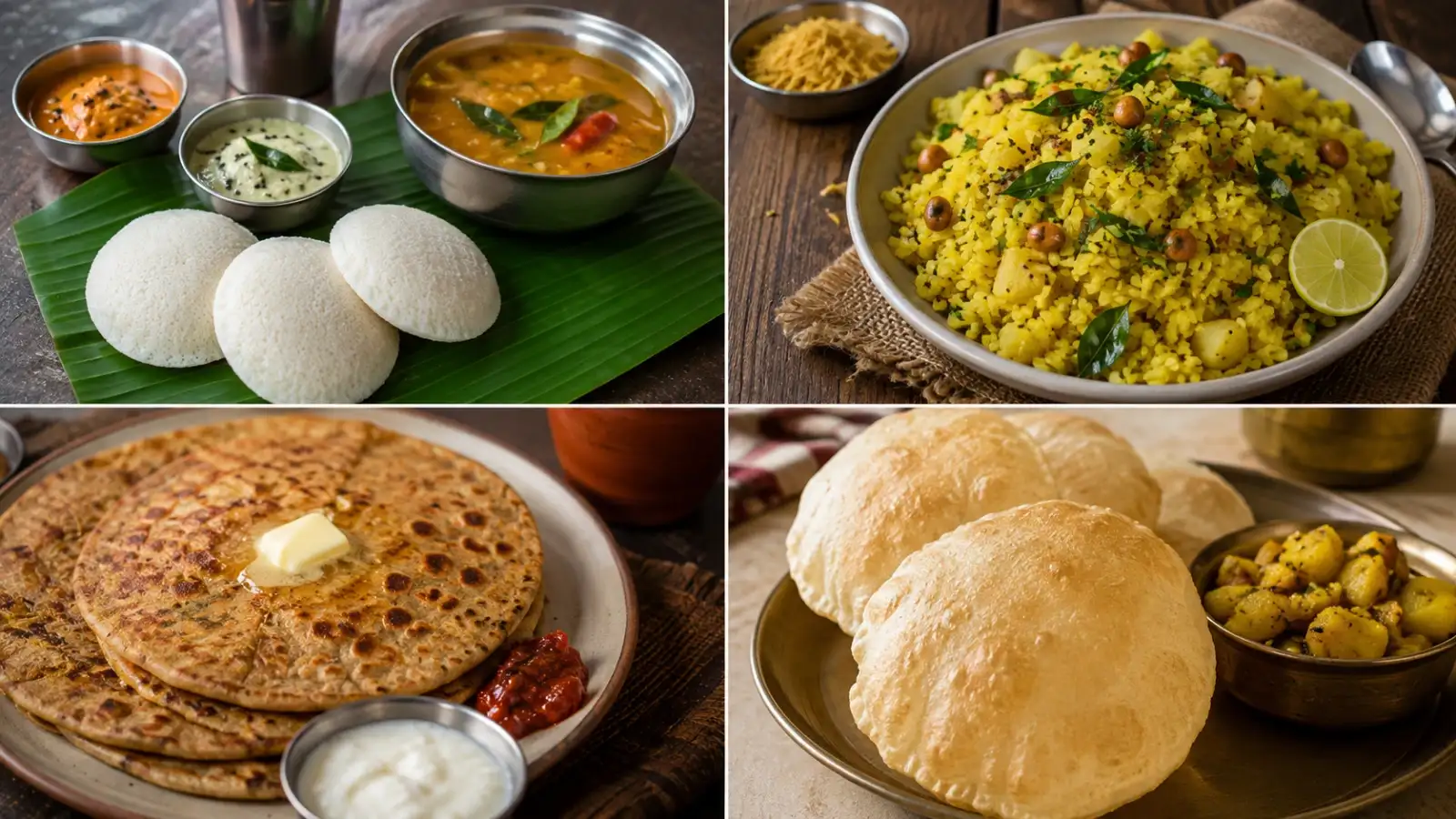
The southern coastal states feature fertile river deltas perfect for rice cultivation. As a result, southern morning dishes rely heavily on rice, paired with lentils like black gram. In contrast, the vast northern plains of Punjab and Haryana boast rich alluvial soil suitable for growing wheat. Northern morning meals naturally evolved around wheat-based flatbreads like puri, paratha, and rotis. In arid western regions like Rajasthan and Gujarat, hardy crops that require minimal rainfall dominate local agriculture. Millet grains like pearl millet and sorghum became regional staples, yielding dense, nourishing breads and savory porridges designed to sustain manual laborers through dry heat.
Over generations, southern cooks realized that grinding rice and lentils into a smooth batter and leaving it outdoors overnight allowed beneficial wild yeast and bacteria to flourish. This natural fermentation process creates light, airy batters for idlis and crispy dosas. Fermentation breaks down complex starches, enriches batter with vitamin B, and makes morning food incredibly easy to digest in tropical heat. In colder northern mountain regions where ambient temperatures are too low for natural overnight fermentation, morning recipes focus on fresh doughs, pan frying, and slow-boiled milk beverages that provide immediate bodily warmth.
Farmers needed heavy, slow-burning meals packed with carbohydrates and fats to sustain hard physical labor in open fields until late afternoon. Stuffed parathas loaded with potatoes or paneer, accompanied by thick curd or clarified butter, provided long-lasting energy reserves. Conversely, in coastal trading hubs and fishing communities, lighter meals that could be cooked quickly, digested easily, and consumed on the go were preferred, leading to steamed rice cakes, coconut chutneys, and light fish broths.
This frugal preservation technique prevented food waste in muggy weather, producing a naturally cooling, probiotic-rich morning meal. Meanwhile, coastal trade brought foreign ingredients like Portuguese potatoes and chilis to western shores, giving rise to savory street foods like pav bhaji and spicy breads that gradually entered morning food cultures.
Agricultural geography and local grain harvests
The most fundamental reason behind regional breakfast diversity lies in agricultural geography. What people traditionally cooked in the morning depended directly on what crops grew best in their immediate soil and climate.The southern coastal states feature fertile river deltas perfect for rice cultivation. As a result, southern morning dishes rely heavily on rice, paired with lentils like black gram. In contrast, the vast northern plains of Punjab and Haryana boast rich alluvial soil suitable for growing wheat. Northern morning meals naturally evolved around wheat-based flatbreads like puri, paratha, and rotis. In arid western regions like Rajasthan and Gujarat, hardy crops that require minimal rainfall dominate local agriculture. Millet grains like pearl millet and sorghum became regional staples, yielding dense, nourishing breads and savory porridges designed to sustain manual laborers through dry heat.
Fermentation chemistry and climate adaptations
Local climate dictates not only what crops grow, but also how food is prepared and preserved before sunrise. The hot, humid climate of southern India provided ideal conditions for natural wild fermentation.Over generations, southern cooks realized that grinding rice and lentils into a smooth batter and leaving it outdoors overnight allowed beneficial wild yeast and bacteria to flourish. This natural fermentation process creates light, airy batters for idlis and crispy dosas. Fermentation breaks down complex starches, enriches batter with vitamin B, and makes morning food incredibly easy to digest in tropical heat. In colder northern mountain regions where ambient temperatures are too low for natural overnight fermentation, morning recipes focus on fresh doughs, pan frying, and slow-boiled milk beverages that provide immediate bodily warmth.
You may also like
- 'It had been our dream since childhood': Six sets of twins at one Kerala wedding, as twin brothers marry twin sisters, with twin priests and twin altar boys
- 5 easy DIY hacks to create a luxury plant corner without spending a fortune
- Why do some houses always smell good, even without room fresheners?
- Dog Parents Alert: 7 Common Kitchen Foods That Can Be Dangerous for Your Pet
- Karnataka man spent nearly 3 hours in the Arabian Sea; rescuer Eshwar Malpe swam almost 3 nautical miles to reach him and bring him back
Daily energy needs and rural lifestyle demands
Historically, morning food was engineered to power specific daily physical activities. In agricultural communities across northern and central plains, farming required intense manual labor starting at dawn.Farmers needed heavy, slow-burning meals packed with carbohydrates and fats to sustain hard physical labor in open fields until late afternoon. Stuffed parathas loaded with potatoes or paneer, accompanied by thick curd or clarified butter, provided long-lasting energy reserves. Conversely, in coastal trading hubs and fishing communities, lighter meals that could be cooked quickly, digested easily, and consumed on the go were preferred, leading to steamed rice cakes, coconut chutneys, and light fish broths.
Preservation techniques and historical trade influences
Regional preservation methods and historical trade contacts also added unique layers to morning menus. Across eastern states like Bengal and Assam, leftover cooked rice was submerged in water overnight to create fermented rice soups called panta bhat.This frugal preservation technique prevented food waste in muggy weather, producing a naturally cooling, probiotic-rich morning meal. Meanwhile, coastal trade brought foreign ingredients like Portuguese potatoes and chilis to western shores, giving rise to savory street foods like pav bhaji and spicy breads that gradually entered morning food cultures.
Celebrating unity through regional culinary heritage
Understanding why breakfast is different across every part of India shows how human ingenuity adapts to local environments. Every regional morning meal tells a story of local earth, seasonal climate, and cultural wisdom, making every sunrise a delicious celebration of diversity.





Loving Newspoint? Download the app now
