
Why Is Govardhan Puja Bigger Than Diwali in Braj?


In most parts of India, Diwali is the biggest celebration of the festive season. But in Braj, there is another day that often brings even greater excitement: Govardhan Puja, celebrated the day after Diwali. Families gather, special dishes are prepared, children enjoy fireworks and homes become centres of celebration. Why does this festival hold such a special place in Krishna's land? The answer lies in a story about a mountain, a young Krishna and a lesson that changed how people understood their relationship with nature.
What Exactly Is the Braj Region?
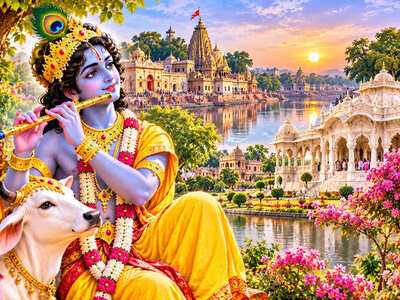 Mathura, Vrindavan and the surrounding areas form the heart of the Braj region.
Braj is the region associated with the childhood and divine pastimes of Lord Krishna. It includes Mathura, Vrindavan, Govardhan and nearby areas, along with parts of present-day Uttar Pradesh, Haryana and Rajasthan. Places such as Palwal, Nuh, Bharatpur and Deeg are also connected with the wider Braj cultural region. For people here, Krishna is not simply a deity worshipped in temples. His stories, traditions and memories are woven into everyday life. That is why festivals connected with his pastimes hold such deep meaning.
Why Govardhan Puja Matters So Much
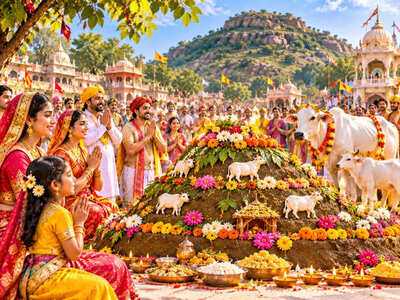 Devotees gather to worship Govardhan Hill and celebrate Krishna's connection with the land.
In Braj, Govardhan Puja is more than a ritual performed after Diwali. It is a celebration closely connected with Krishna's life and the identity of the region. Many families gather on this day, prepare traditional dishes and take part in worship and community celebrations. The festival is especially meaningful because Govardhan Hill is believed to be closely connected with Krishna himself. For devotees, worshipping Govardhan is also a way of remembering the protection, nourishment and blessings associated with the natural world.
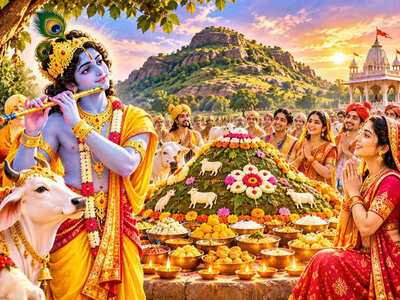
The Mountain Krishna Lifted With One FingerAccording to the Bhagavata Purana, Krishna once encouraged the people of Braj to worship Govardhan Hill instead of performing a sacrifice to please Indra, the god of rain. Angered by this, Indra sent powerful rainstorms over the region. To protect the villagers, Krishna lifted Govardhan Hill on his little finger and gave people and their cattle shelter beneath it. The mountain became a symbol of divine protection, and the story remains at the heart of Govardhan Puja celebrations.
Why People Make a Hill From Cow DungOne of the most recognisable traditions of Govardhan Puja is creating a small hill-shaped figure from cow dung. It represents the Govardhan mountain that Krishna lifted to protect the people of Braj. Families decorate the figure with flowers, leaves and other offerings before performing puja. This practice brings the story into the home, allowing people to take part in the celebration even when they cannot visit Govardhan Hill. The simple act turns an ancient story into a shared family tradition.
The Tradition of Govardhan ParikramaAnother important part of the festival is Govardhan Parikrama, the devotional walk around the sacred hill. The traditional route is around 21 kilometres long and passes through places associated with Krishna's stories. Devotees complete the walk as an expression of faith and gratitude. Some families also symbolically perform parikrama around the small Govardhan figure made at home. Both practices connect worshippers with the same story: the mountain that sheltered Braj's people and became a lasting symbol of Krishna's grace.
Why the Celebrations Feel Bigger Than DiwaliDiwali is celebrated with lamps, decorations and prayers across Braj, but Govardhan Puja has a special local connection. It brings together the region's devotion to Krishna, its agricultural traditions and its shared cultural identity. Families prepare a variety of dishes, offer food during worship and spend time together. In many places, the celebrations feel especially lively because the festival is rooted in local customs passed down through generations. It is not that Diwali is unimportant; Govardhan Puja simply holds a unique place in the hearts of many people in Krishna's land.
The Festival's Message About NatureThe deeper message of Govardhan Puja goes beyond worshipping a mountain. The hill, forests, cattle, water and land are all part of the natural world that supports human life. Krishna's story reminds devotees to value the things that nourish and protect their communities. Making a symbolic Govardhan Hill at home is one way of keeping that message alive. The festival encourages gratitude for nature and respect for the resources people depend on every day.
Unlock insightful tips and inspiration on personal growth, productivity, and well-being. Stay motivated and updated with the latest at My Life XP.
What Exactly Is the Braj Region?
Braj is the region associated with the childhood and divine pastimes of Lord Krishna. It includes Mathura, Vrindavan, Govardhan and nearby areas, along with parts of present-day Uttar Pradesh, Haryana and Rajasthan. Places such as Palwal, Nuh, Bharatpur and Deeg are also connected with the wider Braj cultural region. For people here, Krishna is not simply a deity worshipped in temples. His stories, traditions and memories are woven into everyday life. That is why festivals connected with his pastimes hold such deep meaning.
Why Govardhan Puja Matters So Much
In Braj, Govardhan Puja is more than a ritual performed after Diwali. It is a celebration closely connected with Krishna's life and the identity of the region. Many families gather on this day, prepare traditional dishes and take part in worship and community celebrations. The festival is especially meaningful because Govardhan Hill is believed to be closely connected with Krishna himself. For devotees, worshipping Govardhan is also a way of remembering the protection, nourishment and blessings associated with the natural world.
The Mountain Krishna Lifted With One FingerAccording to the Bhagavata Purana, Krishna once encouraged the people of Braj to worship Govardhan Hill instead of performing a sacrifice to please Indra, the god of rain. Angered by this, Indra sent powerful rainstorms over the region. To protect the villagers, Krishna lifted Govardhan Hill on his little finger and gave people and their cattle shelter beneath it. The mountain became a symbol of divine protection, and the story remains at the heart of Govardhan Puja celebrations.
Why People Make a Hill From Cow DungOne of the most recognisable traditions of Govardhan Puja is creating a small hill-shaped figure from cow dung. It represents the Govardhan mountain that Krishna lifted to protect the people of Braj. Families decorate the figure with flowers, leaves and other offerings before performing puja. This practice brings the story into the home, allowing people to take part in the celebration even when they cannot visit Govardhan Hill. The simple act turns an ancient story into a shared family tradition.
The Tradition of Govardhan ParikramaAnother important part of the festival is Govardhan Parikrama, the devotional walk around the sacred hill. The traditional route is around 21 kilometres long and passes through places associated with Krishna's stories. Devotees complete the walk as an expression of faith and gratitude. Some families also symbolically perform parikrama around the small Govardhan figure made at home. Both practices connect worshippers with the same story: the mountain that sheltered Braj's people and became a lasting symbol of Krishna's grace.
Why the Celebrations Feel Bigger Than DiwaliDiwali is celebrated with lamps, decorations and prayers across Braj, but Govardhan Puja has a special local connection. It brings together the region's devotion to Krishna, its agricultural traditions and its shared cultural identity. Families prepare a variety of dishes, offer food during worship and spend time together. In many places, the celebrations feel especially lively because the festival is rooted in local customs passed down through generations. It is not that Diwali is unimportant; Govardhan Puja simply holds a unique place in the hearts of many people in Krishna's land.
The Festival's Message About NatureThe deeper message of Govardhan Puja goes beyond worshipping a mountain. The hill, forests, cattle, water and land are all part of the natural world that supports human life. Krishna's story reminds devotees to value the things that nourish and protect their communities. Making a symbolic Govardhan Hill at home is one way of keeping that message alive. The festival encourages gratitude for nature and respect for the resources people depend on every day.
Unlock insightful tips and inspiration on personal growth, productivity, and well-being. Stay motivated and updated with the latest at My Life XP.
Next Story