
Why Is Samosa Triangular? The Story Behind Its Unique Shape

Golden, crispy and filled with a spicy mixture, the samosa is one of the most familiar snacks in India. Its delicious filling may change from place to place, but one thing usually remains the same. The classic samosa comes in a distinctive triangular shape with a pointed top and a broad base.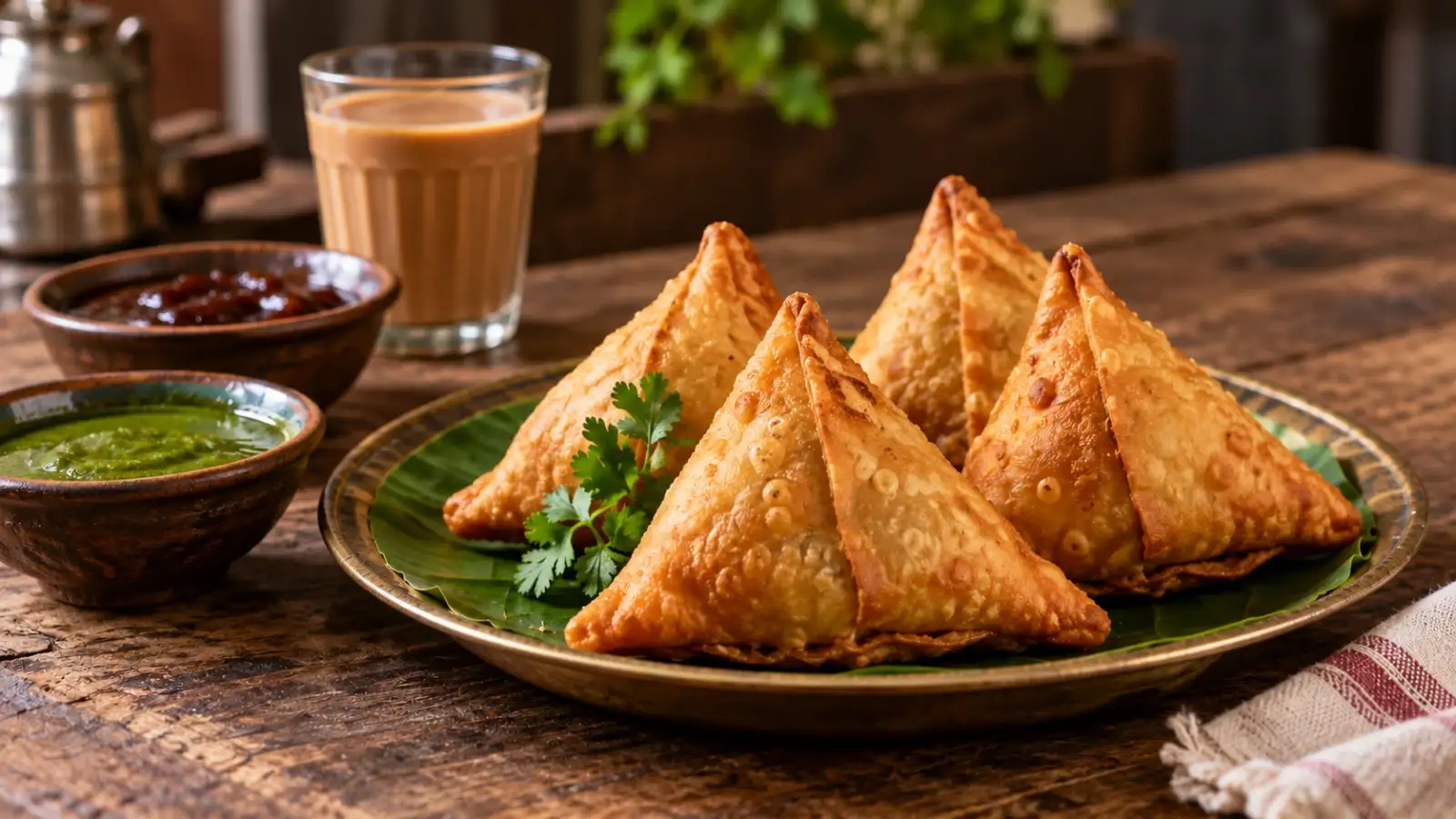
This unusual shape has become so closely connected with the snack that most people can recognise a samosa even before taking the first bite. But have you ever wondered why samosas are triangular in the first place?
The answer is not as simple as one particular inventor deciding to make a triangle. The shape is linked to the history of the samosa, the way its pastry is folded and the practical advantages of creating a small stuffed pocket. Over centuries, this simple design became an important part of the identity of one of India's favourite snacks.
Unlike the potato samosa commonly eaten in India today, older versions were often filled with meat, onions, nuts and spices. They were also generally smaller and were considered convenient food for travellers and traders.
The samosa travelled along important trade routes as people moved between different parts of Asia and the Middle East. Eventually, stuffed pastries of this kind reached the Indian subcontinent, where local cooks began adapting them according to available ingredients and regional tastes.
The snack changed considerably over time, but the folded pastry remained an important feature.
The shape also works particularly well with a long strip of pastry. The dough can be folded over itself in a series of triangular folds, creating a secure pocket for the filling. Once the final edge is sealed, the filling is enclosed inside the pastry.
This folding method has another advantage. It creates several layers around the filling, which become wonderfully crisp when the samosa is fried.
The broad base also gives the samosa stability. Vendors can place freshly fried samosas upright or arrange them together on a tray without them rolling around. The pointed top adds to their familiar appearance while helping create a compact structure.
This technique is relatively simple once mastered, but it creates the three-dimensional shape that makes a samosa different from a flat stuffed pastry.
The filling must also be prepared carefully. If there is too much filling, the pastry may split while being sealed or fried. If there is too little, the finished samosa may have too much pastry and not enough of the flavourful centre.
The triangular design therefore provides a useful balance between pastry and filling.
However, there is no strong historical evidence showing that the triangular samosa was originally created specifically because of one religious or cultural symbol.
The more practical explanation is that the triangle developed through pastry-folding techniques and remained popular because it was convenient. As the samosa became established in South Asian food culture, its familiar shape gained a strong visual identity.
In other words, the triangle may not have been created to represent something particular. It simply proved to be an effective way to make a stuffed pastry.
A long strip of pastry can be folded efficiently into a triangular pocket. The filling stays concentrated in the centre, while the folded layers provide a strong outer shell.
The shape is also convenient for eating. A person can easily pick up a samosa from its wider base or hold it along the sides. This is especially useful for a snack traditionally enjoyed without a knife and fork.
For food vendors, the shape is useful too. Triangular samosas can be made in large batches, arranged neatly on trays and easily recognised by customers.
Over time, these practical benefits helped the triangular form become the standard image of a samosa.
The potato and pea filling is perhaps the best-known Indian version. Spices such as cumin, coriander, ginger and green chilli give it the familiar flavour that pairs so well with mint chutney, tamarind chutney and a hot cup of chai.
Different regions have also developed their own versions. Some samosas are filled with minced meat, while others contain lentils, onions or vegetables. There are smaller versions designed for parties and larger ones commonly sold by street food vendors.
Despite these variations, the classic triangular form remains remarkably consistent.
The same is true of the samosa. Its triangle has become a visual symbol of the snack.
Even when modern cooks experiment with fillings such as cheese, noodles or different vegetables, they often retain the triangular shape. That is because changing the filling still leaves the snack recognisable as a samosa.
This shows how powerful the shape has become. It is no longer simply a convenient way to fold pastry. It is part of what people expect a samosa to look like.
As the snack travelled from one region to another, cooks adapted its ingredients and flavours. In India, it became deeply connected with street food, tea-time snacks, celebrations and everyday cravings.
The next time you enjoy a hot samosa, take a closer look at its shape. That little triangle represents centuries of culinary travel and adaptation. It is simple enough to make, strong enough to hold a generous filling and distinctive enough to be recognised almost anywhere.
The samosa may be famous for its spicy filling and crispy exterior, but its triangular shape is a big part of what makes this humble snack so instantly familiar.
This unusual shape has become so closely connected with the snack that most people can recognise a samosa even before taking the first bite. But have you ever wondered why samosas are triangular in the first place?
The answer is not as simple as one particular inventor deciding to make a triangle. The shape is linked to the history of the samosa, the way its pastry is folded and the practical advantages of creating a small stuffed pocket. Over centuries, this simple design became an important part of the identity of one of India's favourite snacks.
The samosa has a long travelling history
The story of the samosa began long before it became a popular Indian street food. Food historians connect early versions of the snack with regions of Central Asia, Persia and the Middle East. These early stuffed pastries appeared under different names, including sanbusak, sanbusaq and sanbusaj.Unlike the potato samosa commonly eaten in India today, older versions were often filled with meat, onions, nuts and spices. They were also generally smaller and were considered convenient food for travellers and traders.
The samosa travelled along important trade routes as people moved between different parts of Asia and the Middle East. Eventually, stuffed pastries of this kind reached the Indian subcontinent, where local cooks began adapting them according to available ingredients and regional tastes.
The snack changed considerably over time, but the folded pastry remained an important feature.
Why the triangular shape is practical
One of the biggest reasons behind the samosa's famous shape is practicality. A triangle creates a compact pocket that can hold a good amount of filling without making the pastry difficult to handle.The shape also works particularly well with a long strip of pastry. The dough can be folded over itself in a series of triangular folds, creating a secure pocket for the filling. Once the final edge is sealed, the filling is enclosed inside the pastry.
This folding method has another advantage. It creates several layers around the filling, which become wonderfully crisp when the samosa is fried.
The broad base also gives the samosa stability. Vendors can place freshly fried samosas upright or arrange them together on a tray without them rolling around. The pointed top adds to their familiar appearance while helping create a compact structure.
The folding technique creates the triangle
The triangular samosa is closely linked to the way the pastry is prepared. A sheet or strip of dough is usually shaped into a pocket before the filling is added. The filling is placed inside and the pastry is folded over it until the edges meet and can be sealed.This technique is relatively simple once mastered, but it creates the three-dimensional shape that makes a samosa different from a flat stuffed pastry.
The filling must also be prepared carefully. If there is too much filling, the pastry may split while being sealed or fried. If there is too little, the finished samosa may have too much pastry and not enough of the flavourful centre.
The triangular design therefore provides a useful balance between pastry and filling.
Was the triangle chosen for a special meaning?
There are many interesting theories about the samosa's three-sided shape. Some people believe the triangle may have symbolic connections with Indian culture, while others associate its form with mountains or geometric designs.However, there is no strong historical evidence showing that the triangular samosa was originally created specifically because of one religious or cultural symbol.
The more practical explanation is that the triangle developed through pastry-folding techniques and remained popular because it was convenient. As the samosa became established in South Asian food culture, its familiar shape gained a strong visual identity.
In other words, the triangle may not have been created to represent something particular. It simply proved to be an effective way to make a stuffed pastry.
Why not make a samosa round?
A round stuffed pastry is certainly possible, and many cuisines around the world have their own versions of filled dough. However, the triangular design offers some useful advantages.A long strip of pastry can be folded efficiently into a triangular pocket. The filling stays concentrated in the centre, while the folded layers provide a strong outer shell.
The shape is also convenient for eating. A person can easily pick up a samosa from its wider base or hold it along the sides. This is especially useful for a snack traditionally enjoyed without a knife and fork.
For food vendors, the shape is useful too. Triangular samosas can be made in large batches, arranged neatly on trays and easily recognised by customers.
Over time, these practical benefits helped the triangular form become the standard image of a samosa.
India gave the samosa its own identity
Although the samosa has roots outside India, its transformation in Indian kitchens is a fascinating part of its history. Local ingredients changed the filling, while regional cooking traditions influenced its size, texture and flavour.The potato and pea filling is perhaps the best-known Indian version. Spices such as cumin, coriander, ginger and green chilli give it the familiar flavour that pairs so well with mint chutney, tamarind chutney and a hot cup of chai.
Different regions have also developed their own versions. Some samosas are filled with minced meat, while others contain lentils, onions or vegetables. There are smaller versions designed for parties and larger ones commonly sold by street food vendors.
Despite these variations, the classic triangular form remains remarkably consistent.
The samosa shape has become part of its identity
Food is often recognised through its appearance as much as its flavour. Think of a round rasgulla, a spiral jalebi or a long dosa. The shape immediately creates an association with the food.The same is true of the samosa. Its triangle has become a visual symbol of the snack.
Even when modern cooks experiment with fillings such as cheese, noodles or different vegetables, they often retain the triangular shape. That is because changing the filling still leaves the snack recognisable as a samosa.
This shows how powerful the shape has become. It is no longer simply a convenient way to fold pastry. It is part of what people expect a samosa to look like.
A simple triangle with a clever history
So, why is a samosa triangular? There is no single answer that explains its entire history. Its shape appears to have developed through practical pastry-making methods and the need to create a compact, secure pocket for filling.As the snack travelled from one region to another, cooks adapted its ingredients and flavours. In India, it became deeply connected with street food, tea-time snacks, celebrations and everyday cravings.
The next time you enjoy a hot samosa, take a closer look at its shape. That little triangle represents centuries of culinary travel and adaptation. It is simple enough to make, strong enough to hold a generous filling and distinctive enough to be recognised almost anywhere.
The samosa may be famous for its spicy filling and crispy exterior, but its triangular shape is a big part of what makes this humble snack so instantly familiar.
Next Story