
Why Is It So Hard To Throw Away Things We Never Use?

You know that drawer. The one filled with things you have not used in years but somehow cannot throw away. An old T-shirt. A birthday card. A random cable. A gift you never liked. Something you bought because it was on sale. You know you do not need most of it. Yet the moment you decide to throw something away, your brain suddenly comes up with a reason to keep it. Maybe I will need it someday. Maybe I can use it later. Maybe I should keep it because someone gave it to me. So why is getting rid of things we never use surprisingly difficult?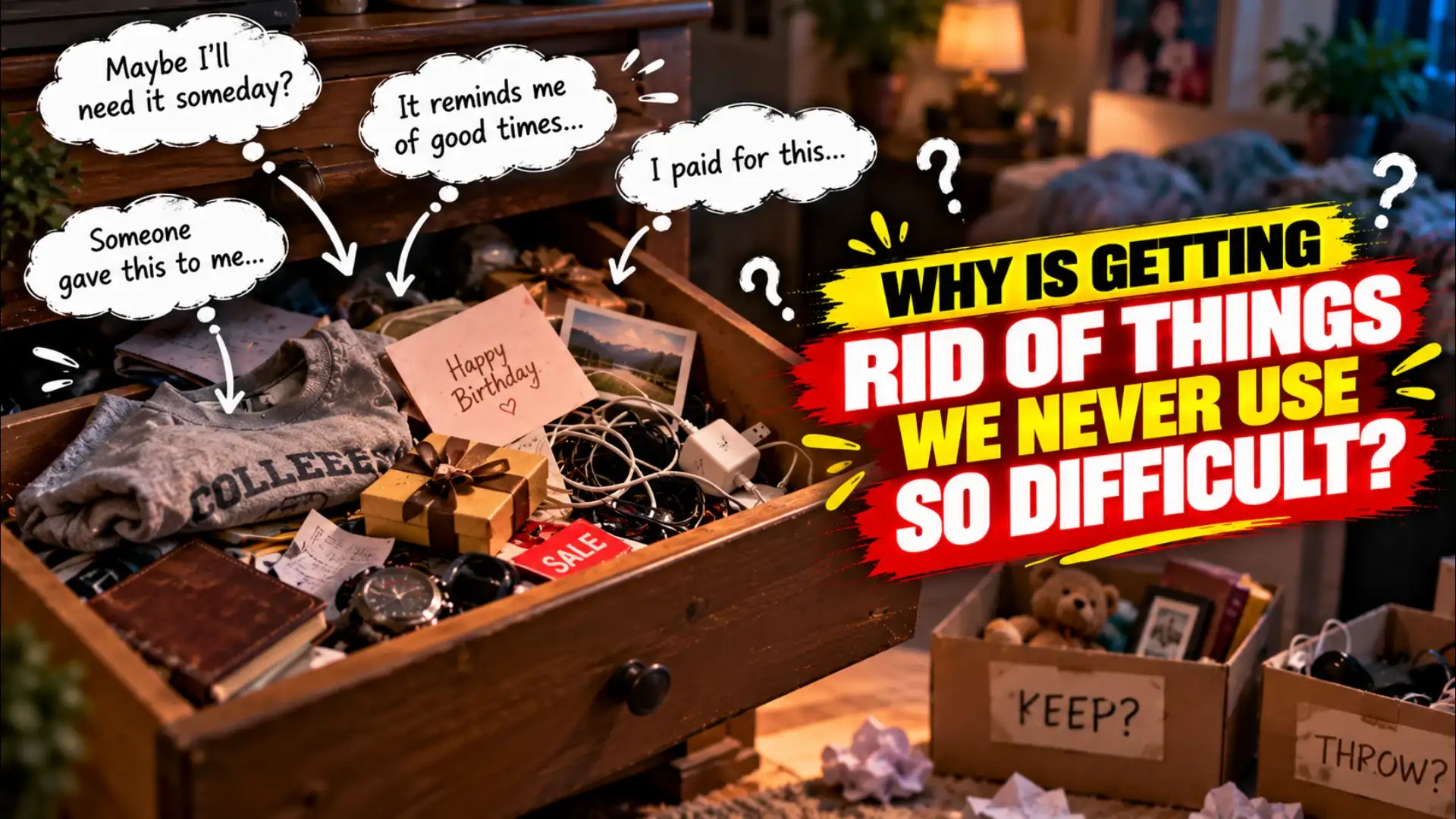
The object becomes connected to a memory. Throwing it away can therefore feel strangely bigger than simply getting rid of a piece of paper or clothing. Of course, the memory does not disappear when the object does. But emotionally, it can still feel as though you are letting go of something connected to that period of your life.
You might have an old charger, a spare container or a piece of furniture that has not been used in years. You know it is taking up space, but there is always a possibility that you will suddenly need it.
The problem is that the possibility is often much easier to imagine than the actual future use. Once you have owned something for a long time, getting rid of it can feel like giving up an option. Even if you have never actually used that option.
But the money has already been spent. Keeping an unused item does not bring that money back. It simply means the object continues taking up space. This is one reason decluttering can become surprisingly emotional when the things involved were expensive purchases or gifts.
The object can represent a version of yourself you would like to be. Getting rid of it can therefore feel like admitting that your habits or priorities have changed. That does not mean you have failed. It simply means the life you have now may not look exactly like the life you imagined when you bought or kept that thing.
And if something has not been used for years, costs nothing to replace and has no real emotional meaning, letting it go may be easier than finding another place to store it. Because sometimes the hardest part of decluttering is not deciding what to throw away. It is accepting that something once mattered to you without needing to keep it forever.
We Attach Memories To Objects
Sometimes the object itself is not what you are keeping. You are keeping what it reminds you of. An old college sweatshirt may remind you of a particular group of friends. A ticket may take you back to a trip. A handwritten note may remind you of someone you no longer see.The object becomes connected to a memory. Throwing it away can therefore feel strangely bigger than simply getting rid of a piece of paper or clothing. Of course, the memory does not disappear when the object does. But emotionally, it can still feel as though you are letting go of something connected to that period of your life.
The I Might Need It Later Problem
Then there is the classic line: I might need it someday. This is especially common with things that are difficult or expensive to replace.You might have an old charger, a spare container or a piece of furniture that has not been used in years. You know it is taking up space, but there is always a possibility that you will suddenly need it.
The problem is that the possibility is often much easier to imagine than the actual future use. Once you have owned something for a long time, getting rid of it can feel like giving up an option. Even if you have never actually used that option.
Money Can Make Things Harder To Throw Away
There is another uncomfortable feeling behind clutter: I paid for this. Throwing away something you bought can feel like admitting that the money was wasted. Keeping it can create the illusion that the purchase might still become useful one day.But the money has already been spent. Keeping an unused item does not bring that money back. It simply means the object continues taking up space. This is one reason decluttering can become surprisingly emotional when the things involved were expensive purchases or gifts.
Sometimes We Are Keeping An Older Version Of Ourselves
This is where things get even more interesting. You may keep clothes that no longer fit because you hope you will wear them again. You may keep hobby equipment because you imagine returning to that hobby. You may keep books because you still want to become the person who reads them.The object can represent a version of yourself you would like to be. Getting rid of it can therefore feel like admitting that your habits or priorities have changed. That does not mean you have failed. It simply means the life you have now may not look exactly like the life you imagined when you bought or kept that thing.
So How Do You Actually Let Things Go?
A useful question is not Could I ever use this? Almost anything could theoretically become useful someday. Instead, ask yourself whether you have used it, needed it or genuinely wanted it recently. For sentimental things, you can also keep the memory without keeping every physical object connected to it. Sometimes taking a photograph of something is enough.And if something has not been used for years, costs nothing to replace and has no real emotional meaning, letting it go may be easier than finding another place to store it. Because sometimes the hardest part of decluttering is not deciding what to throw away. It is accepting that something once mattered to you without needing to keep it forever.
Next Story