
Why Is Jaggery a Winter Favourite in Indian Kitchens? Discover Its Traditional Uses

As winter arrives, jaggery becomes a familiar ingredient in Indian kitchens. From til ke laddoo and gajak to gur ki roti, chikki and warm drinks, this traditional sweetener features in many seasonal recipes. Made mainly from sugarcane juice or palm sap, jaggery has a rich flavour that pairs particularly well with sesame seeds, peanuts, millets and warming spices. Its popularity is connected to regional food traditions, seasonal ingredients and its use as an alternative to refined sugar. But why does jaggery appear so frequently in winter cooking? The answer lies in its taste, versatility and cultural significance.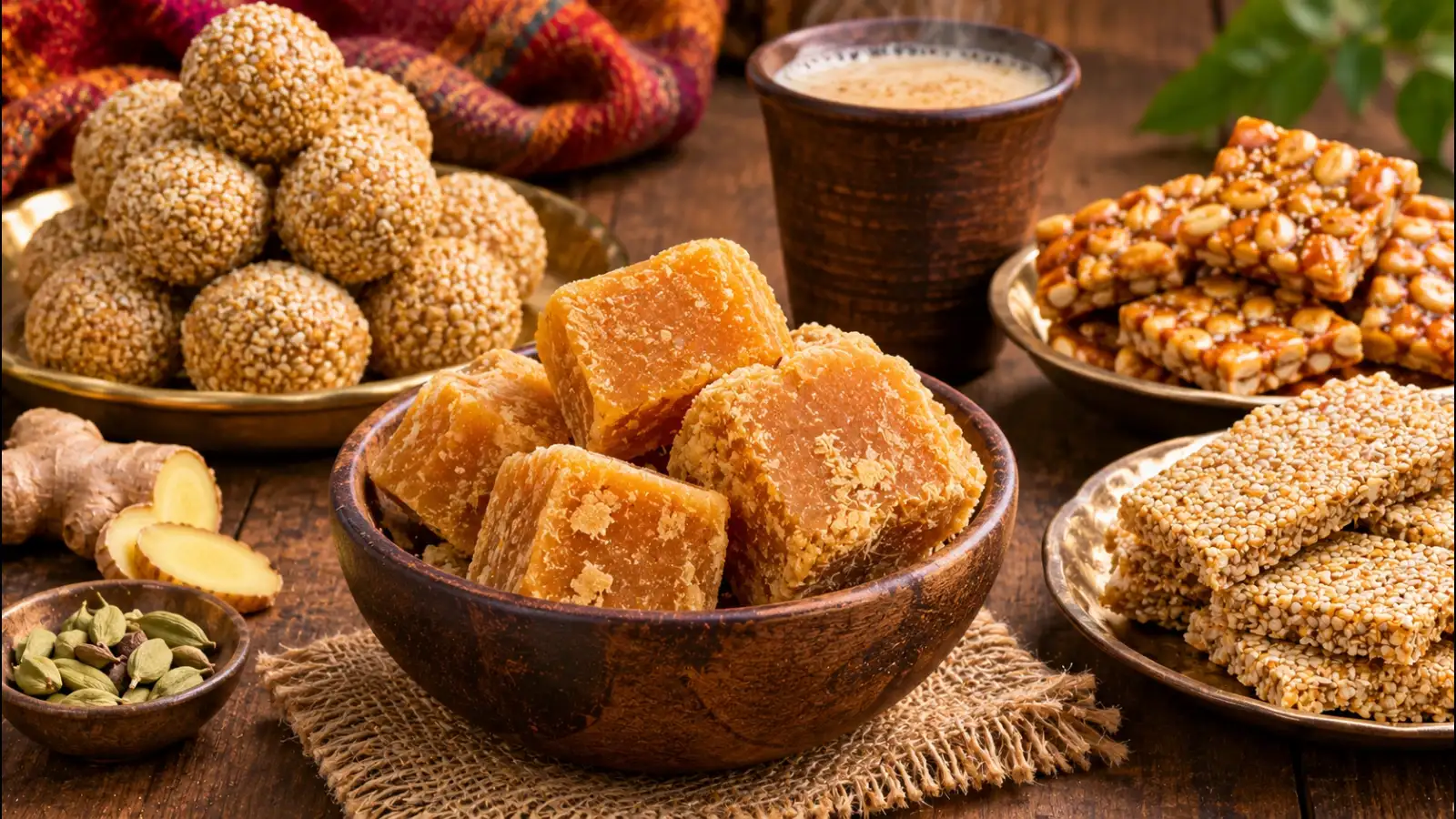
Families prepare recipes such as til ke laddoo, gajak, rewari and gur-based chikki during the colder months. These foods are especially popular around festivals such as Lohri and Makar Sankranti.
The practice varies across states, but jaggery remains an important part of India's seasonal food culture.
It works particularly well with:
Depending on the recipe, it can be used in kheer, halwa, laddoos, porridge and homemade sweets. However, jaggery is still a form of added sugar. It should not be considered automatically healthier or consumed without moderation.
Although these traditional associations are part of food culture, there is no strong reason to treat jaggery as a way to raise body temperature or protect against cold weather. Its popularity is better understood through culinary traditions and its convenient use in seasonal recipes.
Til ke laddoo, peanut chikki and gajak are familiar examples. Sesame seeds provide fats, protein and minerals, while peanuts contribute plant-based protein and energy. The nutritional value of the finished snack depends on its ingredients and portion size.
Some popular ways to use it during winter include:
This characteristic makes it particularly suitable for traditional sweets, festive snacks and regional desserts. It also balances the nutty taste of sesame seeds and peanuts, creating familiar winter flavours that many households enjoy.
People managing diabetes or blood glucose levels should be particularly mindful of portion sizes and follow individual dietary advice. Choose clean, good-quality jaggery from a reliable source, and store it in a dry, airtight container to prevent moisture and contamination.
Jaggery is common in Indian winter recipes because it brings together traditional flavours, seasonal ingredients and familiar cooking practices. Its ability to complement sesame seeds, peanuts, millets and spices makes it useful in several popular winter sweets and snacks. From gajak and til laddoos to gur-based halwa, it continues to hold a special place in Indian kitchens. Enjoying it in moderation allows you to appreciate its traditional flavour without overlooking its sugar content.
1. A Traditional Winter Ingredient
Jaggery has been used in Indian households for generations. In many regions, winter is associated with the preparation of traditional sweets and snacks made using freshly available jaggery.Families prepare recipes such as til ke laddoo, gajak, rewari and gur-based chikki during the colder months. These foods are especially popular around festivals such as Lohri and Makar Sankranti.
The practice varies across states, but jaggery remains an important part of India's seasonal food culture.
2. It Pairs Well With Winter Ingredients
One reason jaggery is commonly used in winter recipes is that its deep, caramel-like sweetness complements several seasonal ingredients.It works particularly well with:
- Sesame seeds, used in til laddoos and gajak.
- Peanuts, commonly added to chikki.
- Bajra and other millets, used in traditional rotis and sweets.
- Dry fruits, including almonds and cashews.
- Ginger and cardamom, which add flavour to warm preparations.
3. A Popular Alternative to Refined Sugar
Jaggery is often chosen instead of refined white sugar in traditional Indian recipes. It has a distinctive flavour and can add colour, moisture and a slightly earthy sweetness to dishes.Depending on the recipe, it can be used in kheer, halwa, laddoos, porridge and homemade sweets. However, jaggery is still a form of added sugar. It should not be considered automatically healthier or consumed without moderation.
4. It Is Traditionally Associated With Warmth
In several Indian food traditions, jaggery is considered a warming food and is commonly included in winter meals. This belief is reflected in seasonal preparations such as gur ki chai, jaggery-based ladoos and sweets made with sesame seeds.Although these traditional associations are part of food culture, there is no strong reason to treat jaggery as a way to raise body temperature or protect against cold weather. Its popularity is better understood through culinary traditions and its convenient use in seasonal recipes.
5. It Complements Sesame Seeds and Peanuts
Sesame seeds and peanuts are widely used in Indian winter snacks. Jaggery acts as a binding ingredient, helping these foods hold their shape while adding sweetness.Til ke laddoo, peanut chikki and gajak are familiar examples. Sesame seeds provide fats, protein and minerals, while peanuts contribute plant-based protein and energy. The nutritional value of the finished snack depends on its ingredients and portion size.
6. It Is Easy to Use in Traditional Home Cooking
Jaggery is available in blocks, powders and small pieces, making it convenient for different types of recipes. It can be melted with a little water to prepare syrups or grated directly into dishes.You may also like
- Post Office Schemes: From FDs to PPF—which one offers the highest interest earnings?
- Gold and Silver Prices Plunge by 53%: Is This the Right Time to Buy, or Will They Fall Further? Expert Opinion
- Has someone secretly blocked you on WhatsApp? Find out with these 7 signs.
- Suriya thanks Tovino Thomas for playing the mysterious killer Victor in Scene
- Opened a fake traffic challan message, entered vehicle number, and lost ₹3.89 lakh from his account
Some popular ways to use it during winter include:
- Adding grated jaggery to bajra or wheat rotis.
- Preparing homemade peanut and sesame chikki.
- Sweetening porridge or kheer.
- Making gur-based halwa.
- Adding a small amount to ginger-infused drinks.
7. It Has a Distinctive Flavour and Aroma
Unlike refined sugar, jaggery has a deeper taste that can range from mildly caramel-like to rich and earthy. Its flavour depends on the source, production method and quality.This characteristic makes it particularly suitable for traditional sweets, festive snacks and regional desserts. It also balances the nutty taste of sesame seeds and peanuts, creating familiar winter flavours that many households enjoy.
Things to Remember While Consuming Jaggery
Although jaggery is traditionally used in winter recipes, it should be eaten in moderate quantities. It contains natural sugars and contributes to overall sugar intake.People managing diabetes or blood glucose levels should be particularly mindful of portion sizes and follow individual dietary advice. Choose clean, good-quality jaggery from a reliable source, and store it in a dry, airtight container to prevent moisture and contamination.
Jaggery is common in Indian winter recipes because it brings together traditional flavours, seasonal ingredients and familiar cooking practices. Its ability to complement sesame seeds, peanuts, millets and spices makes it useful in several popular winter sweets and snacks. From gajak and til laddoos to gur-based halwa, it continues to hold a special place in Indian kitchens. Enjoying it in moderation allows you to appreciate its traditional flavour without overlooking its sugar content.






Loving Newspoint? Download the app now
