
Why Khichdi Is Considered Comfort Food Across India: The Story Behind This Simple Indian Dish

A warm bowl of khichdi has a special place in Indian households. Made with rice and lentils , this simple dish is often associated with home-cooked meals, childhood memories and the comfort of familiar flavours. It is commonly prepared when someone wants something light, during recovery from illness or simply when there is little time to cook an elaborate meal. However, khichdi is much more than an easy combination of ingredients. Its regional variations, cultural connections and nutritional value have helped it remain popular across generations. Here is why this humble Indian dish is considered comfort food in so many homes.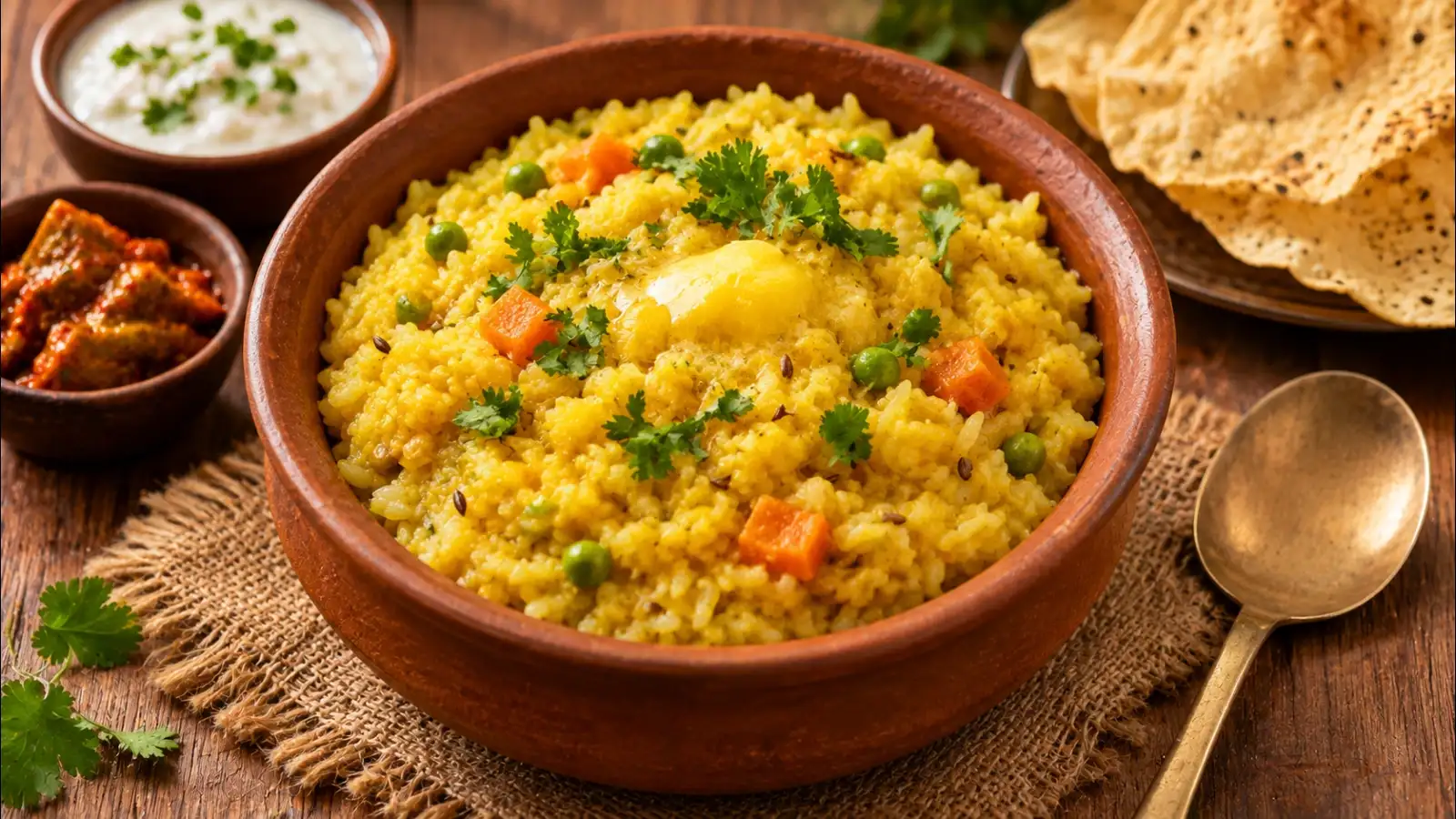
Moong dal is commonly used because it cooks relatively quickly and creates a soft texture. Depending on personal preferences, families may also use toor dal or other lentils. The dish can be prepared with just a few ingredients while still providing a satisfying meal.
Moong dal khichdi , in particular, is commonly prepared in Indian homes during periods of illness or recovery. However, individual digestive needs vary, and the ingredients can be adjusted according to personal tolerance.
The familiar combination of rice, lentils and a little ghee creates a comforting flavour that many people continue to enjoy as adults. This emotional connection is an important part of its popularity.
When eaten together as part of a balanced diet, rice and lentils provide a useful combination of nutrients. Adding vegetables such as carrots, peas, beans and spinach can further improve the dish's nutritional variety.
It is particularly convenient for busy weekdays when people want a filling home-cooked meal without spending too much time in the kitchen. One-pot preparation also means fewer utensils to wash afterwards.
A spoonful of ghee adds richness, while papad provides a crunchy contrast. Mango pickle, curd and vegetable chokha are also popular choices in different parts of India.
In some communities, khichdi is offered as prasad or prepared as part of traditional gatherings. Its simple ingredients and nourishing character make it suitable for occasions that emphasise humble, home-style food.
Khichdi remains one of India's most loved comfort foods because it combines simplicity, familiarity and nourishment in a single bowl. Its ability to adapt to regional tastes, seasonal ingredients and individual preferences has helped it survive changing food trends. Whether enjoyed with ghee and pickle, served with kadhi or prepared with seasonal vegetables, khichdi continues to remind people that a satisfying meal does not always need elaborate ingredients or complicated cooking.
1. Simple Ingredients That Create a Satisfying Meal
One of the biggest reasons behind khichdi's popularity is its simplicity. The basic preparation usually involves rice, lentils, water, salt and a few everyday spices.Moong dal is commonly used because it cooks relatively quickly and creates a soft texture. Depending on personal preferences, families may also use toor dal or other lentils. The dish can be prepared with just a few ingredients while still providing a satisfying meal.
2. Easy to Digest and Gentle on the Stomach
Soft-cooked khichdi is often preferred when someone has a reduced appetite or wants a mild meal. Its texture makes it easier to eat, while simple seasoning keeps the flavours gentle.Moong dal khichdi , in particular, is commonly prepared in Indian homes during periods of illness or recovery. However, individual digestive needs vary, and the ingredients can be adjusted according to personal tolerance.
3. A Familiar Dish From Childhood
For many Indians, khichdi brings back memories of meals prepared by parents and grandparents. It is often one of the first home-cooked dishes served to young children because it can be made soft and mildly seasoned.The familiar combination of rice, lentils and a little ghee creates a comforting flavour that many people continue to enjoy as adults. This emotional connection is an important part of its popularity.
4. Different States Have Their Own Khichdi Traditions
Khichdi is not limited to one recipe. Different regions have developed their own versions using local ingredients and cooking styles.- Gujarati khichdi: Often prepared with rice and lentils and served with kadhi.
- Bengali khichuri: Commonly cooked with rice, moong dal and aromatic spices, particularly during festive occasions.
- Bihari khichdi: Often served with chokha, papad, pickles and ghee.
- Rajasthani khichdi: Prepared in different combinations using regional grains and lentils.
- South Indian variations: Some preparations include rice, moong dal, pepper, cumin and curry leaves.
5. A Nutritious Combination of Rice and Lentils
Rice provides carbohydrates, which supply energy, while lentils contribute plant-based protein, fibre and several essential nutrients.When eaten together as part of a balanced diet, rice and lentils provide a useful combination of nutrients. Adding vegetables such as carrots, peas, beans and spinach can further improve the dish's nutritional variety.
6. Perfect for Busy Days and Simple Cooking
Khichdi is popular because it does not require complicated preparation. Most ingredients are easily available in Indian kitchens, and the dish can be cooked in a pressure cooker or a regular pot.It is particularly convenient for busy weekdays when people want a filling home-cooked meal without spending too much time in the kitchen. One-pot preparation also means fewer utensils to wash afterwards.
7. Ghee, Papad and Pickle Make It More Enjoyable
Although plain khichdi is delicious on its own, traditional accompaniments can make it even more satisfying.A spoonful of ghee adds richness, while papad provides a crunchy contrast. Mango pickle, curd and vegetable chokha are also popular choices in different parts of India.
8. Its Connection With Religious and Cultural Traditions
Khichdi also has a place in India's religious and cultural food traditions. It is prepared during Makar Sankranti in several regions, particularly in parts of North India.In some communities, khichdi is offered as prasad or prepared as part of traditional gatherings. Its simple ingredients and nourishing character make it suitable for occasions that emphasise humble, home-style food.
Khichdi remains one of India's most loved comfort foods because it combines simplicity, familiarity and nourishment in a single bowl. Its ability to adapt to regional tastes, seasonal ingredients and individual preferences has helped it survive changing food trends. Whether enjoyed with ghee and pickle, served with kadhi or prepared with seasonal vegetables, khichdi continues to remind people that a satisfying meal does not always need elaborate ingredients or complicated cooking.
Next Story