
Why Is Kulfa Saag Popular in Traditional Indian Cooking? Discover Its Unique Taste and Uses

Indian cooking features a wide variety of leafy greens, many of which have been enjoyed in regional kitchens for generations. Kulfa saag , also known as purslane, is one such seasonal green valued for its distinctive slightly tangy flavour and soft texture. Commonly found in home gardens and local vegetable markets, it is used in several traditional preparations across India. From simple stir-fries to comforting lentil dishes, kulfa adds a refreshing taste to everyday meals. Its easy availability during warmer months and versatility in the kitchen have helped it maintain a place in traditional Indian food culture.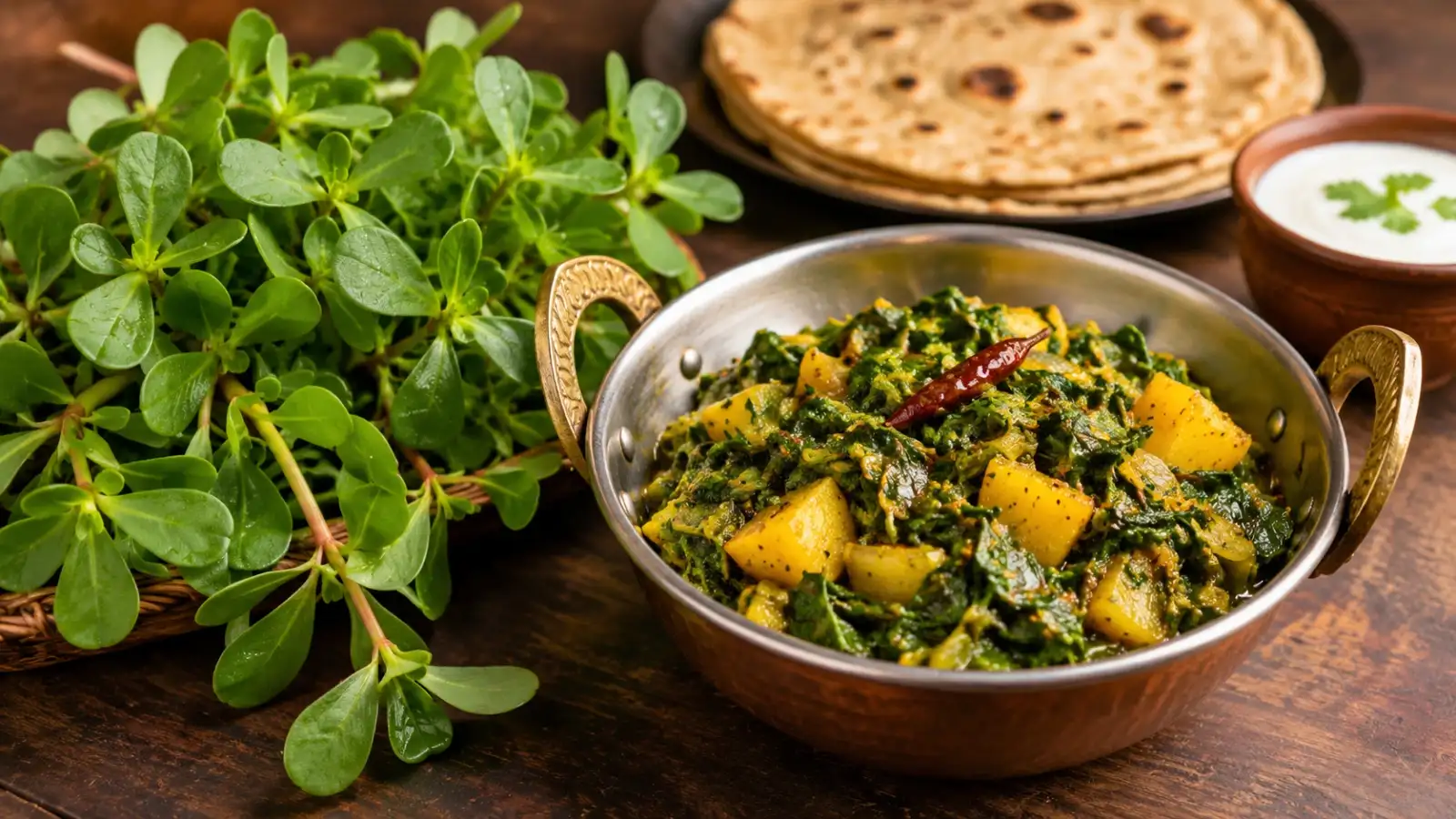
What Is Kulfa Saag?
Kulfa saag comes from the purslane plant, scientifically known as Portulaca oleracea. It is a low-growing leafy plant with small, fleshy leaves and tender stems. In India, it is commonly called kulfa, kulfa saag or lunia in different regions.
The leaves have a mildly sour and slightly salty taste, which gives them a distinctive flavour. Their soft texture makes them suitable for cooking with lentils, potatoes, spices and other everyday ingredients.
Why Is Kulfa Saag Popular in Traditional Indian Cooking ?
1. Its Distinctive Tangy Taste
One of the main reasons kulfa saag is valued in Indian kitchens is its naturally tangy flavour. Unlike many leafy vegetables with a mild or earthy taste, kulfa adds a slight sourness to dishes.
This flavour works particularly well with garlic, green chillies, cumin and traditional Indian spices. It can also balance the richness of lentils and other ingredients.
2. Easy to Find in Local Markets
Kulfa often grows naturally in fields, gardens and open spaces, particularly during warmer and rainy periods. It is also sold by local vegetable vendors in several parts of India.
Its seasonal availability makes it a familiar ingredient in households that prefer cooking with locally available greens.
3. Used in Different Regional Recipes
Kulfa is prepared in several ways across Indian households. Some cooks combine it with moong dal or other lentils, while others prepare it with potatoes, onions and spices.
The recipes differ from one region to another, reflecting local cooking habits and ingredient preferences. This flexibility has helped kulfa remain part of traditional home cooking.
4. Suitable for Simple Everyday Meals
Kulfa does not require complicated preparation. Once cleaned and chopped, it can be cooked with basic ingredients such as cumin, garlic, turmeric and green chillies.
It can be served with chapati, roti or rice, making it a convenient option for everyday lunches and dinners.
5. Its Traditional Association with Seasonal Eating
Many Indian households traditionally prepare different leafy vegetables according to their seasonal availability. Kulfa is one of the greens that appears in local markets during warmer parts of the year.
Cooking with seasonal produce allows families to enjoy ingredients when they are readily available and often more affordable.
How Is Kulfa Saag Used in Indian Cooking?
Kulfa can be included in several simple vegetarian preparations. Here are some popular ways to enjoy it:
Kulfa is known for containing several nutrients, including vitamins, minerals and dietary fibre. It also contains plant compounds with antioxidant properties. Its leaves are a source of vitamin A precursors, vitamin C and minerals such as potassium and magnesium.
Like other leafy vegetables, its nutritional value can contribute to a varied and balanced diet. However, its benefits depend on the quantity consumed and the overall eating pattern. People with a history of kidney stones related to oxalates may need to seek dietary advice because purslane contains oxalates.
How to Clean and Prepare Kulfa Saag
Fresh kulfa may contain soil, small roots or unwanted plants, so cleaning it properly is important.
Kulfa saag remains popular in traditional Indian cooking because of its distinctive flavour, seasonal availability and versatility. Whether prepared with lentils, potatoes or simple spices, it brings a mildly tangy taste to everyday meals. Its connection with regional food traditions also reflects the variety of leafy greens used in Indian kitchens. If you come across fresh kulfa at your local vegetable market, it is worth trying in a simple homemade sabzi or dal preparation.
What Is Kulfa Saag?
Kulfa saag comes from the purslane plant, scientifically known as Portulaca oleracea. It is a low-growing leafy plant with small, fleshy leaves and tender stems. In India, it is commonly called kulfa, kulfa saag or lunia in different regions.
The leaves have a mildly sour and slightly salty taste, which gives them a distinctive flavour. Their soft texture makes them suitable for cooking with lentils, potatoes, spices and other everyday ingredients.
Why Is Kulfa Saag Popular in Traditional Indian Cooking ?
1. Its Distinctive Tangy Taste
One of the main reasons kulfa saag is valued in Indian kitchens is its naturally tangy flavour. Unlike many leafy vegetables with a mild or earthy taste, kulfa adds a slight sourness to dishes.
This flavour works particularly well with garlic, green chillies, cumin and traditional Indian spices. It can also balance the richness of lentils and other ingredients.
2. Easy to Find in Local Markets
Kulfa often grows naturally in fields, gardens and open spaces, particularly during warmer and rainy periods. It is also sold by local vegetable vendors in several parts of India.
Its seasonal availability makes it a familiar ingredient in households that prefer cooking with locally available greens.
3. Used in Different Regional Recipes
Kulfa is prepared in several ways across Indian households. Some cooks combine it with moong dal or other lentils, while others prepare it with potatoes, onions and spices.
The recipes differ from one region to another, reflecting local cooking habits and ingredient preferences. This flexibility has helped kulfa remain part of traditional home cooking.
4. Suitable for Simple Everyday Meals
Kulfa does not require complicated preparation. Once cleaned and chopped, it can be cooked with basic ingredients such as cumin, garlic, turmeric and green chillies.
It can be served with chapati, roti or rice, making it a convenient option for everyday lunches and dinners.
5. Its Traditional Association with Seasonal Eating
Many Indian households traditionally prepare different leafy vegetables according to their seasonal availability. Kulfa is one of the greens that appears in local markets during warmer parts of the year.
Cooking with seasonal produce allows families to enjoy ingredients when they are readily available and often more affordable.
How Is Kulfa Saag Used in Indian Cooking?
Kulfa can be included in several simple vegetarian preparations. Here are some popular ways to enjoy it:
- Kulfa with moong dal: Cook chopped kulfa with soaked moong dal, turmeric, cumin and garlic for a comforting dish.
- Aloo kulfa : Combine the greens with diced potatoes, onions and everyday spices for a flavourful dry preparation.
- Kulfa sabzi : Sauté chopped kulfa with garlic, green chillies, cumin and turmeric for a simple side dish.
- Kulfa with lentils: Add it to cooked masoor or toor dal to create a thicker, tangy preparation.
- Kulfa paratha filling: Cook the leaves with spices, allow the mixture to cool and use it as a filling for homemade parathas.
Kulfa is known for containing several nutrients, including vitamins, minerals and dietary fibre. It also contains plant compounds with antioxidant properties. Its leaves are a source of vitamin A precursors, vitamin C and minerals such as potassium and magnesium.
Like other leafy vegetables, its nutritional value can contribute to a varied and balanced diet. However, its benefits depend on the quantity consumed and the overall eating pattern. People with a history of kidney stones related to oxalates may need to seek dietary advice because purslane contains oxalates.
How to Clean and Prepare Kulfa Saag
Fresh kulfa may contain soil, small roots or unwanted plants, so cleaning it properly is important.
- Separate the tender leaves and stems from thick or damaged portions.
- Remove roots and discard yellow or wilted leaves.
- Wash the greens thoroughly in a large bowl of clean water.
- Repeat washing until the water remains clear.
- Drain the excess water and chop the leaves and tender stems before cooking.
Kulfa saag remains popular in traditional Indian cooking because of its distinctive flavour, seasonal availability and versatility. Whether prepared with lentils, potatoes or simple spices, it brings a mildly tangy taste to everyday meals. Its connection with regional food traditions also reflects the variety of leafy greens used in Indian kitchens. If you come across fresh kulfa at your local vegetable market, it is worth trying in a simple homemade sabzi or dal preparation.
Next Story