
Why Is the Rann of Kutch White? The Fascinating Science Explained

At first glance, the Great Rann of Kutch can look like an enormous sheet of snow stretching towards the horizon. There are no traditional sand dunes covering the landscape and, during the dry season, very little vegetation breaks the seemingly endless white surface. This unusual scenery has made Kutch one of India's most distinctive landscapes.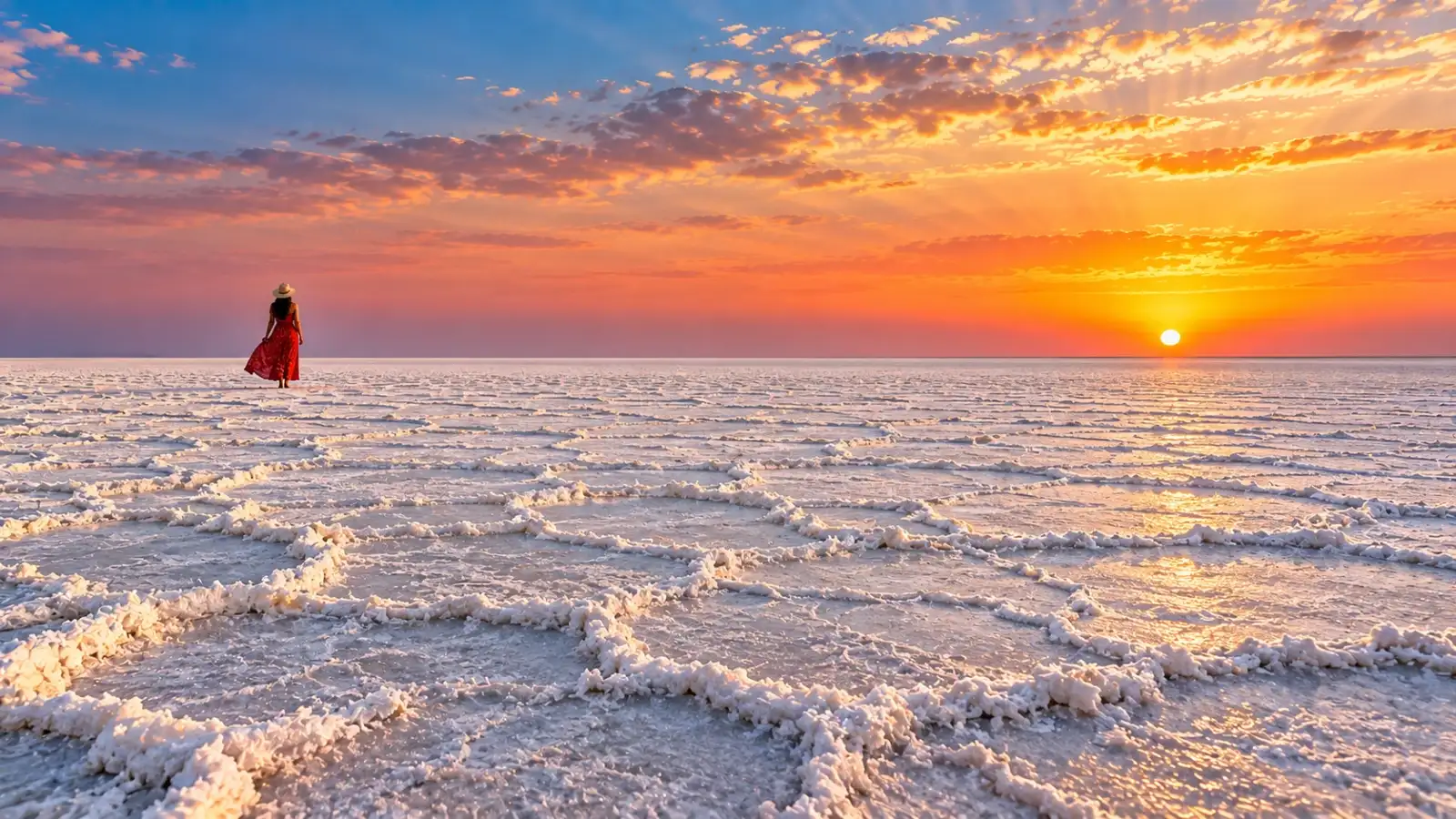
But the Rann is not actually a conventional desert. It is a vast seasonal salt marsh that changes dramatically throughout the year. During the monsoon, large parts of the region become covered with shallow water. As the water gradually disappears, salt is left behind on the ground, creating the brilliant white surface that travellers associate with the White Rann. Gujarat Tourism describes the Great Rann as a seasonal marsh during the monsoon that becomes a salt desert during the dry months.
Over time, sedimentation, tectonic activity and changes in water flow helped create the unusual low-lying terrain that exists today. Gujarat Tourism describes the Great Rann as an area that was once a shallow part of the Arabian Sea before geological changes transformed it into a seasonal marsh and, later, a salt desert during dry periods.
This history explains why the Rann does not behave like a conventional sandy desert. Its landscape is strongly influenced by water, salt and seasonal changes.
During the monsoon, rainwater and water flowing into the low-lying Rann spread across large sections of the landscape. Parts of the region can remain submerged or marshy for months. When the dry season arrives, intense heat causes much of this water to evaporate.
Salt and other dissolved minerals cannot evaporate along with the water. They remain behind on the surface and gradually form a layer of salt crystals. As this process continues across the flat landscape, the ground develops its characteristic pale or brilliant white appearance.
Gujarat Tourism notes that the Rann fills with water during the monsoon and dries into a salty landscape during the hotter months. The Kutch Desert Wildlife Sanctuary similarly describes the area as a seasonal saline wetland that dries after October and November, leaving behind a saline desert.
During the monsoon, the low-lying Rann can become a huge shallow wetland. Water spreads across the salt flats, transforming the landscape into something that looks very different from the famous white desert seen in photographs.
After the water recedes and evaporation increases, the salt crust gradually develops. By the cooler, drier months, large expanses of the Rann can once again appear white and almost completely dry. Gujarat Tourism describes the Great Rann as a seasonal marsh during the monsoon and a salt desert for the remainder of the year.
This seasonal transformation is one of the most fascinating things about Kutch. The same landscape can look like a wetland during one part of the year and an enormous salt plain during another.
Because the landscape has very little elevation difference across enormous distances, water can spread across wide areas rather than being confined to a conventional river channel. When this water evaporates, the dissolved salts can be deposited across broad sections of the exposed surface.
The result is a landscape that can appear remarkably uniform from a distance. There may be cracks, irregular patches and variations in the salt crust when viewed closely, but from a high viewpoint or across the horizon, the surface can appear almost perfectly flat and white.
Kalo Dungar, the highest point in Kutch, provides one of the better vantage points for seeing the enormous scale of the Rann. Gujarat Tourism notes that the landscape visible from the hill changes in appearance as the day progresses.
Fresh or relatively clean salt crystals reflect a large amount of incoming light. Under strong sunlight, the extensive salt-covered ground can therefore appear exceptionally bright. The effect becomes particularly striking because there are few tall trees or structures interrupting the horizon.
At sunrise and sunset, the colour changes as the angle of sunlight changes. The same white surface can take on warmer shades before becoming pale again as daylight fades.
Moonlight can create another dramatic effect. Gujarat Tourism specifically describes the salt-covered plains as particularly striking during winter full-moon nights, when the white surface reflects the moonlight.
Most ordinary plants cannot tolerate highly saline conditions. Combined with the seasonal flooding and long dry periods, this creates a difficult environment for conventional vegetation.
However, that does not mean the Rann is lifeless. The wider Kutch landscape supports a surprising variety of wildlife and birds, with different habitats appearing across the salt flats, wetlands, grasslands and surrounding scrub.
The Kutch Desert Wildlife Sanctuary, for example, supports flamingoes, chinkara, nilgai, foxes, hyenas and numerous resident and migratory birds.
The wider Kutch region is also home to the Little Rann of Kutch , where the Wild Ass Sanctuary protects the Indian wild ass along with a variety of birds and other wildlife. Gujarat Tourism describes the Little Rann as a salt-desert landscape that changes significantly between monsoon and dry periods.
Chhari Dhand is another example of how quickly the landscape can change. Located near the Banni grasslands and salt flats, the seasonal wetland attracts numerous migratory birds during suitable periods.
This unusual combination is connected to the region's geology and its position between the Arabian Sea and the semi-arid landscapes of western India. Seasonal rainfall, evaporation, sedimentation and sea influence all contribute to the changing character of the area.
The result is a landscape where seemingly opposite environments exist close together. A vast white salt plain can give way to grassland, while a little further away there may be hills, villages or coastal habitats.
As the water disappears, salt remains behind. Repeated evaporation can leave increasingly extensive salt deposits across the surface, eventually creating the familiar white landscape.
The Kutch Desert Wildlife Sanctuary notes that the seasonal saline wetland dries after October and November, turning the area into a saline desert.
This is why the dry season is so closely associated with photographs of the White Rann.
With very few tall structures or trees across the central salt flats, there are limited visual reference points. The horizon can therefore appear extremely distant, making it difficult to judge the actual size and distance of objects.
This creates an unusual visual experience. A person standing on the salt flats may appear tiny against the landscape, while the boundary between the ground and sky can seem to disappear in certain conditions.
The effect is particularly noticeable from elevated viewpoints such as Kalo Dungar, where the broad expanse of the Rann becomes easier to appreciate.
The annual Rann Utsav has also helped bring attention to Kutch's crafts, music, food and cultural traditions. Gujarat Tourism describes the festival as an event showcasing the region's art, crafts, music, dance, people and natural environment.
So, the famous white appearance is only one part of the story. Beneath that bright salt crust is a landscape shaped by ancient geological changes, seasonal water, intense evaporation and a surprisingly rich ecosystem.
The minerals dissolved in that water remain behind, with salt forming a widespread crust across the exposed ground. Sunlight then reflects from the crystals, producing the striking white appearance that has made the Rann famous.
What looks like an endless white desert is therefore actually a landscape in constant seasonal transition. Its whiteness is not permanent, and its apparent emptiness hides a complex relationship between geology, water, climate, salt and wildlife.
But the Rann is not actually a conventional desert. It is a vast seasonal salt marsh that changes dramatically throughout the year. During the monsoon, large parts of the region become covered with shallow water. As the water gradually disappears, salt is left behind on the ground, creating the brilliant white surface that travellers associate with the White Rann. Gujarat Tourism describes the Great Rann as a seasonal marsh during the monsoon that becomes a salt desert during the dry months.
The Rann Was Once Connected to the Sea
The story of Kutch's white landscape begins much further back in geological history. The Rann was once associated with the shallow waters of the Arabian Sea, but geological changes gradually altered the landscape and closed its direct connection with the sea.Over time, sedimentation, tectonic activity and changes in water flow helped create the unusual low-lying terrain that exists today. Gujarat Tourism describes the Great Rann as an area that was once a shallow part of the Arabian Sea before geological changes transformed it into a seasonal marsh and, later, a salt desert during dry periods.
This history explains why the Rann does not behave like a conventional sandy desert. Its landscape is strongly influenced by water, salt and seasonal changes.
Why Does the Ground Turn White?
The answer is salt.During the monsoon, rainwater and water flowing into the low-lying Rann spread across large sections of the landscape. Parts of the region can remain submerged or marshy for months. When the dry season arrives, intense heat causes much of this water to evaporate.
Salt and other dissolved minerals cannot evaporate along with the water. They remain behind on the surface and gradually form a layer of salt crystals. As this process continues across the flat landscape, the ground develops its characteristic pale or brilliant white appearance.
Gujarat Tourism notes that the Rann fills with water during the monsoon and dries into a salty landscape during the hotter months. The Kutch Desert Wildlife Sanctuary similarly describes the area as a seasonal saline wetland that dries after October and November, leaving behind a saline desert.
It Is Not White All Year Round
One of the biggest misconceptions about the White Rann is that it remains white throughout the year. In reality, its appearance changes substantially with the seasons.During the monsoon, the low-lying Rann can become a huge shallow wetland. Water spreads across the salt flats, transforming the landscape into something that looks very different from the famous white desert seen in photographs.
After the water recedes and evaporation increases, the salt crust gradually develops. By the cooler, drier months, large expanses of the Rann can once again appear white and almost completely dry. Gujarat Tourism describes the Great Rann as a seasonal marsh during the monsoon and a salt desert for the remainder of the year.
This seasonal transformation is one of the most fascinating things about Kutch. The same landscape can look like a wetland during one part of the year and an enormous salt plain during another.
Why Is the Salt So Evenly Spread?
The Rann's extremely flat terrain plays an important role.Because the landscape has very little elevation difference across enormous distances, water can spread across wide areas rather than being confined to a conventional river channel. When this water evaporates, the dissolved salts can be deposited across broad sections of the exposed surface.
The result is a landscape that can appear remarkably uniform from a distance. There may be cracks, irregular patches and variations in the salt crust when viewed closely, but from a high viewpoint or across the horizon, the surface can appear almost perfectly flat and white.
Kalo Dungar, the highest point in Kutch, provides one of the better vantage points for seeing the enormous scale of the Rann. Gujarat Tourism notes that the landscape visible from the hill changes in appearance as the day progresses.
Why Does the White Rann Look Even Brighter?
The colour of the landscape is also affected by sunlight.Fresh or relatively clean salt crystals reflect a large amount of incoming light. Under strong sunlight, the extensive salt-covered ground can therefore appear exceptionally bright. The effect becomes particularly striking because there are few tall trees or structures interrupting the horizon.
At sunrise and sunset, the colour changes as the angle of sunlight changes. The same white surface can take on warmer shades before becoming pale again as daylight fades.
Moonlight can create another dramatic effect. Gujarat Tourism specifically describes the salt-covered plains as particularly striking during winter full-moon nights, when the white surface reflects the moonlight.
Why Is There So Little Vegetation?
The extreme salinity of the soil is one of the major reasons the landscape appears so barren.Most ordinary plants cannot tolerate highly saline conditions. Combined with the seasonal flooding and long dry periods, this creates a difficult environment for conventional vegetation.
However, that does not mean the Rann is lifeless. The wider Kutch landscape supports a surprising variety of wildlife and birds, with different habitats appearing across the salt flats, wetlands, grasslands and surrounding scrub.
The Kutch Desert Wildlife Sanctuary, for example, supports flamingoes, chinkara, nilgai, foxes, hyenas and numerous resident and migratory birds.
The White Desert Is Also a Wildlife Landscape
The apparent emptiness of the Rann can be misleading. Seasonal water creates important wetland habitats for birds, while the surrounding grasslands and scrub support mammals adapted to the region's harsh conditions.The wider Kutch region is also home to the Little Rann of Kutch , where the Wild Ass Sanctuary protects the Indian wild ass along with a variety of birds and other wildlife. Gujarat Tourism describes the Little Rann as a salt-desert landscape that changes significantly between monsoon and dry periods.
Chhari Dhand is another example of how quickly the landscape can change. Located near the Banni grasslands and salt flats, the seasonal wetland attracts numerous migratory birds during suitable periods.
Why Does Kutch Have Such a Unique Landscape?
Kutch is not defined by a single type of terrain. Within the broader region, travellers can encounter salt flats, wetlands, grasslands, scrub, rocky hills and coastal environments.This unusual combination is connected to the region's geology and its position between the Arabian Sea and the semi-arid landscapes of western India. Seasonal rainfall, evaporation, sedimentation and sea influence all contribute to the changing character of the area.
The result is a landscape where seemingly opposite environments exist close together. A vast white salt plain can give way to grassland, while a little further away there may be hills, villages or coastal habitats.
What Happens to the Rann After the Monsoon?
Once the monsoon begins to weaken, temperatures and evaporation gradually start changing the landscape again. Water levels fall and exposed sections of the Rann begin drying out.As the water disappears, salt remains behind. Repeated evaporation can leave increasingly extensive salt deposits across the surface, eventually creating the familiar white landscape.
The Kutch Desert Wildlife Sanctuary notes that the seasonal saline wetland dries after October and November, turning the area into a saline desert.
This is why the dry season is so closely associated with photographs of the White Rann.
Why Does Kutch Look Almost Endless?
The enormous scale of the landscape adds to the illusion.With very few tall structures or trees across the central salt flats, there are limited visual reference points. The horizon can therefore appear extremely distant, making it difficult to judge the actual size and distance of objects.
This creates an unusual visual experience. A person standing on the salt flats may appear tiny against the landscape, while the boundary between the ground and sky can seem to disappear in certain conditions.
The effect is particularly noticeable from elevated viewpoints such as Kalo Dungar, where the broad expanse of the Rann becomes easier to appreciate.
More Than Just a White Desert
The White Rann is perhaps the most famous visual symbol of Kutch, but the region's identity extends far beyond its salt flats. The surrounding communities are known for embroidery, textiles, leatherwork, pottery and other traditional crafts, while villages across Kutch contribute to the region's distinctive cultural landscape.The annual Rann Utsav has also helped bring attention to Kutch's crafts, music, food and cultural traditions. Gujarat Tourism describes the festival as an event showcasing the region's art, crafts, music, dance, people and natural environment.
So, the famous white appearance is only one part of the story. Beneath that bright salt crust is a landscape shaped by ancient geological changes, seasonal water, intense evaporation and a surprisingly rich ecosystem.
The Science Behind Kutch's White Landscape
The simplest way to understand the White Rann is to think of it as a seasonal salt marsh rather than a conventional desert. Water arrives during the monsoon, spreads across the low-lying terrain and eventually evaporates during the dry season.The minerals dissolved in that water remain behind, with salt forming a widespread crust across the exposed ground. Sunlight then reflects from the crystals, producing the striking white appearance that has made the Rann famous.
What looks like an endless white desert is therefore actually a landscape in constant seasonal transition. Its whiteness is not permanent, and its apparent emptiness hides a complex relationship between geology, water, climate, salt and wildlife.
Next Story