
What Makes Lepakshi Temple One of India's Most Fascinating Architectural Wonders?

Lepakshi, a historic village in Andhra Pradesh, is widely known for its remarkable temple architecture, intricate stone carvings and fascinating legends. Located in the Anantapur region, it attracts history enthusiasts, architecture lovers and travellers interested in India's cultural heritage. The village is particularly famous for the Veerabhadra Temple, a magnificent example of the Vijayanagara architectural style. Its hanging pillar, detailed sculptures, colourful ceiling paintings and impressive stone structures make it different from many other temple destinations. Beyond its architectural beauty, Lepakshi also has an interesting connection with the Ramayana, adding another layer of cultural significance to this historic place.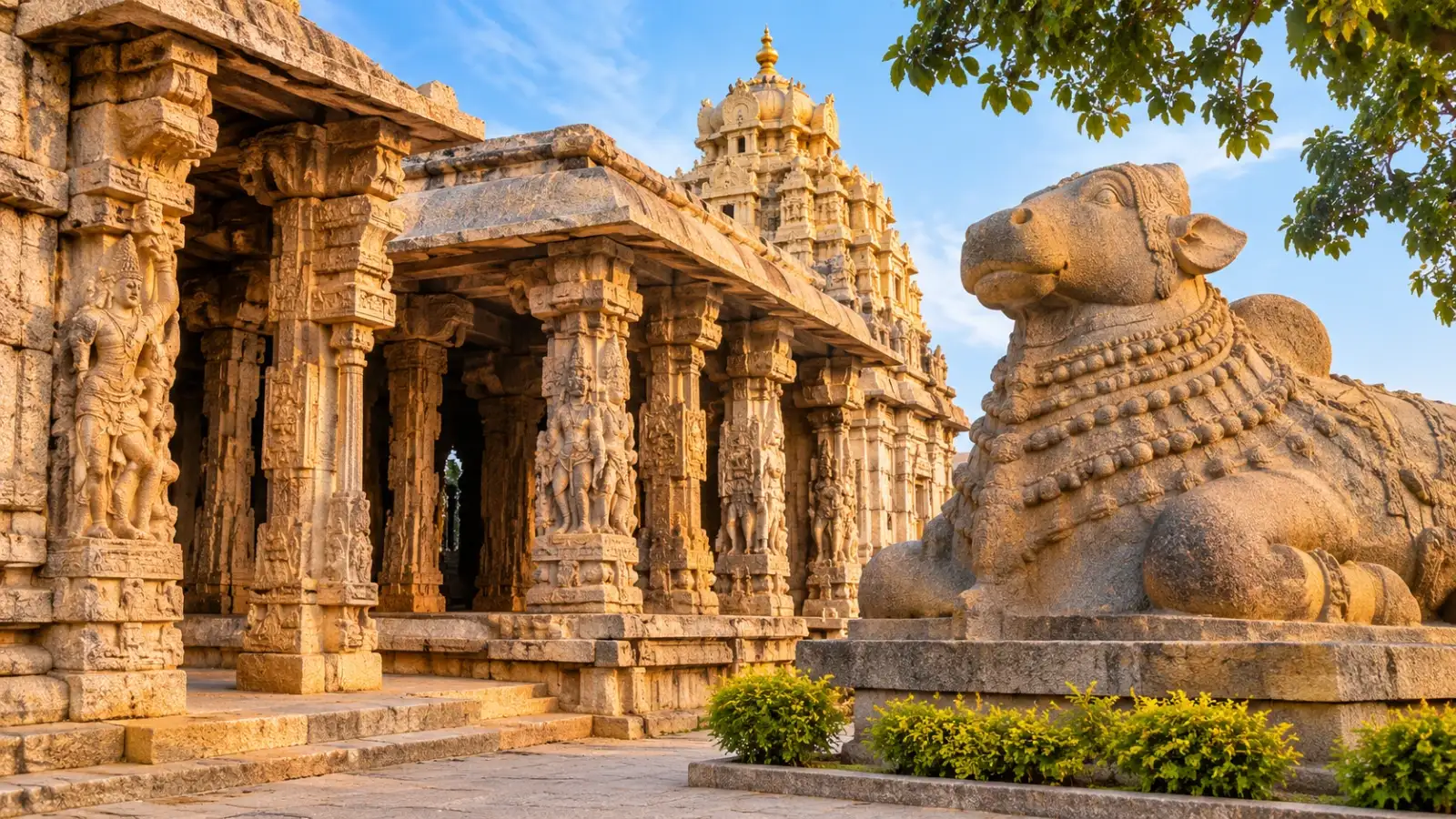
The temple complex features impressive entrances, carved pillars, open courtyards and detailed stonework. Its architectural design reflects the artistic achievements of the Vijayanagara period, when temple construction and sculpture reached remarkable levels of craftsmanship.
Visitors often notice that a thin piece of cloth or paper can be passed beneath it. The pillar has become a popular attraction because of its unusual construction and the questions it raises about the engineering techniques used by ancient builders.
It is best appreciated as part of the temple's wider architectural design rather than treated simply as a mystery or tourist trick.
Many carvings display remarkable attention to detail, from the ornaments worn by sculpted figures to the expressions and decorative elements. These works provide insight into the artistic traditions and religious themes that influenced Vijayanagara-era temple architecture.
The paintings are known for their rich colours, elaborate compositions and decorative patterns. Some of the surviving artwork is considered an important example of Vijayanagara-era mural painting, making the temple valuable not only for its architecture but also for its artistic heritage.
Its size and detailed decoration make it one of the most recognisable landmarks in the area. The statue is positioned facing the direction of the main temple, creating a significant connection between the two structures.
The name Lepakshi is traditionally linked to the Telugu expression meaning 'rise, bird', believed to refer to Lord Rama addressing the injured Jatayu. Although this is a religious legend rather than an established historical explanation, it adds cultural significance to the destination.
The structure is often described as unfinished, adding another point of interest for visitors. Its detailed columns and open layout demonstrate the scale of artistic planning and craftsmanship associated with the temple.
The temple complex brings together different artistic elements, including stone construction, carved sculptures and painted ceilings. Exploring these features helps visitors understand how religion, royal patronage and artistic expression influenced temple-building traditions in South India.
Lepakshi can be visited as a day trip from Bengaluru, which is approximately 120 kilometres away by road. Travellers should check local timings and any restrictions before planning their visit.
Lepakshi is a fascinating destination for anyone interested in India's temple architecture and artistic heritage. Its hanging pillar, detailed stone carvings, ceiling paintings and enormous Nandi statue make it particularly distinctive. The connection with the Ramayana and the legacy of the Vijayanagara Empire add further cultural depth to the experience. Whether you are an architecture enthusiast, a history lover or a curious traveller, Lepakshi offers an opportunity to explore an important chapter of South India's heritage.
1. Veerabhadra Temple Showcases Vijayanagara Architecture
The Veerabhadra Temple is the most prominent attraction in Lepakshi. Built during the sixteenth century under the Vijayanagara Empire, it is dedicated to Lord Veerabhadra, a fierce form of Lord Shiva.The temple complex features impressive entrances, carved pillars, open courtyards and detailed stonework. Its architectural design reflects the artistic achievements of the Vijayanagara period, when temple construction and sculpture reached remarkable levels of craftsmanship.
2. The Famous Hanging Pillar Attracts Visitors
One of the most talked-about features of the Veerabhadra Temple is its hanging pillar, which appears to leave a small gap between its base and the floor.Visitors often notice that a thin piece of cloth or paper can be passed beneath it. The pillar has become a popular attraction because of its unusual construction and the questions it raises about the engineering techniques used by ancient builders.
It is best appreciated as part of the temple's wider architectural design rather than treated simply as a mystery or tourist trick.
3. Intricate Stone Carvings Reflect Ancient Craftsmanship
Lepakshi is particularly admired for its detailed stone sculptures and decorative pillars. The temple walls and columns feature figures of deities, mythological characters, animals and floral patterns.Many carvings display remarkable attention to detail, from the ornaments worn by sculpted figures to the expressions and decorative elements. These works provide insight into the artistic traditions and religious themes that influenced Vijayanagara-era temple architecture.
4. The Temple Has Beautiful Ceiling Paintings
Another distinctive feature of Lepakshi is its collection of traditional ceiling paintings. The temple's murals depict mythological stories, divine figures and scenes associated with Hindu traditions.The paintings are known for their rich colours, elaborate compositions and decorative patterns. Some of the surviving artwork is considered an important example of Vijayanagara-era mural painting, making the temple valuable not only for its architecture but also for its artistic heritage.
5. The Monolithic Nandi Is a Major Attraction
Located a short distance from the main temple complex, the enormous Nandi statue is another major reason why Lepakshi attracts visitors. Carved from a single granite block, this impressive sculpture represents Nandi, the sacred bull associated with Lord Shiva.Its size and detailed decoration make it one of the most recognisable landmarks in the area. The statue is positioned facing the direction of the main temple, creating a significant connection between the two structures.
6. Lepakshi Is Connected With the Ramayana
Lepakshi also holds an important place in local religious traditions because of its association with the Ramayana. According to a popular legend, the village is connected with Jatayu, the mythical bird who tried to rescue Sita when Ravana abducted her.The name Lepakshi is traditionally linked to the Telugu expression meaning 'rise, bird', believed to refer to Lord Rama addressing the injured Jatayu. Although this is a religious legend rather than an established historical explanation, it adds cultural significance to the destination.
You may also like
- Advika Kasliwal began 'Planting Hopes' as a home-gardening effort during lockdown; it has reached more than 5,000 people, supported 800 low-income families, run 50 workshops and taken nutrition education into 25 schools
- PPF Rules: If you are planning to withdraw money from your Public Provident Fund (PPF) account, avoid these common mistakes.
- Why heat won't kill these 3 kitchen pests? Here's what actually will!
- One small mistake could leave your PF account empty! Never share your UAN, OTP, or bank details with anyone—such an oversight could prove costly.
- What happens to your PF and pension when you change jobs? You don't need a new UAN—simply transfer your funds. Know about PF withdrawal rules.
7. The Kalyana Mandapa Displays Remarkable Design
The Kalyana Mandapa, or marriage hall, is one of the most interesting architectural sections of the temple complex. It contains numerous carved pillars featuring figures of gods, celestial beings and other decorative elements.The structure is often described as unfinished, adding another point of interest for visitors. Its detailed columns and open layout demonstrate the scale of artistic planning and craftsmanship associated with the temple.
8. Lepakshi Offers a Glimpse of the Vijayanagara Cultural Legacy
Lepakshi is more than a single temple attraction. It represents a wider cultural legacy associated with the Vijayanagara Empire, which supported architecture, sculpture, literature and religious art.The temple complex brings together different artistic elements, including stone construction, carved sculptures and painted ceilings. Exploring these features helps visitors understand how religion, royal patronage and artistic expression influenced temple-building traditions in South India.
Best Time to Visit Lepakshi
The months from October to February are generally suitable for visiting Lepakshi, as the weather is more comfortable for exploring the temple complex and nearby attractions. Summers can be quite hot in this part of Andhra Pradesh, making outdoor sightseeing less convenient.Lepakshi can be visited as a day trip from Bengaluru, which is approximately 120 kilometres away by road. Travellers should check local timings and any restrictions before planning their visit.
Lepakshi is a fascinating destination for anyone interested in India's temple architecture and artistic heritage. Its hanging pillar, detailed stone carvings, ceiling paintings and enormous Nandi statue make it particularly distinctive. The connection with the Ramayana and the legacy of the Vijayanagara Empire add further cultural depth to the experience. Whether you are an architecture enthusiast, a history lover or a curious traveller, Lepakshi offers an opportunity to explore an important chapter of South India's heritage.






Loving Newspoint? Download the app now
