
Why Even Lions Avoid Attacking Hippos

In the African wilderness, lions are widely recognised as fearless predators. Known as the kings of the savannah, they hunt a variety of animals with remarkable skill and coordination. However, there is one animal that even lions tend to avoid, the hippopotamus. Understanding why hippos are dangerous to lions reveals a fascinating story of strength, aggression, and survival in the wild.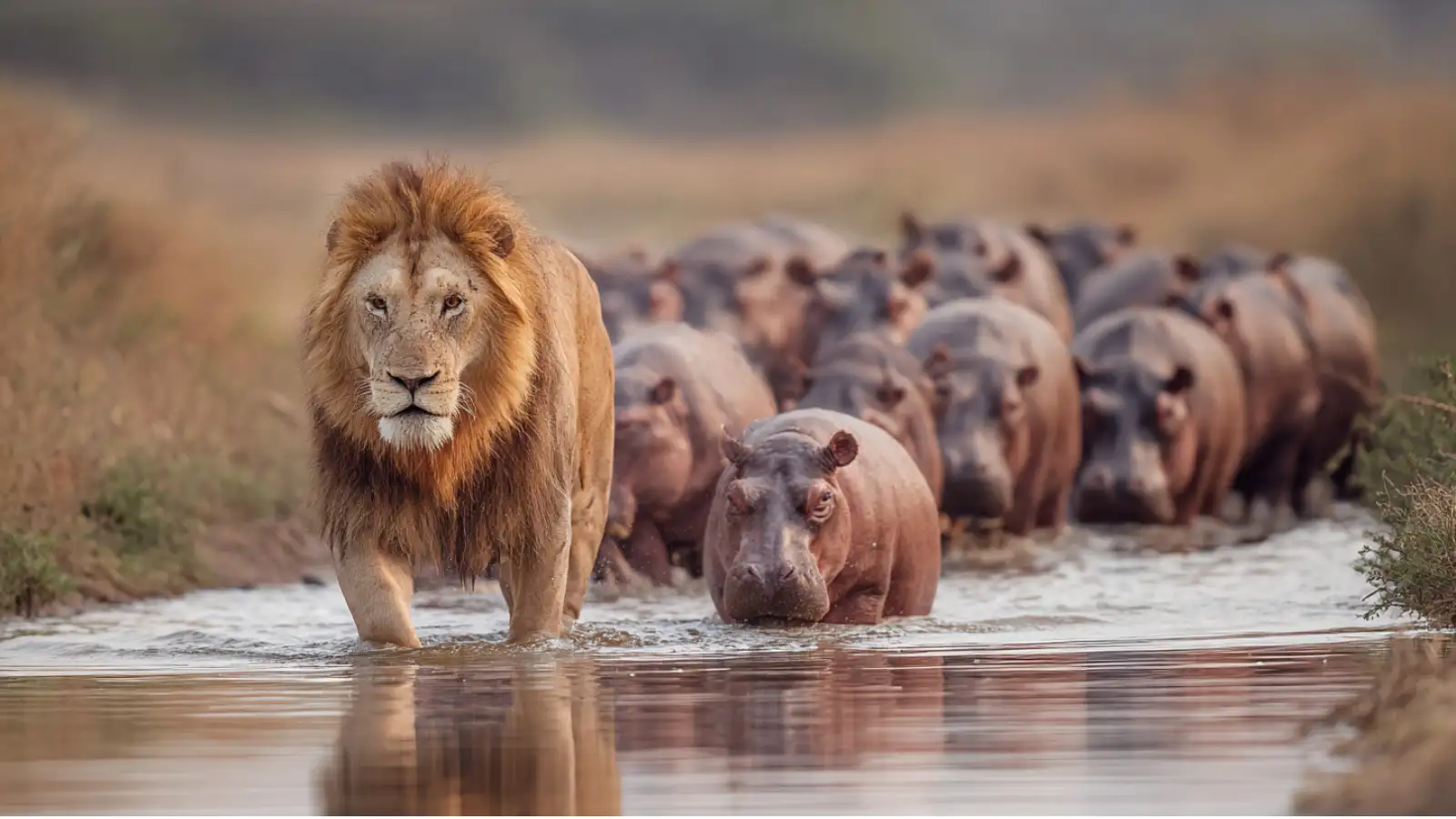
At first glance, hippos may not seem particularly threatening. They spend much of their time in water, appearing calm and slow-moving. Yet this impression is misleading. Hippos are incredibly powerful animals, weighing up to 1,500 kilograms or more. Their sheer size alone makes them a difficult target for lions. Unlike typical prey such as antelope or zebra, a full-grown hippo presents a formidable challenge that requires immense effort and risk.
One of the main reasons why lions avoid hippos is their aggressive nature. Hippos are highly territorial, especially in water. They are known to attack anything they perceive as a threat, including crocodiles, boats, and even other hippos. This aggression makes any encounter with lions unpredictable and dangerous. For lions, which rely on calculated hunting strategies, such unpredictability is a major disadvantage.
Read More: Why Animals Play Dead To Survive In The Wild
Another crucial factor is the hippo’s powerful bite. Hippos possess one of the strongest bite forces in the animal kingdom, capable of crushing bones with ease. Their large jaws and long tusks can inflict serious injuries or even kill a lion in a single strike. When considering why hippos are dangerous to lions, this physical weapon is a key reason. Lions typically prefer prey they can overpower with minimal risk, and a hippo does not fit that category.
The environment also plays an important role in this dynamic. Hippos spend most of their time in water, where they have a natural advantage. Lions, on the other hand, are not specialised for hunting in aquatic environments. Attempting to attack a hippo in water would put lions at a severe disadvantage, reducing their chances of success. Even on land, hippos can move surprisingly fast over short distances, further complicating any potential attack.
Interestingly, lions may occasionally target young or weak hippos, particularly if food is scarce. However, such attempts are rare and usually involve a coordinated effort by a pride. Even then, the risks remain high, as adult hippos often defend their young fiercely. This reinforces the idea that hippos are dangerous to lions and not worth the potential injury.
From an evolutionary perspective, lions have adapted to prioritise safety and efficiency in their hunts. Injuries can be fatal in the wild, as an injured lion may struggle to hunt or defend its territory. Therefore, avoiding high-risk prey like hippos is a practical survival strategy. This behaviour reflects the balance of power in ecosystems, where even top predators must make careful decisions.
In conclusion, the relationship between lions and hippos is a striking example of respect rather than rivalry. While lions dominate much of the savannah, they recognise the dangers posed by hippos. The combination of size, aggression, and strength ensures that hippos remain one of the few animals lions prefer to leave alone. This dynamic highlights the complexity of wildlife interactions and the importance of strategy in survival.
At first glance, hippos may not seem particularly threatening. They spend much of their time in water, appearing calm and slow-moving. Yet this impression is misleading. Hippos are incredibly powerful animals, weighing up to 1,500 kilograms or more. Their sheer size alone makes them a difficult target for lions. Unlike typical prey such as antelope or zebra, a full-grown hippo presents a formidable challenge that requires immense effort and risk.
One of the main reasons why lions avoid hippos is their aggressive nature. Hippos are highly territorial, especially in water. They are known to attack anything they perceive as a threat, including crocodiles, boats, and even other hippos. This aggression makes any encounter with lions unpredictable and dangerous. For lions, which rely on calculated hunting strategies, such unpredictability is a major disadvantage.
Read More: Why Animals Play Dead To Survive In The Wild
Another crucial factor is the hippo’s powerful bite. Hippos possess one of the strongest bite forces in the animal kingdom, capable of crushing bones with ease. Their large jaws and long tusks can inflict serious injuries or even kill a lion in a single strike. When considering why hippos are dangerous to lions, this physical weapon is a key reason. Lions typically prefer prey they can overpower with minimal risk, and a hippo does not fit that category.
The environment also plays an important role in this dynamic. Hippos spend most of their time in water, where they have a natural advantage. Lions, on the other hand, are not specialised for hunting in aquatic environments. Attempting to attack a hippo in water would put lions at a severe disadvantage, reducing their chances of success. Even on land, hippos can move surprisingly fast over short distances, further complicating any potential attack.
Interestingly, lions may occasionally target young or weak hippos, particularly if food is scarce. However, such attempts are rare and usually involve a coordinated effort by a pride. Even then, the risks remain high, as adult hippos often defend their young fiercely. This reinforces the idea that hippos are dangerous to lions and not worth the potential injury.
From an evolutionary perspective, lions have adapted to prioritise safety and efficiency in their hunts. Injuries can be fatal in the wild, as an injured lion may struggle to hunt or defend its territory. Therefore, avoiding high-risk prey like hippos is a practical survival strategy. This behaviour reflects the balance of power in ecosystems, where even top predators must make careful decisions.
In conclusion, the relationship between lions and hippos is a striking example of respect rather than rivalry. While lions dominate much of the savannah, they recognise the dangers posed by hippos. The combination of size, aggression, and strength ensures that hippos remain one of the few animals lions prefer to leave alone. This dynamic highlights the complexity of wildlife interactions and the importance of strategy in survival.
Next Story