
Why Is the Lotus So Special in Indian Traditions? Discover Its Deep Cultural Meaning

The lotus is more than a beautiful flower in India. Its presence in temples, religious artwork, festivals and traditional ceremonies reflects a deeper cultural meaning. Known for growing in muddy water while keeping its petals clean, the flower is often associated with purity, spiritual growth and inner strength. It has been admired for centuries and holds an important place in several Indian religious traditions. From its connection with Hindu deities to its significance in Buddhist teachings, the lotus continues to represent values that have shaped Indian culture, beliefs and artistic heritage.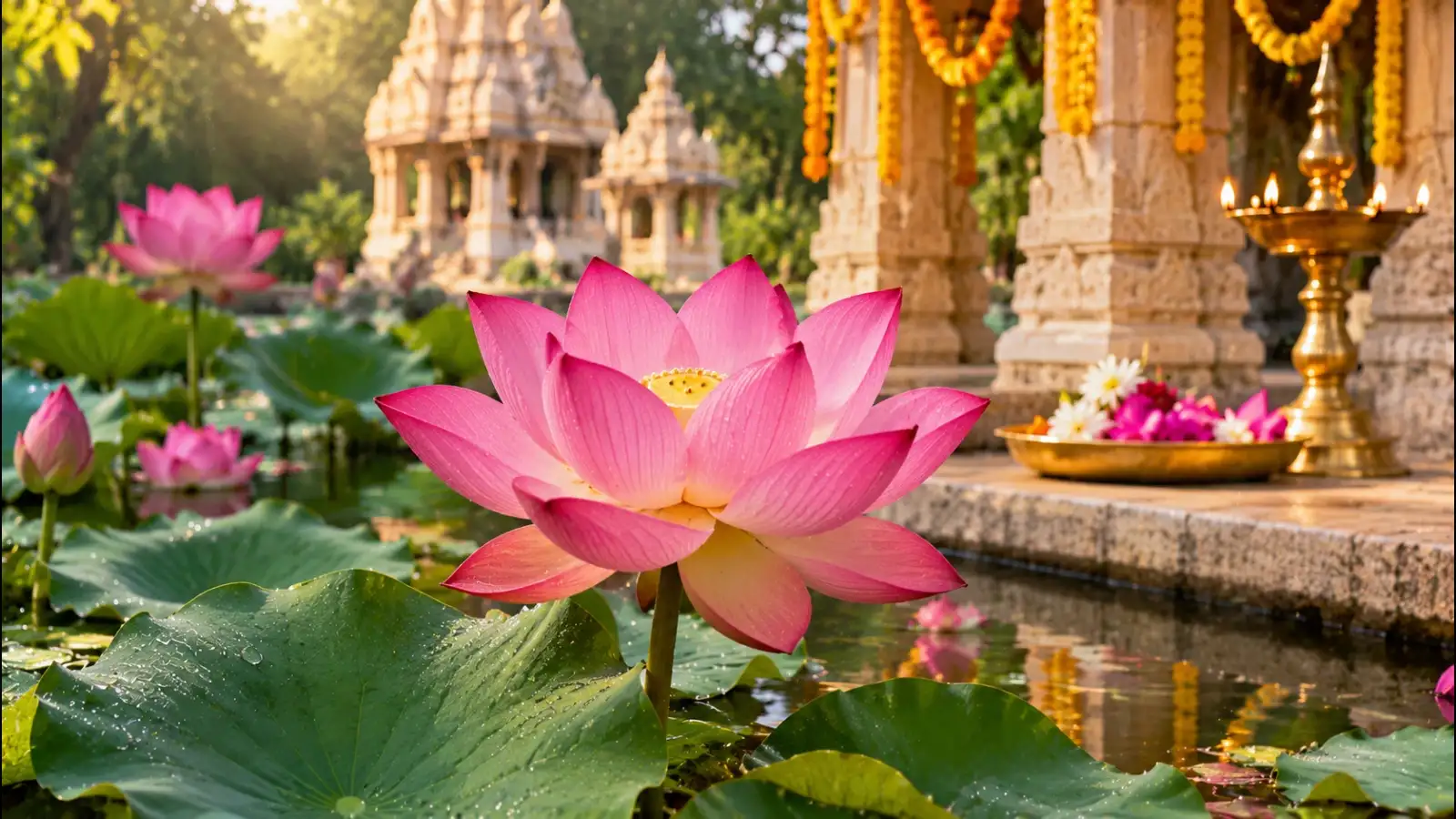
In Indian traditions, the lotus is also associated with spiritual development. Its journey from the muddy bottom of a pond towards the sunlight is often compared with a person's path towards knowledge, awareness and self-realisation.
Goddess Saraswati, associated with knowledge, wisdom and learning, is also sometimes shown with a lotus. Lord Brahma is traditionally depicted seated on a lotus emerging from Lord Vishnu's navel. These images have made the flower an important element in Hindu religious art and storytelling.
Different lotus colours carry symbolic meanings in Buddhist traditions. The white lotus is often associated with purity, while the pink lotus is linked with the Buddha and spiritual significance. The blue lotus is commonly connected with wisdom and knowledge.
The flower is also used in rangoli designs, traditional paintings and festive decorations. Its symmetrical shape makes it a popular artistic element, while its cultural associations add meaning to its use.
During festivals such as Diwali, lotus motifs often appear in decorations, artwork and worship arrangements. The flower is also associated with the idea of inviting prosperity and positive energy into the home.
The lotus is special in Indian traditions because it brings together natural beauty, spiritual symbolism and cultural history. Its ability to bloom in muddy water has made it a lasting reminder of purity, resilience and personal growth. Whether seen in a temple, a painting or a festival decoration, the lotus continues to hold a meaningful place in India's cultural identity.
A Symbol of Purity and Spiritual Growth
One of the most recognised meanings of the lotus is purity. The flower grows in ponds and muddy water, yet its petals remain remarkably clean. This quality has made it a symbol of maintaining inner goodness despite difficult surroundings.In Indian traditions, the lotus is also associated with spiritual development. Its journey from the muddy bottom of a pond towards the sunlight is often compared with a person's path towards knowledge, awareness and self-realisation.
Its Connection With Hindu Deities
The lotus has a strong presence in Hindu religious traditions. Goddess Lakshmi, who represents prosperity, abundance and good fortune, is commonly depicted seated or standing on a lotus. The flower reflects purity, beauty and spiritual abundance.Goddess Saraswati, associated with knowledge, wisdom and learning, is also sometimes shown with a lotus. Lord Brahma is traditionally depicted seated on a lotus emerging from Lord Vishnu's navel. These images have made the flower an important element in Hindu religious art and storytelling.
Importance in Buddhism
The lotus also holds deep significance in Buddhism. It represents spiritual awakening, wisdom and the possibility of rising above worldly difficulties.Different lotus colours carry symbolic meanings in Buddhist traditions. The white lotus is often associated with purity, while the pink lotus is linked with the Buddha and spiritual significance. The blue lotus is commonly connected with wisdom and knowledge.
A Popular Flower in Indian Art and Architecture
The influence of the lotus can be seen across Indian architecture, sculptures, paintings and decorative designs. Lotus motifs appear on temple pillars, ceilings, doorways and carved stone structures.The flower is also used in rangoli designs, traditional paintings and festive decorations. Its symmetrical shape makes it a popular artistic element, while its cultural associations add meaning to its use.
The Lotus in Festivals and Everyday Rituals
Lotus flowers are used in several religious ceremonies and offerings across India. Devotees may offer them at temples or use them during prayers, particularly in rituals connected with Goddess Lakshmi.During festivals such as Diwali, lotus motifs often appear in decorations, artwork and worship arrangements. The flower is also associated with the idea of inviting prosperity and positive energy into the home.
The lotus is special in Indian traditions because it brings together natural beauty, spiritual symbolism and cultural history. Its ability to bloom in muddy water has made it a lasting reminder of purity, resilience and personal growth. Whether seen in a temple, a painting or a festival decoration, the lotus continues to hold a meaningful place in India's cultural identity.
Next Story