
Why Magpies, Bowerbirds and Other Birds Are Attracted to Shiny Objects

A brightly coloured bottle cap lying in a garden or a small piece of foil on a pavement may seem like rubbish to us. To certain birds, however, unusual objects can attract attention for reasons ranging from curiosity and courtship to nest-building. Stories about magpies stealing jewellery have helped popularise the idea that birds instinctively love shiny things, but the science is more complicated. Different species collect different materials, and their behaviour depends on their environment, breeding habits and individual preferences. Understanding why birds gather bright or unusual objects offers a fascinating glimpse into animal intelligence, natural selection and the unexpected ways wildlife responds to human environments.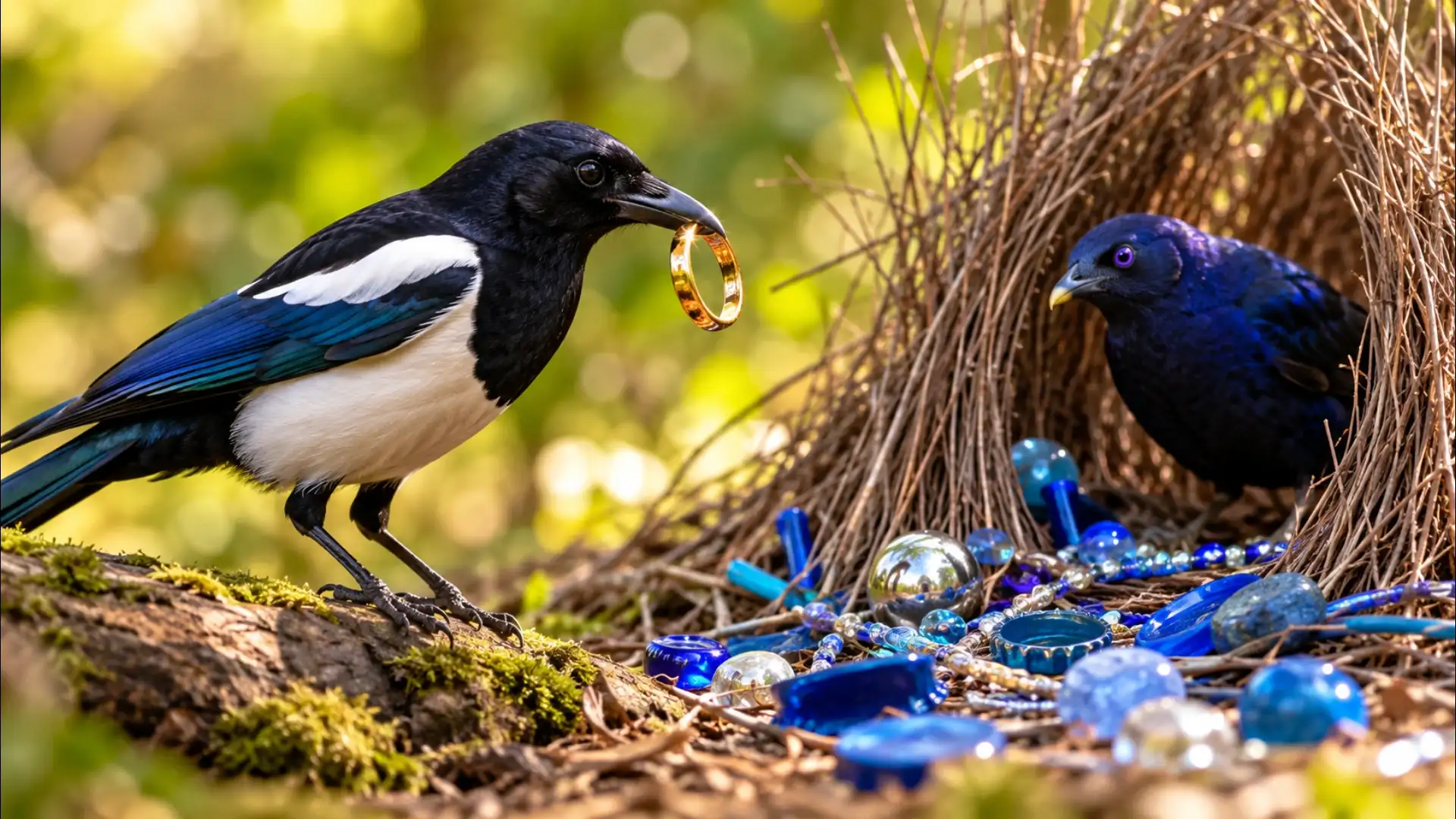
Magpies, for instance, have a reputation for collecting jewellery and other reflective objects. However, research has challenged the idea that these birds consistently prefer shiny items. In controlled observations, magpies have sometimes avoided unfamiliar objects rather than collecting them.
This suggests that curiosity and caution can be just as important as attraction. A bird may inspect a bright object because it is unfamiliar, not because it wants to take it away.
Depending on the species, these decorations may include berries, flowers, feathers, shells and brightly coloured pieces of plastic. The males arrange the objects around their bowers as part of a courtship display.
Females inspect these structures when choosing potential mates. The quality of the display can influence their decision, making the collection and arrangement of objects an important part of reproduction.
Interestingly, the bower itself is not the bird's nest. It is a display structure designed to attract a mate.
The importance of colour varies between species. Birds have visual systems that can detect wavelengths humans cannot see, including ultraviolet light. This means that an object's appearance to a bird may differ considerably from how it looks to us.
In courtship displays, carefully selected colours can help make a structure more noticeable. However, this does not mean every bird collecting a colourful item is trying to attract a mate.
Young birds may investigate unfamiliar objects while learning about their surroundings. Adult birds can also explore materials while searching for food or assessing potential nesting resources.
These behaviours should not automatically be interpreted as a preference for decoration. What appears unusual to a human observer may have a practical purpose, or it may simply be the result of exploration.
People can help by securing rubbish, avoiding loose synthetic nesting materials and keeping gardens free of hazardous debris. If nesting birds are present, it is best not to disturb their nests or remove materials while they are actively being used.
Birds do not collect bright or unusual objects for one universal reason. Some use colourful materials in courtship displays, others gather practical nesting supplies, and many simply investigate unfamiliar things. The famous image of a magpie stealing jewellery tells only a small part of the story. The real explanation is more interesting: bird behaviour reflects a combination of instinct, learning, visual perception and adaptation. The next time a bird examines an unusual object, it may be responding to its colour, its possible use or simply the opportunity to explore something new.
Not All Birds Collect Shiny Objects
The belief that all birds are attracted to glittering objects is a common misconception. Some species investigate unusual items, but many show little interest in shiny materials.Magpies, for instance, have a reputation for collecting jewellery and other reflective objects. However, research has challenged the idea that these birds consistently prefer shiny items. In controlled observations, magpies have sometimes avoided unfamiliar objects rather than collecting them.
This suggests that curiosity and caution can be just as important as attraction. A bird may inspect a bright object because it is unfamiliar, not because it wants to take it away.
Bowerbirds Use Colour to Attract Mates
One of the clearest examples of birds collecting unusual objects comes from bowerbirds, found in Australia and New Guinea. Male bowerbirds of several species build elaborate structures called bowers, decorating them with colourful natural materials and, in some cases, human-made items.Depending on the species, these decorations may include berries, flowers, feathers, shells and brightly coloured pieces of plastic. The males arrange the objects around their bowers as part of a courtship display.
Females inspect these structures when choosing potential mates. The quality of the display can influence their decision, making the collection and arrangement of objects an important part of reproduction.
Interestingly, the bower itself is not the bird's nest. It is a display structure designed to attract a mate.
Colour Can Matter More Than Shine
For some birds, colour and contrast may be more significant than reflectiveness. A vivid blue object, for example, may stand out against a background of leaves and soil.You may also like
- After seeing patients lose their sight while waiting for treatment, Surat doctor Bhavin Patel takes eye care to Gujarat's villages, with over 30,000 free surgeries and nearly 40 monthly screening camps
- How Elephants Grieve: What Their Mourning Rituals Reveal About Emotion
- Why You Keep Attracting People Who Are Not Sure About You
- Child Bedwetting: 5 Common Causes and Simple Ways Parents Can Help Their Kids Stay Dry at Night
- Understanding the Significance of Solah Shringar in Hindu Culture
The importance of colour varies between species. Birds have visual systems that can detect wavelengths humans cannot see, including ultraviolet light. This means that an object's appearance to a bird may differ considerably from how it looks to us.
In courtship displays, carefully selected colours can help make a structure more noticeable. However, this does not mean every bird collecting a colourful item is trying to attract a mate.
Nest-Building and Curiosity Also Play a Role
Birds collect materials for practical reasons, too. Twigs, grass, feathers, moss and other items help build or line nests. Some urban birds also incorporate pieces of string, fabric or plastic into their structures.Young birds may investigate unfamiliar objects while learning about their surroundings. Adult birds can also explore materials while searching for food or assessing potential nesting resources.
These behaviours should not automatically be interpreted as a preference for decoration. What appears unusual to a human observer may have a practical purpose, or it may simply be the result of exploration.
Why Human Rubbish Can Become a Problem
Urban environments offer birds a wide range of unfamiliar materials, but not all are safe. Plastic strips, fishing lines, synthetic fibres and loose threads can become tangled around birds' legs or wings. Small fragments may also be swallowed accidentally.People can help by securing rubbish, avoiding loose synthetic nesting materials and keeping gardens free of hazardous debris. If nesting birds are present, it is best not to disturb their nests or remove materials while they are actively being used.
Birds do not collect bright or unusual objects for one universal reason. Some use colourful materials in courtship displays, others gather practical nesting supplies, and many simply investigate unfamiliar things. The famous image of a magpie stealing jewellery tells only a small part of the story. The real explanation is more interesting: bird behaviour reflects a combination of instinct, learning, visual perception and adaptation. The next time a bird examines an unusual object, it may be responding to its colour, its possible use or simply the opportunity to explore something new.






Loving Newspoint? Download the app now
