
The Netherlands and Its Beautiful Tulip Fields: How Did This Flower Become So Famous?

The Netherlands is widely recognised for its colourful tulip fields , which transform large areas of the countryside into vibrant landscapes every spring. Rows of red, yellow, pink, purple and white flowers attract visitors, photographers and gardening enthusiasts from around the world. Although tulips are strongly associated with Dutch culture today, the flowers did not originally come from the Netherlands. Their journey began in Central Asia before reaching Europe through trade and botanical exchanges. Over time, tulip cultivation became an important part of Dutch horticulture, agriculture and tourism. Today, these beautiful flower fields remain one of the country's most recognisable attractions.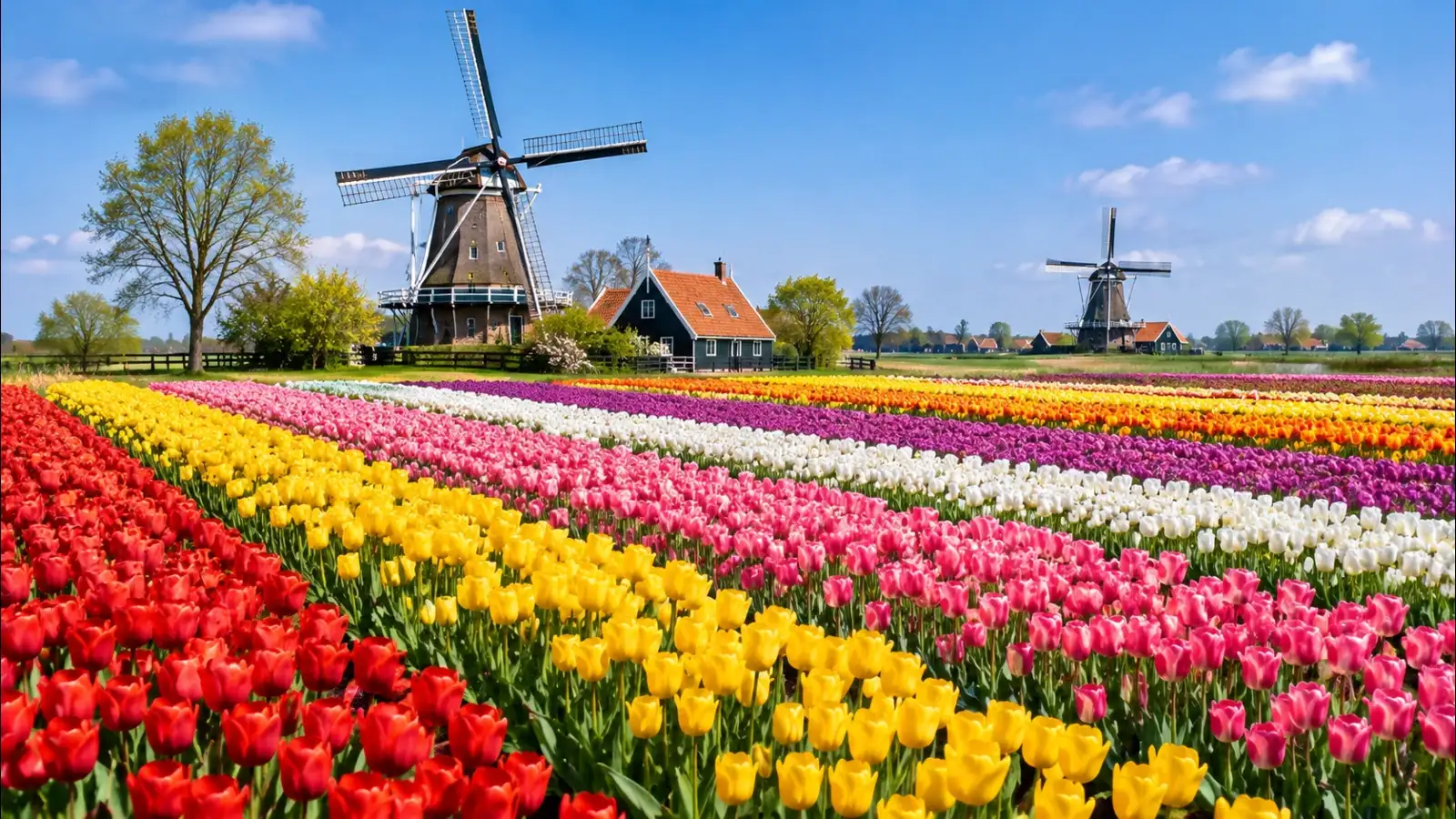
The Dutch became increasingly interested in cultivating tulips, and the country's favourable growing conditions helped the flower industry expand. Skilled growers developed different varieties, turning tulip cultivation into an important horticultural activity.
By the 17th century, tulips had become highly desirable in Dutch society, contributing to a period of intense speculation known as Tulip Mania.
The market eventually collapsed in 1637, leaving a lasting place for the episode in economic history. Although popular accounts sometimes exaggerate its scale, Tulip Mania remains an interesting example of how speculation can influence markets.
Today, tulips are valued more for their beauty, commercial cultivation and cultural importance than for the extraordinary prices associated with that period.
Farmers plant tulip bulbs in autumn so that they can experience the cold period needed for proper development. When temperatures rise in spring, the plants begin flowering.
Large farms grow different varieties in organised rows. When several colours bloom at the same time, they create the spectacular striped landscapes that have become famous worldwide.
Some early varieties may bloom in March, while later ones can continue flowering into May. Visitors planning a trip should check seasonal bloom updates before travelling.
It is also important to remember that many commercial tulip fields are private agricultural land. Visitors should follow designated routes and avoid walking into flower beds without permission.
The Netherlands is famous for its colourful tulip fields because of a centuries-old connection with flower cultivation, horticultural innovation and spring tourism. From the carefully designed displays at Keukenhof to the expansive agricultural landscapes of Bollenstreek and Flevoland, tulips have become an important symbol of the country's identity. Their vibrant colours, fascinating history and seasonal beauty continue to attract visitors from across the world every year.
How Did Tulips Become Popular in the Netherlands?
Tulips were introduced to Western Europe during the 16th century and gradually gained popularity among wealthy collectors and gardeners. The flowers were particularly admired for their bright colours and distinctive shapes.The Dutch became increasingly interested in cultivating tulips, and the country's favourable growing conditions helped the flower industry expand. Skilled growers developed different varieties, turning tulip cultivation into an important horticultural activity.
By the 17th century, tulips had become highly desirable in Dutch society, contributing to a period of intense speculation known as Tulip Mania.
What Was Tulip Mania?
Tulip Mania refers to a famous period in Dutch history during the 1630s when prices for certain tulip bulbs rose dramatically. Rare varieties became highly sought after, and some bulbs were traded for extraordinary sums.The market eventually collapsed in 1637, leaving a lasting place for the episode in economic history. Although popular accounts sometimes exaggerate its scale, Tulip Mania remains an interesting example of how speculation can influence markets.
Today, tulips are valued more for their beauty, commercial cultivation and cultural importance than for the extraordinary prices associated with that period.
Why Are Dutch Tulip Fields So Colourful?
The Netherlands has suitable conditions for growing tulips on a large scale. Its temperate maritime climate, relatively mild spring temperatures and well-drained sandy soils in important growing regions support bulb cultivation.Farmers plant tulip bulbs in autumn so that they can experience the cold period needed for proper development. When temperatures rise in spring, the plants begin flowering.
You may also like
Large farms grow different varieties in organised rows. When several colours bloom at the same time, they create the spectacular striped landscapes that have become famous worldwide.
Best Places to See Tulip Fields in the Netherlands
Travellers can explore several destinations to experience the country's colourful spring flowers.1. Keukenhof Gardens
Keukenhof, located in Lisse, is one of the world's best-known spring flower gardens. It displays millions of flowering bulbs, including tulips, daffodils and hyacinths. Its carefully designed gardens, themed displays and walking paths make it a popular seasonal attraction.2. Bollenstreek Flower Region
The Bollenstreek, or Bulb Region, is famous for its extensive flower-growing areas. Located between Leiden and Haarlem, it offers beautiful views of colourful fields during the spring flowering season.3. Noordoostpolder
Situated in the province of Flevoland, Noordoostpolder is another important tulip-growing region. Its organised flower routes allow visitors to explore large fields and rural landscapes.4. Kop van Noord-Holland
This northern region is known for its expansive flower fields and picturesque countryside. During spring, visitors can find colourful stretches of tulips across the agricultural landscape.When Is the Best Time to See Tulip Fields?
The main tulip flowering season in the Netherlands generally falls between mid-April and early May. However, the exact timing changes according to temperatures, weather conditions and the varieties being grown.Some early varieties may bloom in March, while later ones can continue flowering into May. Visitors planning a trip should check seasonal bloom updates before travelling.
It is also important to remember that many commercial tulip fields are private agricultural land. Visitors should follow designated routes and avoid walking into flower beds without permission.
The Netherlands is famous for its colourful tulip fields because of a centuries-old connection with flower cultivation, horticultural innovation and spring tourism. From the carefully designed displays at Keukenhof to the expansive agricultural landscapes of Bollenstreek and Flevoland, tulips have become an important symbol of the country's identity. Their vibrant colours, fascinating history and seasonal beauty continue to attract visitors from across the world every year.






Loving Newspoint? Download the app now
