
Why Do Peacocks Spread Their Feathers? The Science Behind Their Famous Display

A peacock spreading its colourful feathers is one of the most recognisable sights in the natural world. Its enormous fan, decorated with shimmering blue, green and eye-shaped markings, looks almost like a moving painting. But this spectacular display is more than a visual attraction. It plays an important role in courtship, communication and the way peafowl interact with one another.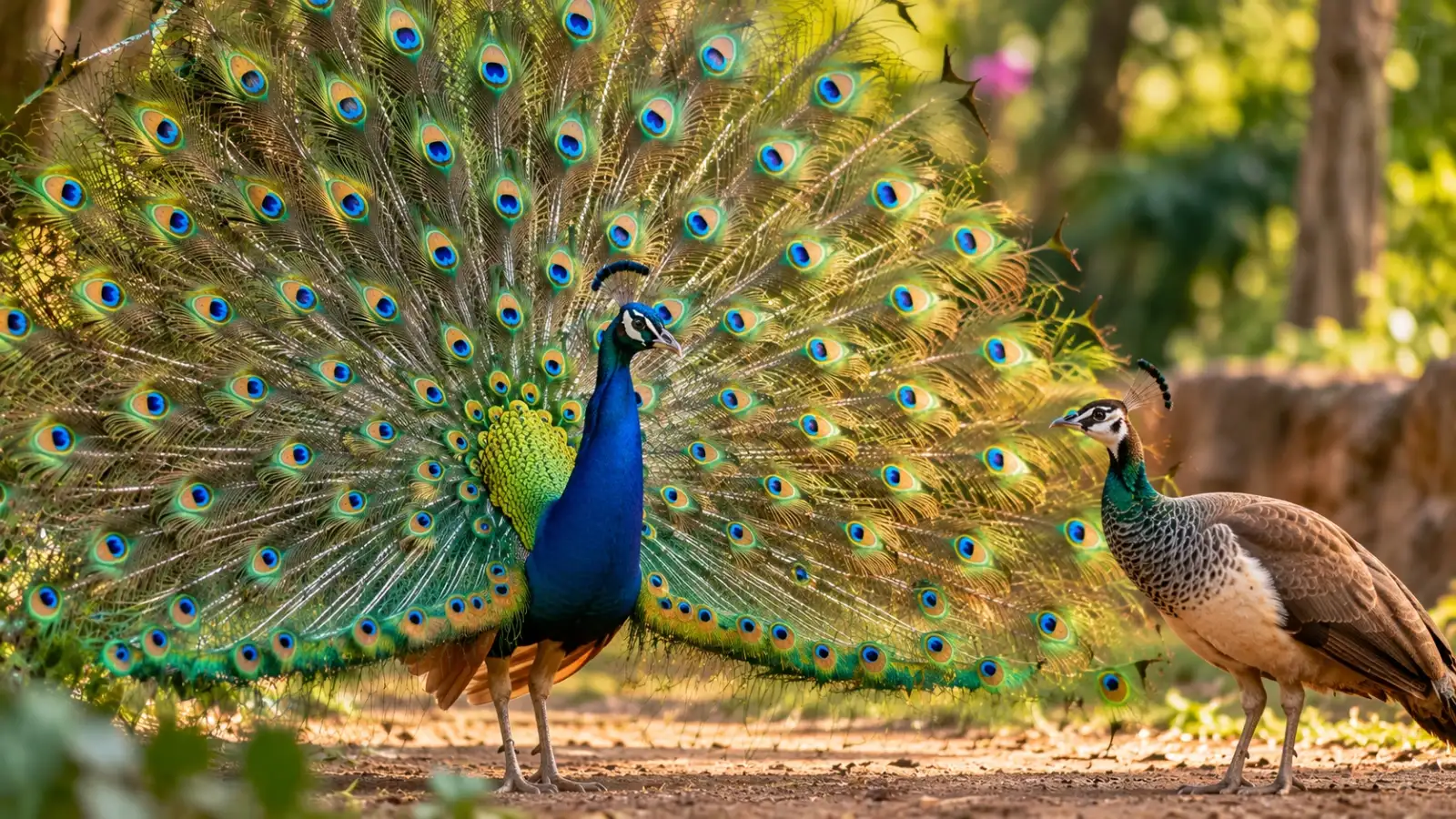
The main reason male peacocks spread their feathers is to attract females during the breeding season. However, the display involves more than simply showing off bright colours. Body movements, feather vibrations and sounds work together to capture attention. Understanding these behaviours reveals how a bird's appearance can influence its chances of reproduction.
The train contains elongated feathers with distinctive eye-like markings, often called eyespots. Their iridescent colours change with the angle of light, creating a shimmering effect when the bird moves.
During courtship, a male positions himself in front of a female, spreads his train and performs a sequence of movements designed to attract her attention. The female may observe the display before deciding whether to approach or mate.
This behaviour is an example of sexual selection, a process in which traits that improve reproductive success become more common over generations. In peafowl, the elaborate train has evolved partly because females respond to aspects of the male's display.
These markings help create a visually complex display. When a male raises and spreads his train, the repeated eyespots form a broad fan that is difficult for a nearby female to overlook.
Research on Indian peafowl has found that females pay attention to particular parts of the male's train during courtship. Studies have also linked the iridescence of the eyespots with mating success, although the importance of individual features can vary.
The display is therefore not simply about having the largest possible fan. How the feathers look and how the male presents them can also matter.
Scientists refer to this behaviour as train-rattling. The male moves his ornamental feathers in a way that makes parts of the train vibrate while the eyespots appear comparatively steady.
This combination of movement and sound creates a more complex courtship signal than a static fan. Research has shown that the feathers' physical structure helps them vibrate efficiently during the display.
The rattling movement can capture and maintain a peahen's attention, helping the male make his courtship presentation more noticeable.
A male must also coordinate several movements to perform an effective display. The way he raises, positions and vibrates his train contributes to the overall presentation.
However, it would be misleading to say that every female always chooses the male with the longest train or the greatest number of eyespots. Studies have produced different findings about the importance of individual traits, and mating success can depend on several factors.
The key point is that the display offers visual and behavioural cues that females may use when assessing potential mates.
The shorter, sturdier tail feathers beneath the ornamental train help support the raised fan. When the bird is not displaying, the long decorative feathers fold down behind its body.
This structure allows the peacock to raise and spread the train during courtship and then fold it away when the display is over.
The arrangement also helps explain why the fan can look so much larger than the bird's actual body. Its ornamental feathers extend far beyond the body outline, creating an impressive visual effect.
The sequence can change depending on the female's position and response. If she moves, the male may adjust his orientation to keep the display visible.
Studies using eye-tracking technology have found that peahens focus on particular parts of the male's train and respond to dynamic components of courtship, including wing-shaking and train-rattling.
These findings suggest that the overall performance matters. The display combines appearance, movement and sound to communicate with a potential mate.
However, the classic full-fan display is primarily associated with courtship. It should not automatically be interpreted as a threat display.
Peafowl can use other behaviours when alarmed or disturbed, including calls, alert postures and attempts to move away from danger. The exact response depends on the situation.
A raised fan may make a bird look larger, but its size and ornamental structure are not proof that the display evolved mainly for defence. In the familiar courtship context, attracting a mate is the central function.
This difference is known as sexual dimorphism. In peafowl, it is closely connected to the different reproductive pressures experienced by males and females.
Males benefit from traits that help them attract mates, even when those traits require energy to grow and maintain. Females, which typically incubate eggs and care for young, benefit from plumage that helps them remain less conspicuous in their surroundings.
Female peafowl do have their own distinctive colours and feather patterns, and they can also perform tail-related movements in certain social contexts. However, they do not possess the same large ornamental train as adult males.
The display illustrates how animal behaviour and physical appearance can evolve together. Although the exact importance of individual feather features continues to be studied, research shows that peahens pay attention to aspects of the male's presentation.
The next time a peacock opens its magnificent fan, the scene can be understood as a carefully coordinated biological performance, shaped by reproduction and the long process of evolution.
The main reason male peacocks spread their feathers is to attract females during the breeding season. However, the display involves more than simply showing off bright colours. Body movements, feather vibrations and sounds work together to capture attention. Understanding these behaviours reveals how a bird's appearance can influence its chances of reproduction.
1. The Main Purpose Is to Attract a Mate
The most familiar reason a peacock spreads its feathers is courtship. Male peafowl, known as peacocks, develop a long ornamental train that they raise into a large fan when displaying to females, called peahens.The train contains elongated feathers with distinctive eye-like markings, often called eyespots. Their iridescent colours change with the angle of light, creating a shimmering effect when the bird moves.
During courtship, a male positions himself in front of a female, spreads his train and performs a sequence of movements designed to attract her attention. The female may observe the display before deciding whether to approach or mate.
This behaviour is an example of sexual selection, a process in which traits that improve reproductive success become more common over generations. In peafowl, the elaborate train has evolved partly because females respond to aspects of the male's display.
2. The Eyespots Make the Display More Noticeable
One of the most striking features of a peacock's train is the pattern of colourful eyespots. Each contains contrasting rings of colour that can appear blue, green, bronze or gold depending on the lighting and viewing angle.These markings help create a visually complex display. When a male raises and spreads his train, the repeated eyespots form a broad fan that is difficult for a nearby female to overlook.
Research on Indian peafowl has found that females pay attention to particular parts of the male's train during courtship. Studies have also linked the iridescence of the eyespots with mating success, although the importance of individual features can vary.
The display is therefore not simply about having the largest possible fan. How the feathers look and how the male presents them can also matter.
3. Feather Shaking Adds Movement and Sound
A peacock does not always remain still after spreading its train. It may vibrate the feathers rapidly, producing a shimmering visual effect and a distinctive rattling sound.Scientists refer to this behaviour as train-rattling. The male moves his ornamental feathers in a way that makes parts of the train vibrate while the eyespots appear comparatively steady.
This combination of movement and sound creates a more complex courtship signal than a static fan. Research has shown that the feathers' physical structure helps them vibrate efficiently during the display.
The rattling movement can capture and maintain a peahen's attention, helping the male make his courtship presentation more noticeable.
4. The Display Communicates Information About the Male
A peacock's display can provide a female with information about the male's appearance and behaviour. Researchers have investigated whether features such as eyespot iridescence, train characteristics and display performance influence female choice.A male must also coordinate several movements to perform an effective display. The way he raises, positions and vibrates his train contributes to the overall presentation.
However, it would be misleading to say that every female always chooses the male with the longest train or the greatest number of eyespots. Studies have produced different findings about the importance of individual traits, and mating success can depend on several factors.
The key point is that the display offers visual and behavioural cues that females may use when assessing potential mates.
5. The Fan Is Not Made of Ordinary Tail Feathers
Although people often describe the peacock's display as its tail, the spectacular fan is made primarily of elongated upper tail-coverts rather than the true tail feathers.The shorter, sturdier tail feathers beneath the ornamental train help support the raised fan. When the bird is not displaying, the long decorative feathers fold down behind its body.
This structure allows the peacock to raise and spread the train during courtship and then fold it away when the display is over.
The arrangement also helps explain why the fan can look so much larger than the bird's actual body. Its ornamental feathers extend far beyond the body outline, creating an impressive visual effect.
6. Feather Displays Are Part of a Larger Courtship Routine
Spreading the train is only one element of peacock courtship. A male may turn his body, orient himself towards a female, shake his wings or perform other movements before and during the fan display.The sequence can change depending on the female's position and response. If she moves, the male may adjust his orientation to keep the display visible.
Studies using eye-tracking technology have found that peahens focus on particular parts of the male's train and respond to dynamic components of courtship, including wing-shaking and train-rattling.
These findings suggest that the overall performance matters. The display combines appearance, movement and sound to communicate with a potential mate.
7. Do Peacocks Spread Their Feathers to Scare Predators?
The enormous fan can appear intimidating, which sometimes leads people to assume that peacocks mainly spread their feathers to frighten predators.However, the classic full-fan display is primarily associated with courtship. It should not automatically be interpreted as a threat display.
Peafowl can use other behaviours when alarmed or disturbed, including calls, alert postures and attempts to move away from danger. The exact response depends on the situation.
A raised fan may make a bird look larger, but its size and ornamental structure are not proof that the display evolved mainly for defence. In the familiar courtship context, attracting a mate is the central function.
8. Why Don't Peahens Have the Same Elaborate Train?
Male and female Indian peafowl look noticeably different. Adult males have the familiar iridescent train, while females generally have more subdued brown, grey and greenish plumage.This difference is known as sexual dimorphism. In peafowl, it is closely connected to the different reproductive pressures experienced by males and females.
Males benefit from traits that help them attract mates, even when those traits require energy to grow and maintain. Females, which typically incubate eggs and care for young, benefit from plumage that helps them remain less conspicuous in their surroundings.
Female peafowl do have their own distinctive colours and feather patterns, and they can also perform tail-related movements in certain social contexts. However, they do not possess the same large ornamental train as adult males.
Why a Peacock's Feather Display Matters
A peacock's feather display is much more than a beautiful natural spectacle. It is a specialised form of courtship communication that combines colourful eyespots, shimmering feathers, movement and sound to attract a potential mate.The display illustrates how animal behaviour and physical appearance can evolve together. Although the exact importance of individual feather features continues to be studied, research shows that peahens pay attention to aspects of the male's presentation.
The next time a peacock opens its magnificent fan, the scene can be understood as a carefully coordinated biological performance, shaped by reproduction and the long process of evolution.
Next Story