
Why Plants Lean Towards Windows Even When There Is Plenty of Light

Even inside bright rooms illuminated by overhead lamps or large skylights, potted houseplants often slant dramatically toward nearby windows. This bending behavior is driven by a natural biological mechanism called positive phototropism . Plants possess specialized light receptors known as phototropins, which are extremely sensitive to directional blue light wavelengths arriving from natural outdoor skies. Overhead artificial bulbs diffuse ambient light evenly across a room, but a glass window delivers a concentrated beam of directional light. The plant perceives this unilateral light source as the primary direction for growth, causing stems to curve outward regardless of how bright the indoor room feels to human eyes.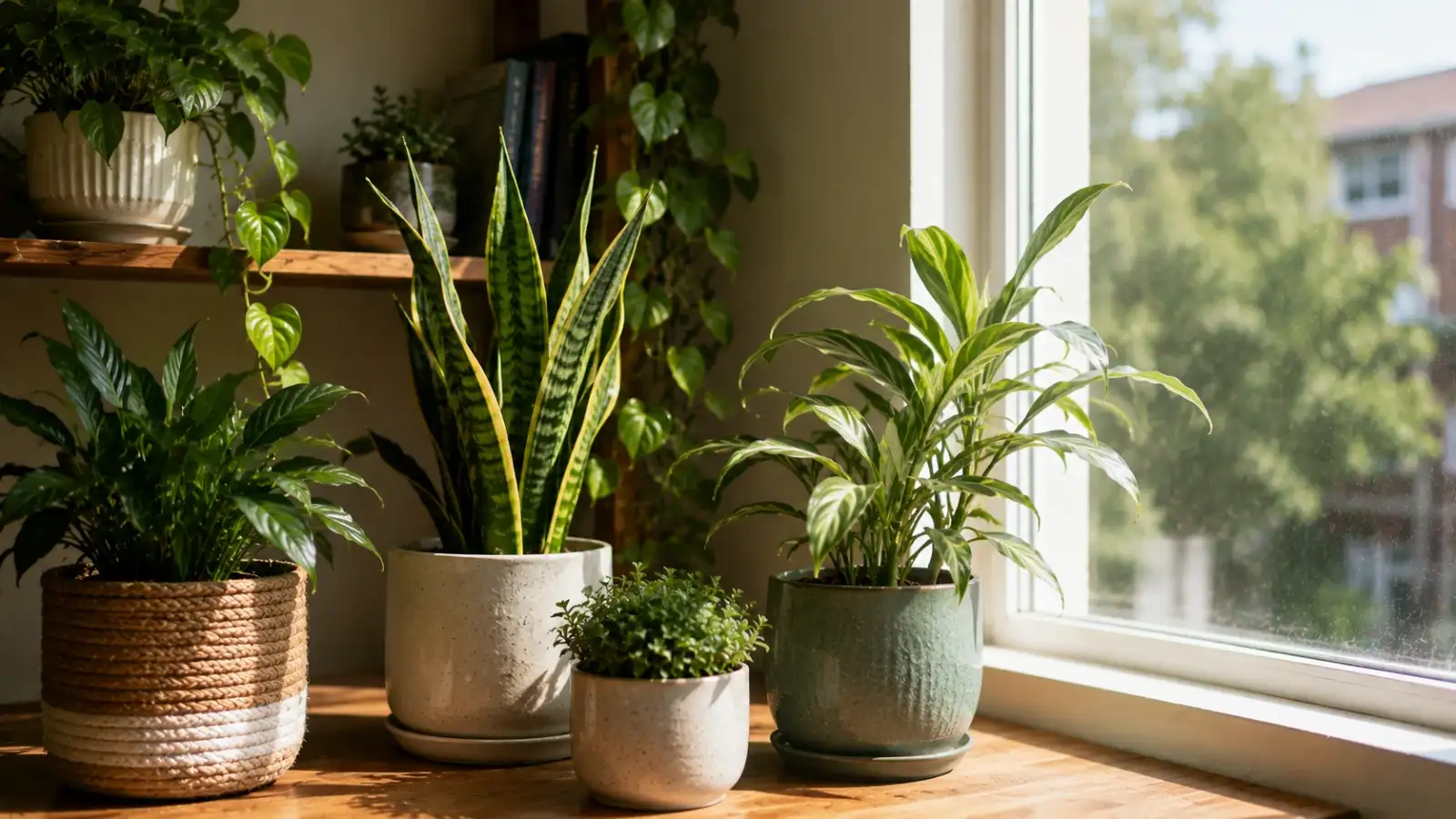
How Plant Auxin Redistribution Drives Asymmetric Cell Growth
The physical bending mechanism is controlled by a vital growth hormone called auxin. When directional window light hits one side of a stem, phototropin receptors signal the plant to redistribute auxin away from the lit side and toward the shaded side. This hormone accumulation causes cells on the shaded side to elongate rapidly, while cells facing the window grow at a normal pace. Because the back of the stem expands faster than the front, the entire plant structure pivots, forcing leaves and growing tips to angle directly toward the glass pane.
Sensing Light Quality and Spectrum Differences
Window glass passes unfiltered natural sunlight, which contains a rich spectrum of natural blue light and red light essential for photosynthesis. Indoor ambient lighting often lacks these ideal natural spectrum ratios. Plant photoreceptors constantly analyze light quality and intensity to optimize energy capture. Even if an indoor room seems bright to human sight, the plant recognizes that natural window light yields far more efficient energy for chlorophyll production. Driven by internal survival signals, the plant redirects its stem tissue toward the window pane to secure maximum photosynthetic quality.
Maximizing Leaf Surface Area for Photosynthesis
Leaves act like solar panels that need to align perpendicularly to incoming rays for efficient energy absorption. When a plant sits beside a window, ambient indoor illumination strikes leaves at flat, indirect angles. By bending stems toward the glass, the plant reorients its upper canopy to present a flat surface area directly face to face with natural outdoor rays. This structural alignment allows chloroplasts inside leaf cells to catch light energy smoothly without wasteful reflection. This instinctive realignment keeps the foliage healthy, vibrant and structurally efficient over long periods.
Preventing Uneven Stems with Simple Rotation Habits
Continuous leaning toward a window pane can leave potted foliage looking lopsided, structurally unstable and prone to tipping over. To maintain balanced upright stems, indoor plant owners can practice a simple rotation routine. Giving your plant pot a quarter turn every time you water ensures that directional window light hits different sides of the main stem equally. Alternating light exposure balances out auxin distribution, allowing cells on all sides to elongate evenly. This easy habit prevents severe stem curvature, keeping your indoor greenery balanced, upright and strong.
How Plant Auxin Redistribution Drives Asymmetric Cell Growth
The physical bending mechanism is controlled by a vital growth hormone called auxin. When directional window light hits one side of a stem, phototropin receptors signal the plant to redistribute auxin away from the lit side and toward the shaded side. This hormone accumulation causes cells on the shaded side to elongate rapidly, while cells facing the window grow at a normal pace. Because the back of the stem expands faster than the front, the entire plant structure pivots, forcing leaves and growing tips to angle directly toward the glass pane.
You may also like
- She was set to begin her first job but Delhi's Hauz Rani fire claimed her life; now Shrutika Baranwal's parents will collect her TISS degreeas a keepsake of her dreams
- Peanuts With or Without Skin: Which Is Healthier and What Is the Best Way to Eat Them?
- 'This is my tiny house, though it looks straight out of a postcard, I live here': Woman reveals the issues she is facing living in a 'picture-perfect' house
- Why do Kodagu brides wear their saree backwards? The fascinating story behind their iconic drape
- Your child seems distracted while studying? These overlooked vision problems could be making reading and learning harder
Sensing Light Quality and Spectrum Differences
Window glass passes unfiltered natural sunlight, which contains a rich spectrum of natural blue light and red light essential for photosynthesis. Indoor ambient lighting often lacks these ideal natural spectrum ratios. Plant photoreceptors constantly analyze light quality and intensity to optimize energy capture. Even if an indoor room seems bright to human sight, the plant recognizes that natural window light yields far more efficient energy for chlorophyll production. Driven by internal survival signals, the plant redirects its stem tissue toward the window pane to secure maximum photosynthetic quality.
Maximizing Leaf Surface Area for Photosynthesis
Leaves act like solar panels that need to align perpendicularly to incoming rays for efficient energy absorption. When a plant sits beside a window, ambient indoor illumination strikes leaves at flat, indirect angles. By bending stems toward the glass, the plant reorients its upper canopy to present a flat surface area directly face to face with natural outdoor rays. This structural alignment allows chloroplasts inside leaf cells to catch light energy smoothly without wasteful reflection. This instinctive realignment keeps the foliage healthy, vibrant and structurally efficient over long periods.
Preventing Uneven Stems with Simple Rotation Habits
Continuous leaning toward a window pane can leave potted foliage looking lopsided, structurally unstable and prone to tipping over. To maintain balanced upright stems, indoor plant owners can practice a simple rotation routine. Giving your plant pot a quarter turn every time you water ensures that directional window light hits different sides of the main stem equally. Alternating light exposure balances out auxin distribution, allowing cells on all sides to elongate evenly. This easy habit prevents severe stem curvature, keeping your indoor greenery balanced, upright and strong.






Loving Newspoint? Download the app now
