
Why Your Potted Plant Has Stopped Growing and How to Help

When a healthy houseplant suddenly stops putting out fresh leaves, restricted root space is often the primary cause. Over time, expanding root systems fill every available centimetre within a container, leaving little space for fresh potting soil. This condition, commonly known as being rootbound, severely restricts the plant from absorbing oxygen and water efficiently. When roots circle tightly around the inner walls of the container, the plant enters a survival mode where active development halts completely. Giving the roots more space or gently trimming dense root masses helps restart healthy plant growth quickly.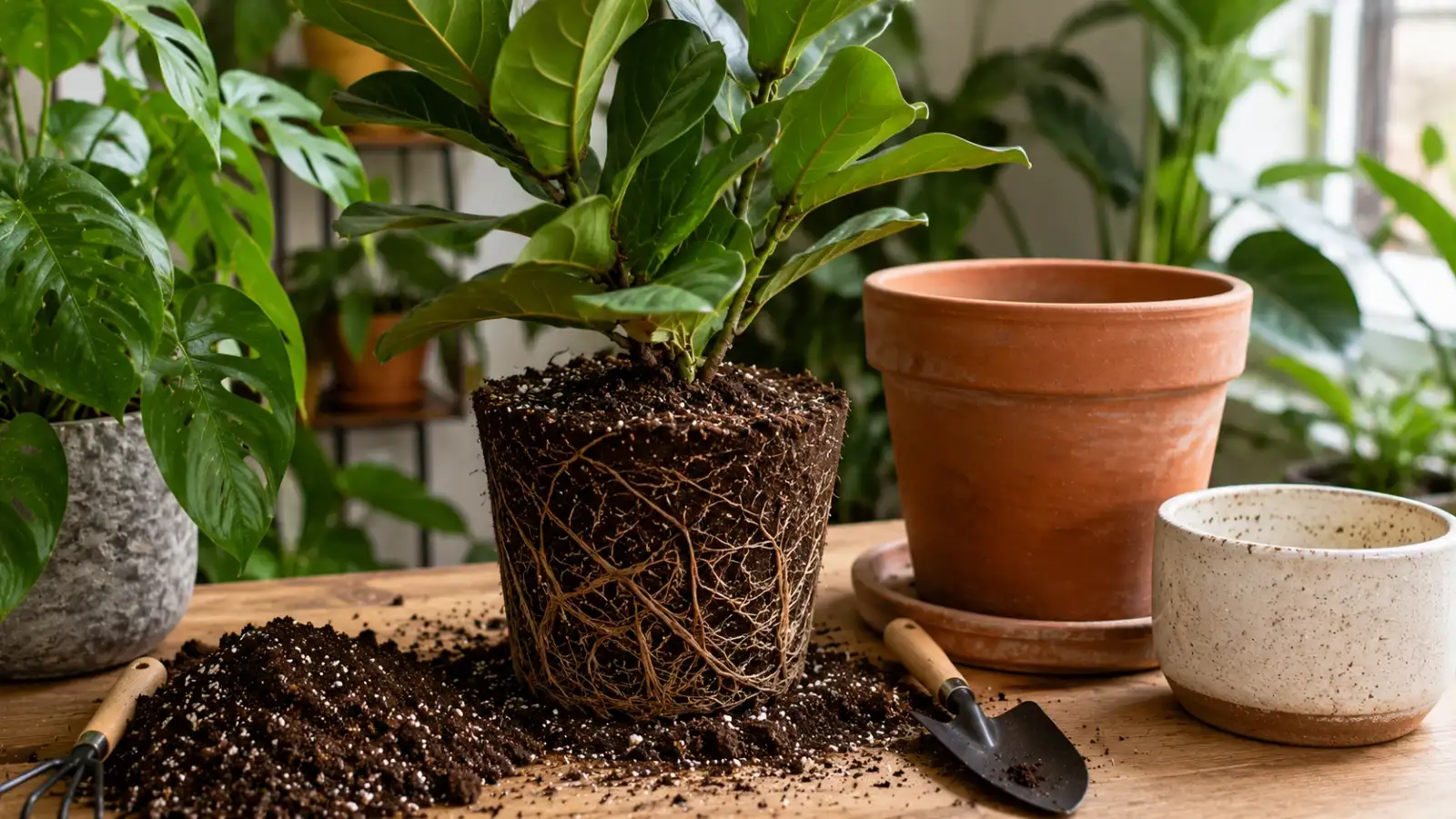
Recognising Depleted Soil Nutrients and Mineral Buildup
Potting soil does not retain its vitality indefinitely. Fresh potting mix contains a balanced supply of organic matter and vital nutrients that feed active growth. Over several months, roots extract these valuable nutrients, leaving behind an exhausted growing medium that cannot support new foliage. Additionally, regular tap water and synthetic fertilisers leave behind hard mineral salts inside the container over time. This mineral buildup changes soil acidity and damages root tips, effectively blocking the plant from absorbing what little nutrition remains. Refreshing the soil restores essential nutrients and removes harmful salt residue.
How Waterlogged Soil Causes Stunted Plant Growth
Proper drainage is crucial for sustaining healthy potted foliage. When drainage holes become clogged with stray roots or compacted dirt, water accumulates at the base of the container. Saturated soil starves root systems of essential oxygen, leading to root rot and severe health issues. Damaged roots cannot transport moisture or nutrients to the upper stem, causing visible growth to freeze completely. Ensuring excess water drains freely away from the base protects underground structures and prevents sudden growth stops.
Addressing Soil Compaction and Poor Oxygen Flow
Repeated watering gradually compresses potting soil, packing fine dirt particles tightly together. Compacted soil loses its spongy texture and creates a dense environment that resists water penetration and smothers delicate roots. Without soft, aerated soil, new root tips cannot expand outwards, which directly limits above-ground foliage development. Aerating dense potting mix with a wooden stick or repotting into fresh, loose media restores oxygen circulation, allowing roots to breathe and spread comfortably.
Managing Natural Dormancy and Environmental Changes
Not every pause in development signals a serious problem with your container. Many species enter natural dormancy periods during cooler, darker months when daylight hours diminish. During these resting phases, active leaf production stops so the plant can conserve energy for spring. Furthermore, sudden shifts in room temperature, humidity, or light levels can cause temporary shock that pauses progress. Understanding these seasonal changes helps houseplant owners distinguish between natural resting cycles and soil issues that require fresh pots.
Recognising Depleted Soil Nutrients and Mineral Buildup
Potting soil does not retain its vitality indefinitely. Fresh potting mix contains a balanced supply of organic matter and vital nutrients that feed active growth. Over several months, roots extract these valuable nutrients, leaving behind an exhausted growing medium that cannot support new foliage. Additionally, regular tap water and synthetic fertilisers leave behind hard mineral salts inside the container over time. This mineral buildup changes soil acidity and damages root tips, effectively blocking the plant from absorbing what little nutrition remains. Refreshing the soil restores essential nutrients and removes harmful salt residue.
You may also like
- Peanuts With or Without Skin: Which Is Healthier and What Is the Best Way to Eat Them?
- 'This is my tiny house, though it looks straight out of a postcard, I live here': Woman reveals the issues she is facing living in a 'picture-perfect' house
- Why do Kodagu brides wear their saree backwards? The fascinating story behind their iconic drape
- Your child seems distracted while studying? These overlooked vision problems could be making reading and learning harder
- Why Zurich deserves more than a layover
How Waterlogged Soil Causes Stunted Plant Growth
Proper drainage is crucial for sustaining healthy potted foliage. When drainage holes become clogged with stray roots or compacted dirt, water accumulates at the base of the container. Saturated soil starves root systems of essential oxygen, leading to root rot and severe health issues. Damaged roots cannot transport moisture or nutrients to the upper stem, causing visible growth to freeze completely. Ensuring excess water drains freely away from the base protects underground structures and prevents sudden growth stops.
Addressing Soil Compaction and Poor Oxygen Flow
Repeated watering gradually compresses potting soil, packing fine dirt particles tightly together. Compacted soil loses its spongy texture and creates a dense environment that resists water penetration and smothers delicate roots. Without soft, aerated soil, new root tips cannot expand outwards, which directly limits above-ground foliage development. Aerating dense potting mix with a wooden stick or repotting into fresh, loose media restores oxygen circulation, allowing roots to breathe and spread comfortably.
Managing Natural Dormancy and Environmental Changes
Not every pause in development signals a serious problem with your container. Many species enter natural dormancy periods during cooler, darker months when daylight hours diminish. During these resting phases, active leaf production stops so the plant can conserve energy for spring. Furthermore, sudden shifts in room temperature, humidity, or light levels can cause temporary shock that pauses progress. Understanding these seasonal changes helps houseplant owners distinguish between natural resting cycles and soil issues that require fresh pots.






Loving Newspoint? Download the app now
