From Hard Seeds to Fluffy Snacks: Why Popcorn Kernels Explode but Other Grains Don't

Whether you are settling down in a cinema or preparing a quick snack at home, the dramatic transformation of a hard corn seed into a light, white puff is always satisfying to watch. Throw a handful of small, golden seeds into a hot pan, and within seconds, a chaotic series of loud pops fills the kitchen. It is a familiar ritual enjoyed by millions of snack lovers around the world. However, if you attempt this exact same cooking process with other common grains like rice, wheat, barley, or oats, you will not get fluffy white clouds. Instead, those grains will simply toast, char, or crack open quietly. Uncovering why popcorn kernels explode but other grains don't reveal a brilliant natural combination of structural engineering, trapped moisture, and high pressure physics hiding inside a humble seed.
The waterproof outer hull acting as a miniature pressure vessel
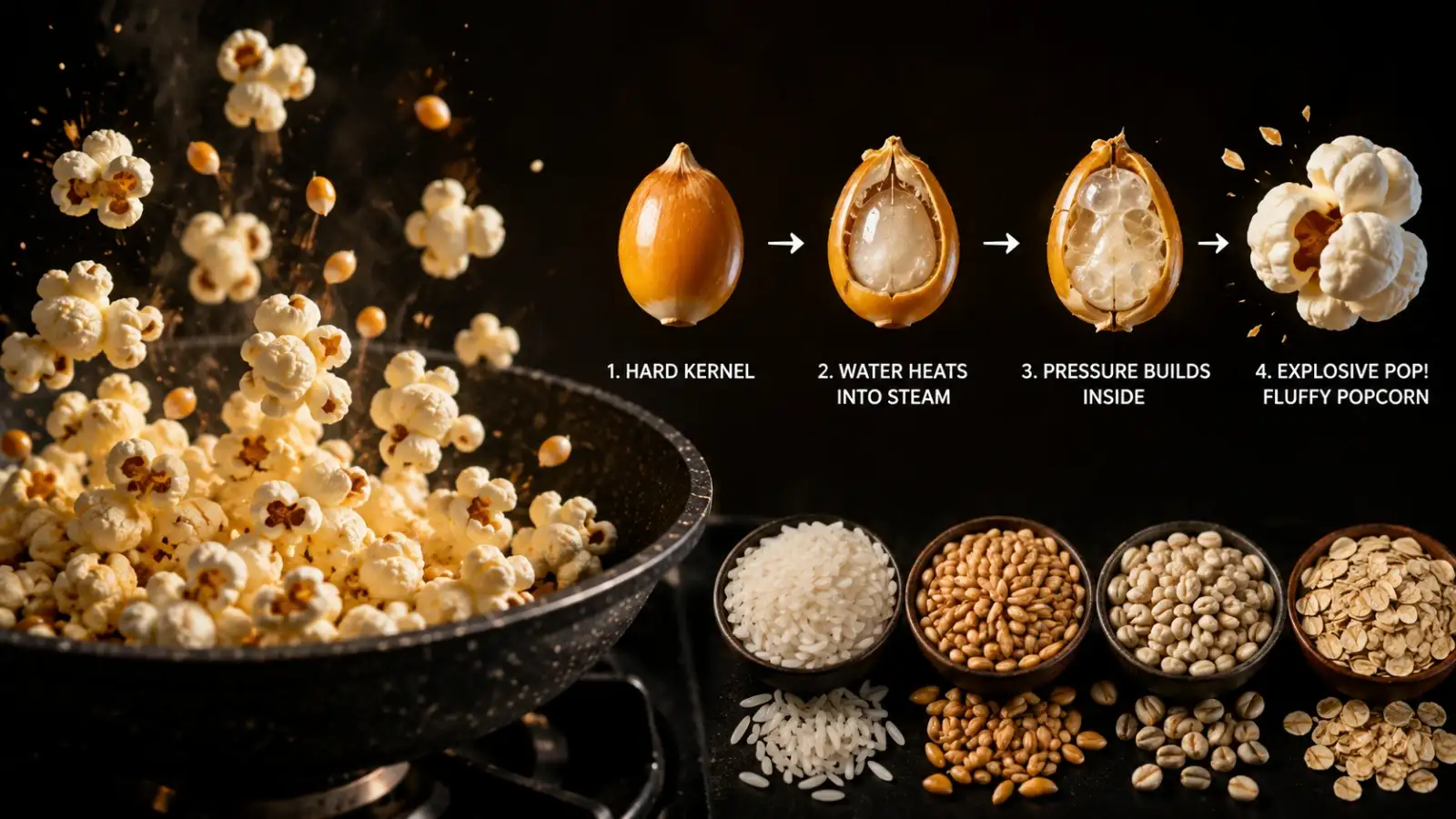
The primary secret behind the popping phenomenon lies in the physical structure of the kernel's outer shell, scientifically known as the pericarp. In most common cereal grains like wheat, rye, or rice, this outer coating is relatively soft, porous, and easily breached by heat and moisture. Popcorn is entirely unique because its outer hull is extraordinarily hard, dense, and virtually waterproof. It functions as a natural, airtight pressure vessel. When you heat the kernel, this tough hull prevents steam from escaping, forcing energy to build up inside the seed rather than dissipating into the surrounding air. Without this durable shell holding everything together under extreme conditions, an explosive burst would be completely impossible.Trapped internal moisture turning into superheated steam
Inside that rock-hard outer shell sits a dense pocket of hard starch along with a precise drop of trapped water. For a kernel to pop successfully, its internal water content needs to be around fourteen percent. As heat is applied from a stovetop, microwave, or hot air machine, that tiny droplet of internal moisture heats up rapidly. However, because the waterproof pericarp seals the kernel completely, the water cannot simply evaporate away as steam. Instead, the trapped water becomes superheated, rising far past its normal boiling point while remaining contained inside the seed. This trapped steam builds up tremendous pressure, constantly pushing against the inner walls of the hard hull.The melting starch and the dramatic explosive point
As the temperature inside the seed approaches one hundred and eighty degrees Celsius, the pressure reaches an astonishing point of roughly nine times normal atmospheric pressure. At this elevated temperature and pressure, the hard starch inside the kernel undergoes a radical physical change. It melts into a hot, gelatinous, liquid-like foam. Eventually, the pressure becomes too intense for the outer hull to contain. The waterproof pericarp ruptures violently, causing an instantaneous drop in pressure. The superheated water instantly expands into steam, inflating the molten starch into a foamy web. As this starch is exposed to the cooler air outside, it solidifies in a fraction of a second, creating the crisp, white, fluffy treat we love to eat.Why other grains fail to recreate the big pop
When you subject other popular grains to intense heat, the process turns out entirely differently because they lack these specific biological traits. Wheat and rice do not possess an airtight, pressure-resistant outer hull. When heated, any internal moisture simply leaks out through porous outer layers as gentle steam. While grains like puffed rice can be created using massive industrial pressure chambers, popcorn is the only natural grain on earth that carries its own built-in pressure cooker. It is this rare alignment of a sealed waterproof shell, exact moisture content, and expandable starch that explains why popcorn kernels explode but other grains don't.Nature's most entertaining culinary miracle
Ultimately, every batch of movie night popcorn is a fascinating display of natural physics in action. What seems like magic in the pan is actually a precise, explosive physical reaction engineered by nature itself. Understanding the remarkable mechanics behind the burst only makes enjoying that salty, warm snack all the more satisfying.Next Story