
How Sea Otters Use Rocks and Other Objects to Find and Eat Food

Sea otters are among the most fascinating marine mammals, not only because of their playful behaviour but also because of their remarkable intelligence. Unlike many other marine animals, they regularly use objects from their surroundings to make everyday activities easier. One of their best-known habits is using rocks to crack open hard-shelled prey such as sea urchins, crabs and mussels. They may also use their bodies as a surface while handling food. This practical behaviour has made sea otters an interesting subject for scientists studying animal intelligence, problem-solving abilities and tool use in the natural world.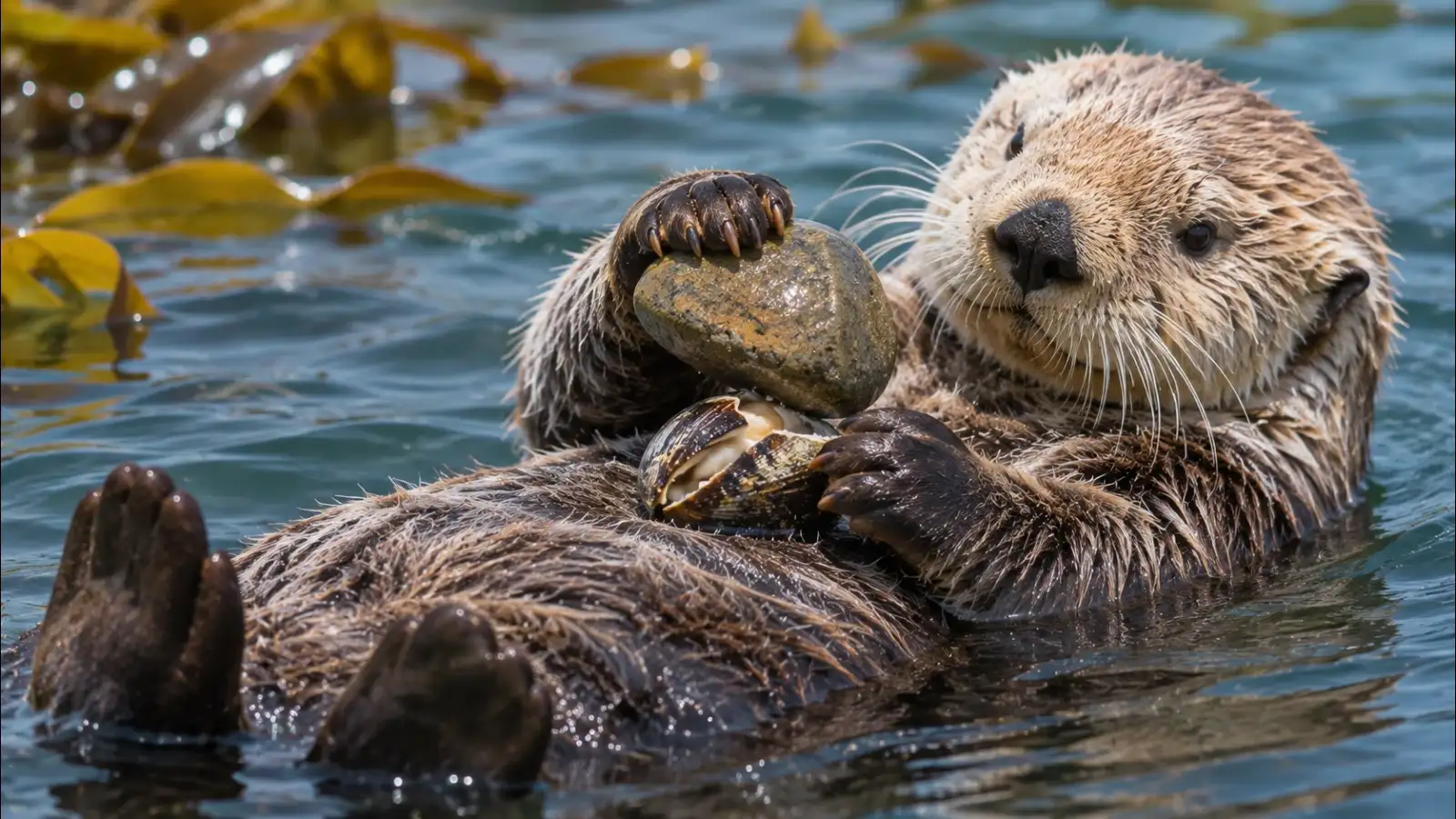
When an otter finds a suitable rock, it may hold the object against its chest and repeatedly strike its prey against it. The impact helps break the shell, allowing the animal to reach the edible portion inside.
They may balance a rock on their abdomen and use it as a small anvil to crack open shellfish. This technique allows them to feed while remaining in the water rather than returning to land.
These pockets are particularly useful when an otter finds food underwater and needs to bring it to the surface. Carrying a tool also means the animal does not always have to search for another suitable stone.
Their ability to handle different objects shows practical problem-solving behaviour. Researchers study how these animals select and use tools to understand the relationship between feeding habits and animal intelligence.
Their techniques can also depend on the type of prey available in their habitat. This flexibility allows them to take advantage of different food sources in coastal environments.
This ability is particularly useful when feeding on mussels, clams and certain crabs. Their varied diet helps them adapt to changing food availability in their coastal habitats.
Pups observe their mothers during feeding activities and gradually develop their own techniques. Learning through observation and practice helps them become more independent as they mature.
Their behaviour also shows how animals can adapt their actions according to the challenges they encounter. Scientists continue to study these habits to learn more about cognition in marine mammals.
By controlling sea urchin numbers, sea otters can help protect kelp forests and support marine biodiversity. Their use of tools helps them access prey that forms part of this ecological relationship.
Scientists examine how individual otters select tools, solve feeding challenges and learn from experience. Research also explores whether tool-use habits differ between populations and how these behaviours may be passed between generations.
Sea otters are known for using tools because they can turn ordinary objects, particularly rocks, into useful feeding equipment. From cracking open shellfish to carrying stones in special skin folds, their behaviour demonstrates impressive adaptability and practical intelligence. Their feeding techniques also reveal how closely animal behaviour is connected to survival and the surrounding environment. Along with their ecological importance, these clever marine mammals offer valuable insights into how intelligence develops across different animal species.
1. Sea Otters Use Rocks to Open Hard-Shelled Food
One of the most recognisable examples of tool use in sea otters involves using rocks to open shellfish. Their diet includes prey such as mussels, clams, crabs and sea urchins, some of which have hard outer coverings.When an otter finds a suitable rock, it may hold the object against its chest and repeatedly strike its prey against it. The impact helps break the shell, allowing the animal to reach the edible portion inside.
2. Their Bodies Become Natural Feeding Surfaces
Sea otters often float on their backs while eating. Their chests provide a convenient surface on which they can place food and handle objects.They may balance a rock on their abdomen and use it as a small anvil to crack open shellfish. This technique allows them to feed while remaining in the water rather than returning to land.
3. They Have Specialised Pockets Under Their Forelimbs
Sea otters possess loose folds of skin beneath their forelimbs that function like small pockets. They can temporarily store food and sometimes carry a preferred rock in these folds.These pockets are particularly useful when an otter finds food underwater and needs to bring it to the surface. Carrying a tool also means the animal does not always have to search for another suitable stone.
4. They Can Select Suitable Tools
Not every rock is equally useful for opening hard-shelled prey. Sea otters may use stones with shapes and sizes that make them easier to hold and strike against food.Their ability to handle different objects shows practical problem-solving behaviour. Researchers study how these animals select and use tools to understand the relationship between feeding habits and animal intelligence.
5. Different Sea Otters Have Different Feeding Techniques
Tool use is not identical among all sea otters. Some individuals regularly use rocks, while others may rely more on their strong teeth and jaws to open food.Their techniques can also depend on the type of prey available in their habitat. This flexibility allows them to take advantage of different food sources in coastal environments.
6. Tool Use Can Help Them Access a Wider Range of Food
Many sea creatures have protective shells or hard outer coverings. By using rocks, sea otters can access food that may otherwise be difficult to eat.This ability is particularly useful when feeding on mussels, clams and certain crabs. Their varied diet helps them adapt to changing food availability in their coastal habitats.
7. Mothers Help Young Otters Learn Feeding Skills
Young sea otters learn important survival behaviours while growing up. Mothers play a major role in teaching their pups how to find, handle and eat food.You may also like
- Why did the issue of sleeping hours on trains (10 PM to 6 AM) reach the High Court?
- Scared of Steroid Creams? What Eczema Patients Need to Know
- Rs 150 coffee, hours of laptop work: Bengaluru cafe owner asks how to stop customers from occupying tables all day and losing business
- Are You Using Enough Moisturiser? The Common Mistake That Affects Your Skin
- No official charges on UPI, yet extra fees are being demanded from vendors – Survey
Pups observe their mothers during feeding activities and gradually develop their own techniques. Learning through observation and practice helps them become more independent as they mature.
8. Tool Use Reveals Their Problem-Solving Abilities
Using an object to achieve a particular goal is an important example of animal problem-solving. Sea otters demonstrate this ability when they choose a stone, position their prey and strike it to access food.Their behaviour also shows how animals can adapt their actions according to the challenges they encounter. Scientists continue to study these habits to learn more about cognition in marine mammals.
9. Their Tool-Using Behaviour Can Influence Coastal Ecosystems
Sea otters are important predators in many coastal ecosystems. They feed on sea urchins, which can consume large quantities of kelp when their populations become excessive.By controlling sea urchin numbers, sea otters can help protect kelp forests and support marine biodiversity. Their use of tools helps them access prey that forms part of this ecological relationship.
10. Scientists Study Them to Understand Animal Intelligence
Sea otters are valuable subjects for research into animal behaviour because their tool use is relatively easy to observe in natural feeding situations.Scientists examine how individual otters select tools, solve feeding challenges and learn from experience. Research also explores whether tool-use habits differ between populations and how these behaviours may be passed between generations.
Sea otters are known for using tools because they can turn ordinary objects, particularly rocks, into useful feeding equipment. From cracking open shellfish to carrying stones in special skin folds, their behaviour demonstrates impressive adaptability and practical intelligence. Their feeding techniques also reveal how closely animal behaviour is connected to survival and the surrounding environment. Along with their ecological importance, these clever marine mammals offer valuable insights into how intelligence develops across different animal species.






Loving Newspoint? Download the app now
