
Why Do Some Sea Snails Have Elaborate Shells? The Science Behind Their Remarkable Designs

Sea snails are found in oceans around the world, from shallow rock pools to deeper marine habitats. While some have relatively smooth, simple shells, others carry striking structures covered in ridges, spines, bumps and intricate patterns. These differences are not simply decorative. A sea snail's shell is closely connected to its survival, offering protection from predators, supporting its soft body and helping it cope with its surroundings. The shape and appearance of a shell can also reflect the species' lifestyle, feeding habits and evolutionary history. Understanding these structures reveals how marine animals adapt to life underwater.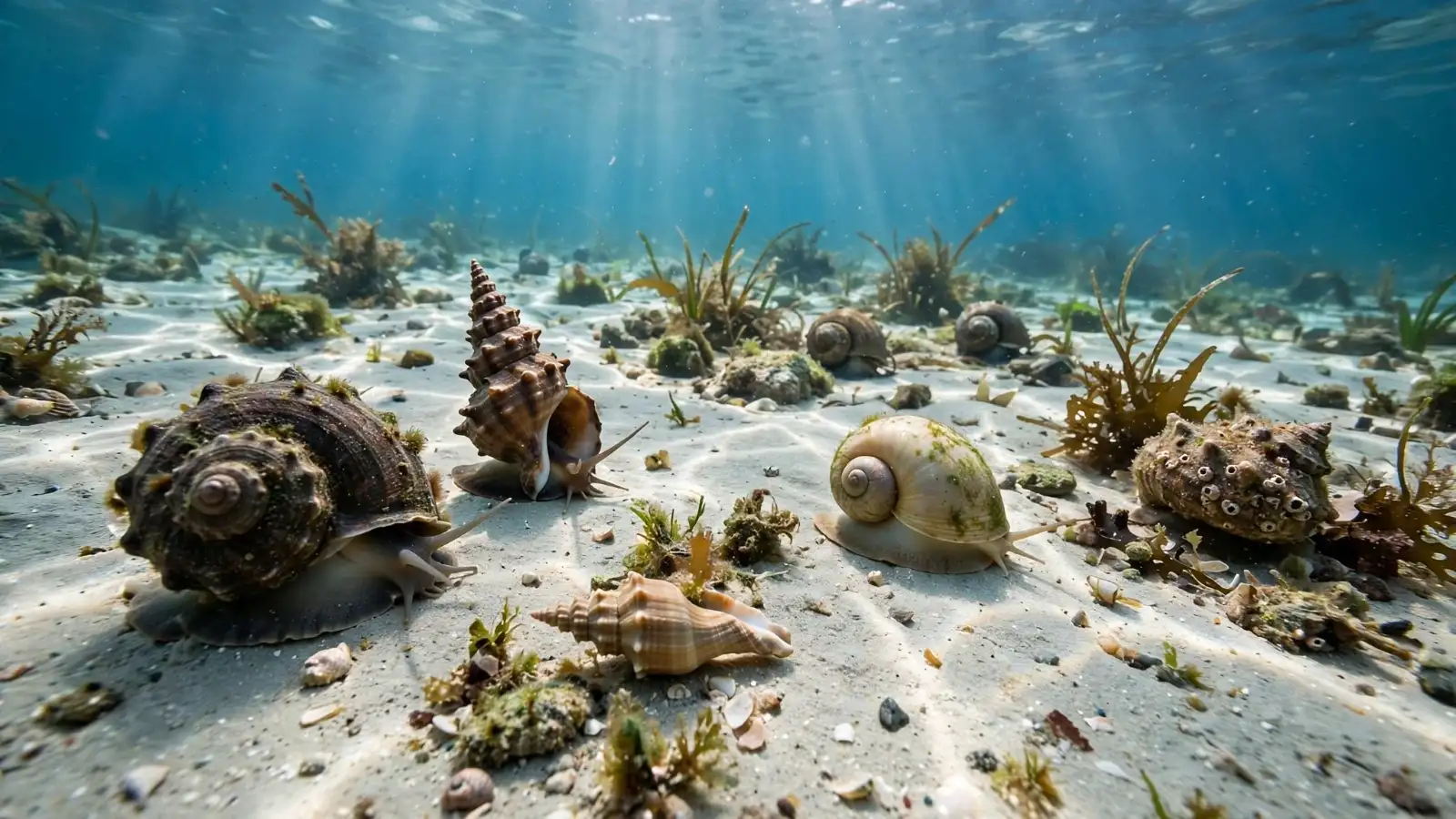
Most shells are made primarily of calcium carbonate, combined with an organic framework that helps organise their structure. As a snail grows, it adds new material around the shell's opening, increasing its size and sometimes extending its ridges, spines or other features.
The resulting design depends on the species' genetics, growth patterns and environment. Some sea snails develop spiral shells with smooth surfaces, while others produce elaborate shapes that appear almost sculpted.
These features can serve practical functions, although not every ridge or projection has a clearly established purpose. Some are the result of evolutionary history rather than a direct adaptation to a particular threat.
A strong shell creates a physical barrier around much of the body. Many sea snails can withdraw into their shells when threatened, reducing the amount of exposed tissue.
Some species also have thickened shell walls, narrow openings or a protective plate called an operculum. The operculum acts like a door, helping close the opening when the snail retreats.
Spines and ridges may make certain shells more difficult for predators to grip, crush or swallow. However, the effectiveness of these features varies by species and predator. A complicated shell does not automatically provide better protection in every situation.
Spines can also help increase the shell's effective width without requiring an equally large increase in its solid mass. In some habitats, shell projections may help prevent a snail from being easily dislodged or swallowed.
However, these structures can come with disadvantages. Elaborate shells may require additional material and energy to build. They can also affect movement through narrow spaces or make certain activities more difficult.
The best shell design therefore depends on the conditions a species faces. A structure that offers an advantage in one habitat may provide little benefit in another.
Snails living on exposed rocky shores may benefit from shells that help them withstand physical stress and resist being dislodged by waves. Species that live among rocks may have compact forms that allow them to move through crevices.
Other snails have elongated or unusually shaped shells that reflect their feeding habits and evolutionary history. Some species are specialised predators, while others graze on algae or feed on organic material.
Shell shape alone does not determine where a sea snail can live, but it can be one part of a wider set of adaptations involving the animal's body, behaviour and physiology.
In some species, colour and pattern may help camouflage the animal against rocks, sand, coral or other surfaces. Blending into the surroundings can make a snail less noticeable to predators.
Shell markings can also vary within the same species, even among individuals living in similar environments. Some differences arise from inherited traits, while others may reflect environmental influences during shell formation.
Not every colourful pattern has a proven survival benefit. Shell appearance can also result from evolutionary processes that have continued over many generations.
If a feature offers a meaningful advantage, it may become more common over time through natural selection. For example, shell thickness, shape or projections may help some species cope with particular predators or physical conditions.
Other shell characteristics may persist because they are linked to different traits or because they have little effect on survival. Evolution does not necessarily produce the most beautiful or complicated design. It favours traits that contribute to reproductive success under particular conditions.
This explains why sea snails display such a wide variety of shells, from simple spirals to elaborate forms with dramatic projections.
Elaborate sea snail shells are more than unusual features of marine life. They are structures shaped by growth, genetics, habitat and evolutionary pressures. Depending on the species, ridges, spines, thick walls and distinctive patterns may offer protection, support camouflage or reflect adaptations to a particular way of life. Not every shell feature has a single clear purpose, but the diversity of these designs demonstrates how marine animals have adapted to different environments over time. Each shell provides a fascinating example of the relationship between an organism and its surroundings.
What Makes Sea Snail Shells So Elaborate?
A sea snail's shell is produced by a specialised part of its body called the mantle. This tissue releases materials that build the shell gradually as the animal grows.Most shells are made primarily of calcium carbonate, combined with an organic framework that helps organise their structure. As a snail grows, it adds new material around the shell's opening, increasing its size and sometimes extending its ridges, spines or other features.
The resulting design depends on the species' genetics, growth patterns and environment. Some sea snails develop spiral shells with smooth surfaces, while others produce elaborate shapes that appear almost sculpted.
These features can serve practical functions, although not every ridge or projection has a clearly established purpose. Some are the result of evolutionary history rather than a direct adaptation to a particular threat.
How Elaborate Shells Help Protect Sea Snails
Protection is one of the most important functions of a sea snail's shell. Unlike animals with internal skeletons, sea snails have soft bodies that can be vulnerable to predators such as fish, crabs and other marine animals.A strong shell creates a physical barrier around much of the body. Many sea snails can withdraw into their shells when threatened, reducing the amount of exposed tissue.
Some species also have thickened shell walls, narrow openings or a protective plate called an operculum. The operculum acts like a door, helping close the opening when the snail retreats.
Spines and ridges may make certain shells more difficult for predators to grip, crush or swallow. However, the effectiveness of these features varies by species and predator. A complicated shell does not automatically provide better protection in every situation.
Why Some Sea Snails Have Spines and Bumps
Some marine snails have shells with long projections, raised knobs or sharp-looking spines. These structures can influence how predators handle them and may make the animal harder to attack.Spines can also help increase the shell's effective width without requiring an equally large increase in its solid mass. In some habitats, shell projections may help prevent a snail from being easily dislodged or swallowed.
However, these structures can come with disadvantages. Elaborate shells may require additional material and energy to build. They can also affect movement through narrow spaces or make certain activities more difficult.
The best shell design therefore depends on the conditions a species faces. A structure that offers an advantage in one habitat may provide little benefit in another.
How Shell Shapes Help Sea Snails Adapt to Different Habitats
Sea snails live in a wide range of marine environments, including rocky shores, sandy seabeds, coral reefs and seagrass beds. Different shell shapes can be useful under different conditions.Snails living on exposed rocky shores may benefit from shells that help them withstand physical stress and resist being dislodged by waves. Species that live among rocks may have compact forms that allow them to move through crevices.
Other snails have elongated or unusually shaped shells that reflect their feeding habits and evolutionary history. Some species are specialised predators, while others graze on algae or feed on organic material.
Shell shape alone does not determine where a sea snail can live, but it can be one part of a wider set of adaptations involving the animal's body, behaviour and physiology.
Do Shell Colours and Patterns Have a Purpose?
Sea snail shells can feature stripes, spots, bands and subtle colour variations. These patterns develop through differences in pigmentation and shell growth.In some species, colour and pattern may help camouflage the animal against rocks, sand, coral or other surfaces. Blending into the surroundings can make a snail less noticeable to predators.
You may also like
- Food Processing May Affect the Body Differently Even When Meals Have the Same Nutrients
- Meet Ashaatti Ammumma: Kerala grandmother wins hearts by teaching kids to write in sand
- Keeping these 5 plants at home can attract wealth and prosperity
- A Tamil Nadu boy was denied access to a library in his own neighbourhood; years after he helped open one in Coimbatore, the number of graduates in his community has risen from just 4 to 30
- Back Pain Causes: 7 Everyday Habits That May Be Hurting Your Spine and How to Prevent Them
Shell markings can also vary within the same species, even among individuals living in similar environments. Some differences arise from inherited traits, while others may reflect environmental influences during shell formation.
Not every colourful pattern has a proven survival benefit. Shell appearance can also result from evolutionary processes that have continued over many generations.
How Evolution Shapes Elaborate Sea Snail Shells
Sea snail shells have evolved over millions of years. Across generations, inherited variations in shell structure can influence how well individuals survive and reproduce in particular environments.If a feature offers a meaningful advantage, it may become more common over time through natural selection. For example, shell thickness, shape or projections may help some species cope with particular predators or physical conditions.
Other shell characteristics may persist because they are linked to different traits or because they have little effect on survival. Evolution does not necessarily produce the most beautiful or complicated design. It favours traits that contribute to reproductive success under particular conditions.
This explains why sea snails display such a wide variety of shells, from simple spirals to elaborate forms with dramatic projections.
Elaborate sea snail shells are more than unusual features of marine life. They are structures shaped by growth, genetics, habitat and evolutionary pressures. Depending on the species, ridges, spines, thick walls and distinctive patterns may offer protection, support camouflage or reflect adaptations to a particular way of life. Not every shell feature has a single clear purpose, but the diversity of these designs demonstrates how marine animals have adapted to different environments over time. Each shell provides a fascinating example of the relationship between an organism and its surroundings.






Loving Newspoint? Download the app now
