
Why Do Sloths Spend So Much Time Hanging Upside Down? The Fascinating Science Behind Their Unusual Habit

Sloths are among the most unusual animals in the world. Known for their slow movements and relaxed lifestyle, these tree-dwelling mammals spend much of their lives hanging upside down from branches. They eat, sleep, rest and even give birth while suspended in trees. Although this behaviour may look uncomfortable, it is perfectly suited to their bodies and surroundings. Their long limbs, curved claws and specialised muscles allow them to remain suspended for extended periods without using much energy. But why did sloths develop this distinctive way of living, and what advantages does it offer?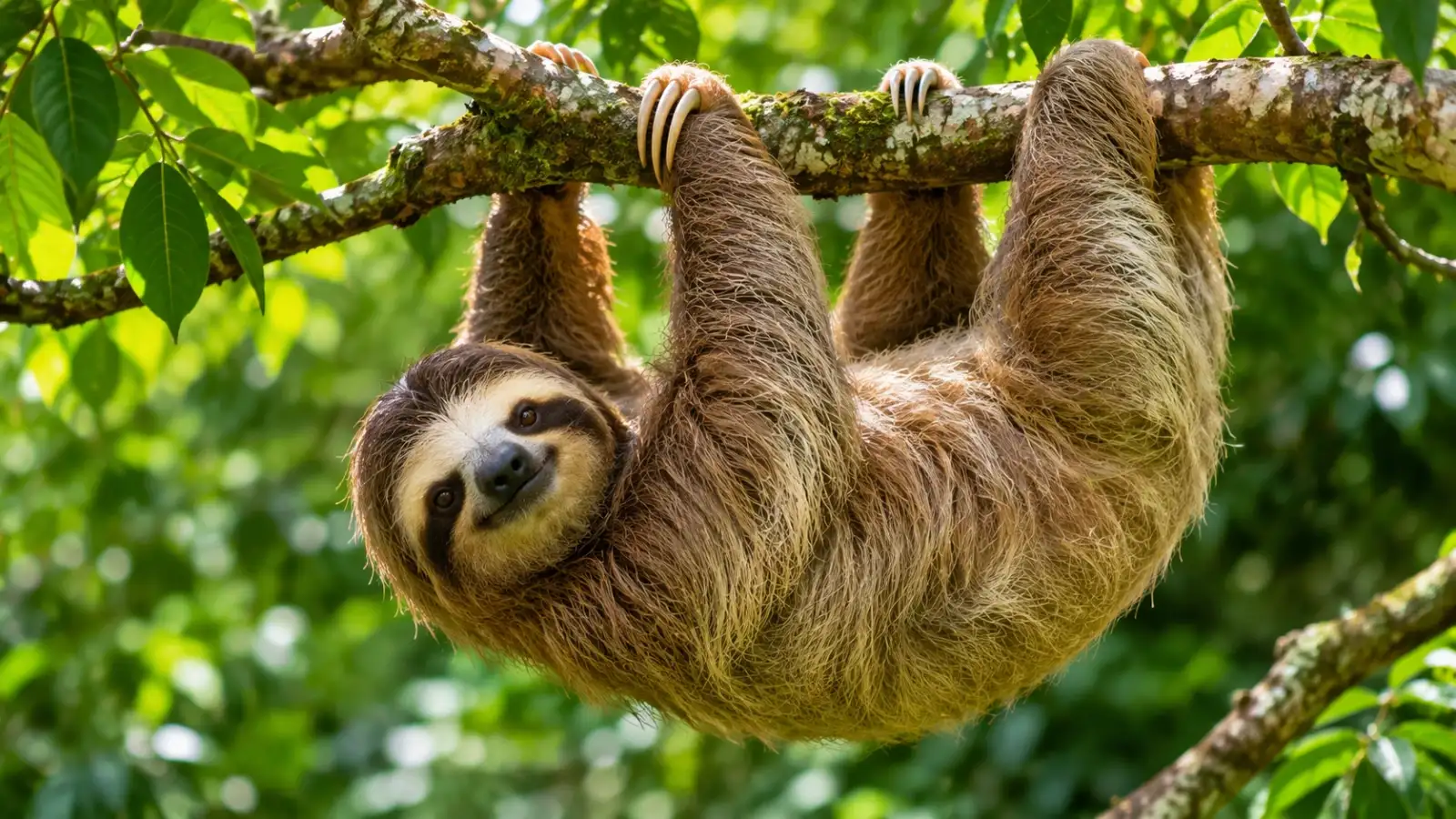
1. Their Bodies Are Built for Hanging
One of the main reasons sloths spend so much time upside down is their physical structure. Their long limbs end in curved claws that hook securely around tree branches. These claws act like natural hooks, allowing sloths to hang without constantly gripping with their hands.
Their tendons and muscles are also adapted to support this posture. Sloths can maintain a firm hold while using relatively little energy. This makes hanging a comfortable resting position rather than a tiring activity.
2. Hanging Helps Them Save Energy
Sloths have an exceptionally slow metabolism. Their bodies process food gradually, and they conserve energy whenever possible. Remaining suspended from a branch helps them avoid unnecessary movement.
Instead of repeatedly climbing up and down, they can rest in one position for long periods. This energy-saving lifestyle is particularly useful because their leafy diet provides relatively little energy.
3. Their Food Is Found High in Trees
Sloths mainly feed on leaves, buds and other plant material found in the forest canopy. Hanging upside down allows them to reach nearby foliage without moving around too much.
Their long limbs help them stretch towards leaves on surrounding branches. Since food is readily available in their habitat, they can spend much of the day feeding and resting in the same general area.
4. It Helps Them Stay Safe from Predators
Living high in trees offers sloths some protection from predators that hunt on the forest floor. Their slow movements and ability to remain still also make them difficult to notice among branches and leaves.
Their fur can support the growth of algae, giving some sloths a greenish appearance that helps them blend into the forest canopy. However, camouflage is not complete protection, as predators such as harpy eagles and large cats can still threaten them.
5. They Can Sleep and Rest Upside Down
Unlike humans, sloths do not need to lie on a flat surface to rest comfortably. Their specialised limbs allow them to remain securely attached to branches while sleeping.
Their curved claws and tendon arrangements help maintain their grip with minimal muscular effort. This means they can relax without constantly worrying about falling.
6. Their Internal Organs Are Adapted to This Lifestyle
Hanging upside down for extended periods could create problems for animals whose bodies are not suited to the position. Sloths have anatomical adaptations that help their internal organs remain supported while they hang.
Their internal structure, including specialised attachments that support certain organs, helps reduce pressure on the diaphragm and allows them to breathe comfortably in this posture.
Can Sloths Ever Come Down from Trees?
Yes. Although they spend most of their lives in trees, sloths occasionally descend to the ground. They may do this to move between trees or, in the case of many three-toed sloths, to defecate.
Moving on the ground is difficult because their limbs are designed primarily for climbing and hanging rather than walking. As a result, they are much slower and more vulnerable when away from trees.
Sloths spend so much time hanging upside down because their bodies and lifestyle are perfectly adapted to life in the forest canopy. Their curved claws, specialised muscles and energy-saving metabolism make this position comfortable and practical. It helps them reach food, rest for long periods and remain relatively protected from ground-based threats. What may look like an unusual habit is actually an effective survival strategy shaped by life among the trees.
1. Their Bodies Are Built for Hanging
One of the main reasons sloths spend so much time upside down is their physical structure. Their long limbs end in curved claws that hook securely around tree branches. These claws act like natural hooks, allowing sloths to hang without constantly gripping with their hands.
Their tendons and muscles are also adapted to support this posture. Sloths can maintain a firm hold while using relatively little energy. This makes hanging a comfortable resting position rather than a tiring activity.
2. Hanging Helps Them Save Energy
Sloths have an exceptionally slow metabolism. Their bodies process food gradually, and they conserve energy whenever possible. Remaining suspended from a branch helps them avoid unnecessary movement.
Instead of repeatedly climbing up and down, they can rest in one position for long periods. This energy-saving lifestyle is particularly useful because their leafy diet provides relatively little energy.
3. Their Food Is Found High in Trees
Sloths mainly feed on leaves, buds and other plant material found in the forest canopy. Hanging upside down allows them to reach nearby foliage without moving around too much.
Their long limbs help them stretch towards leaves on surrounding branches. Since food is readily available in their habitat, they can spend much of the day feeding and resting in the same general area.
4. It Helps Them Stay Safe from Predators
Living high in trees offers sloths some protection from predators that hunt on the forest floor. Their slow movements and ability to remain still also make them difficult to notice among branches and leaves.
Their fur can support the growth of algae, giving some sloths a greenish appearance that helps them blend into the forest canopy. However, camouflage is not complete protection, as predators such as harpy eagles and large cats can still threaten them.
5. They Can Sleep and Rest Upside Down
You may also like
- Psychology says people who read messages but choose not to reply may have different communication patterns: How emotional avoidance, conflict discomfort, personal boundaries and digital communication habits influence texting behaviour and relationships
- Bigg Boss 20: Yung DSA upset over ScoutOP sharing Gullu's bed? Fans question his reactions
- Big news for Central Government pensioners: pending dues will now be settled.
- Government Introduces New Rules for PF Trusts; Benefits Now Comparable to EPFO
- Rs 37,989 Crore Subsidy Provided for Rooftop Solar Panels; UP Leads the Way
Unlike humans, sloths do not need to lie on a flat surface to rest comfortably. Their specialised limbs allow them to remain securely attached to branches while sleeping.
Their curved claws and tendon arrangements help maintain their grip with minimal muscular effort. This means they can relax without constantly worrying about falling.
6. Their Internal Organs Are Adapted to This Lifestyle
Hanging upside down for extended periods could create problems for animals whose bodies are not suited to the position. Sloths have anatomical adaptations that help their internal organs remain supported while they hang.
Their internal structure, including specialised attachments that support certain organs, helps reduce pressure on the diaphragm and allows them to breathe comfortably in this posture.
Can Sloths Ever Come Down from Trees?
Yes. Although they spend most of their lives in trees, sloths occasionally descend to the ground. They may do this to move between trees or, in the case of many three-toed sloths, to defecate.
Moving on the ground is difficult because their limbs are designed primarily for climbing and hanging rather than walking. As a result, they are much slower and more vulnerable when away from trees.
Sloths spend so much time hanging upside down because their bodies and lifestyle are perfectly adapted to life in the forest canopy. Their curved claws, specialised muscles and energy-saving metabolism make this position comfortable and practical. It helps them reach food, rest for long periods and remain relatively protected from ground-based threats. What may look like an unusual habit is actually an effective survival strategy shaped by life among the trees.






Loving Newspoint? Download the app now
