
Why Some Foods Make Your Mouth Feel Dry Even Though They Contain Water

A ripe fruit can be packed with water, yet one bite can leave your mouth feeling strangely dry. The same thing can happen after drinking strong tea or eating an unripe fruit. It seems contradictory. If something contains plenty of water, why does your mouth feel as though it needs a drink? The answer is that perceived dryness is not always about how much water a food contains. Sometimes it is about what that food does to the thin layer of saliva that keeps your mouth slippery. Certain compounds can interfere with this natural lubrication, creating a sensation of dryness even when plenty of water is present.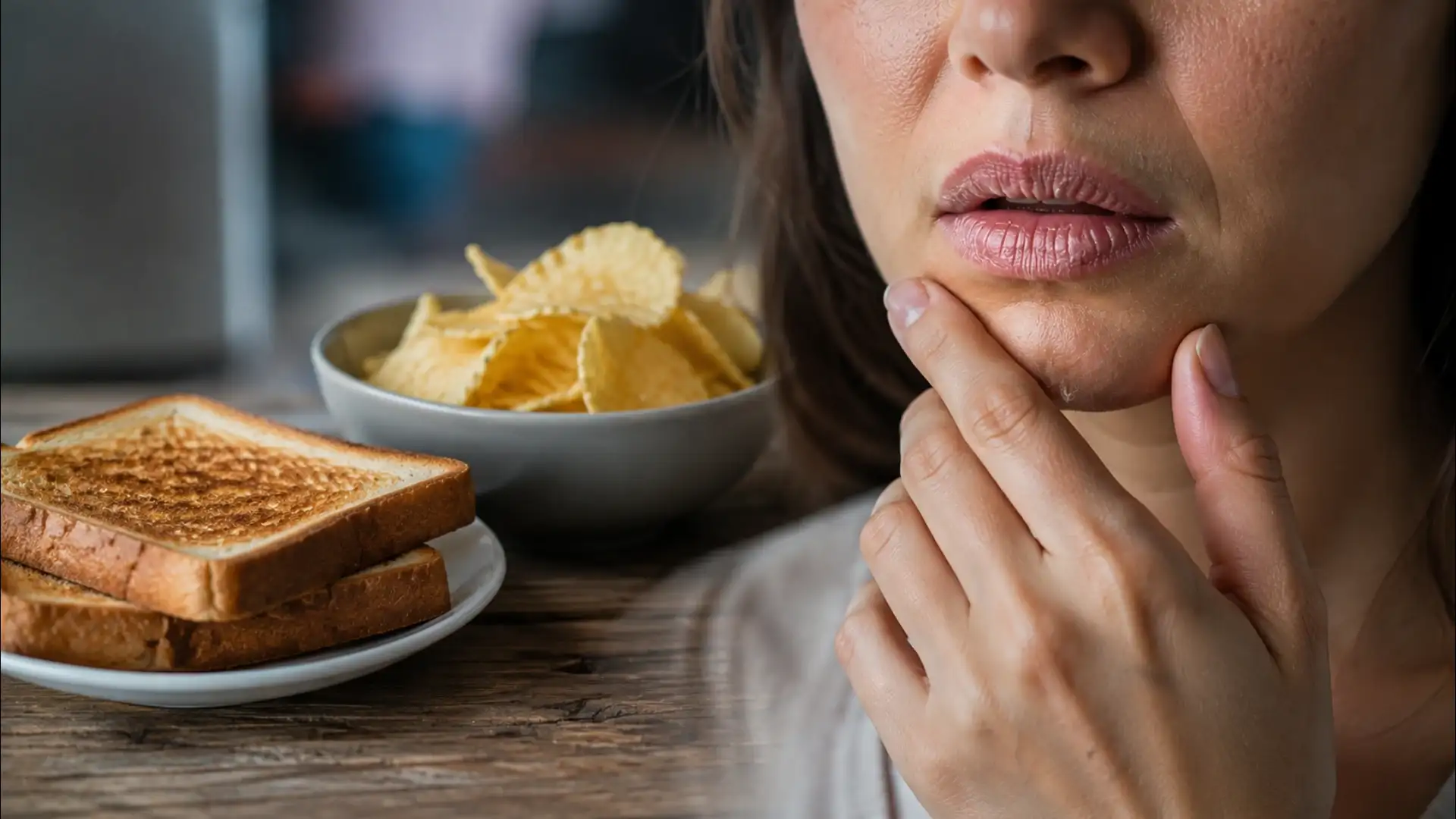
Some foods interfere with this system. Instead of simply removing water, they can change the properties of the saliva film and increase friction inside the mouth. The result feels dry, rough or puckered.
This is why a mouthful of juicy fruit can sometimes feel surprisingly dry.
Tannins can interact with proteins in saliva, particularly proline-rich proteins. These interactions can form aggregates and reduce the lubricating quality of the saliva film. As friction increases, the mouth can begin to feel rough and dry.
That familiar puckering sensation after a strong cup of tea is therefore not simply your imagination. It is a measurable sensory response involving food chemistry and your saliva.
The reason is that the sensation is not determined solely by the amount of water touching your mouth. The interaction between food compounds and saliva has already altered the mouth's surface conditions. Research has found that astringent substances can produce a less wet sensation than ordinary water, even though the astringent liquid itself contains water.
This may partly explain why one person can enjoy a very strong cup of tea while another reaches for water after just a few sips.
So the next time a food seems to "steal" the moisture from your mouth, remember that it may not have taken away much water at all. It may simply have changed the way your saliva works.
Your mouth can feel dry even when the real story is happening at a microscopic level between food, saliva and the surfaces inside your mouth.
Dryness Is Not Always a Lack of Water
When people say a food has "dried out" their mouth, they are not necessarily describing dehydration. Your mouth is covered by a microscopic film of saliva containing water, proteins and other substances that help surfaces slide smoothly against each other.Some foods interfere with this system. Instead of simply removing water, they can change the properties of the saliva film and increase friction inside the mouth. The result feels dry, rough or puckered.
This is why a mouthful of juicy fruit can sometimes feel surprisingly dry.
Tannins Are One of the Main Culprits
Tea, coffee, grapes, some berries and unripe fruits can contain polyphenols such as tannins. These compounds are particularly well known for producing a sensation called astringency .You may also like
- 'We left the happiest country in the world to raise our kids in India': Why this foreign couple shifted base to India
- Ranveer Singh's 'Pralay': A Groundbreaking Action Thriller Begins Filming
- Money Plant Not Growing? 5 Common Mistakes That Could Be Stopping New Leaves
- Lemon, eucalyptus and vinegar: DIY organic floor cleaner that you can make with 3 easy ingredients in your kitchen
- What Makes These 4 Kali Temples in Bengal So Mysterious?
Tannins can interact with proteins in saliva, particularly proline-rich proteins. These interactions can form aggregates and reduce the lubricating quality of the saliva film. As friction increases, the mouth can begin to feel rough and dry.
That familiar puckering sensation after a strong cup of tea is therefore not simply your imagination. It is a measurable sensory response involving food chemistry and your saliva.
Water Cannot Immediately Cancel the Sensation
This explains another curious experience. You might drink water after eating an astringent food and still feel that your mouth is dry for a short while.The reason is that the sensation is not determined solely by the amount of water touching your mouth. The interaction between food compounds and saliva has already altered the mouth's surface conditions. Research has found that astringent substances can produce a less wet sensation than ordinary water, even though the astringent liquid itself contains water.
Your Saliva May Change the Experience
Not everyone experiences astringency in exactly the same way. Saliva differs between individuals in its flow rate, composition and protein content. These differences can influence how strongly someone perceives the drying effect of tannins and other compounds.This may partly explain why one person can enjoy a very strong cup of tea while another reaches for water after just a few sips.
Why This Matters Beyond Tea and Fruit
The science of mouthfeel has become increasingly important to food manufacturers, particularly as they develop high-protein and plant-based foods. Some proteins and plant ingredients can also interact with saliva and create an astringent sensation. Researchers are studying these interactions to make nutritious foods more pleasant to eat.So the next time a food seems to "steal" the moisture from your mouth, remember that it may not have taken away much water at all. It may simply have changed the way your saliva works.
Your mouth can feel dry even when the real story is happening at a microscopic level between food, saliva and the surfaces inside your mouth.






Loving Newspoint? Download the app now
