The Dark Pan Mystery: Why Do Some Indian Foods Taste Better When Cooked in Iron Utensils

If you step into an old-fashioned kitchen or a bustling roadside dhaba in India, you will immediately notice massive, heavy black pans resting over open flames. Whether it is a seasoned cast iron kadai sizzling with spicy dry vegetables, a smooth iron tawa crisping up golden flatbreads, or a heavy pan simmering iron enriched spinach curry, iron utensils remain the undisputed favorite of traditional cooks. Modern non-stick cookware and lightweight aluminum pans offered convenience, but food lovers consistently argue that meals prepared in cast iron cookware possess a distinct, rich depth of taste that modern metal pans cannot duplicate. What seems like simple rustic nostalgia is actually rooted in chemical reactions, heat management physics, and natural seasoning. Exploring why some Indian foods taste better when cooked in iron utensils reveals how extreme heat retention, iron element leaching, polymerised oil seasoning, and deep Maillard browning transform everyday dishes.
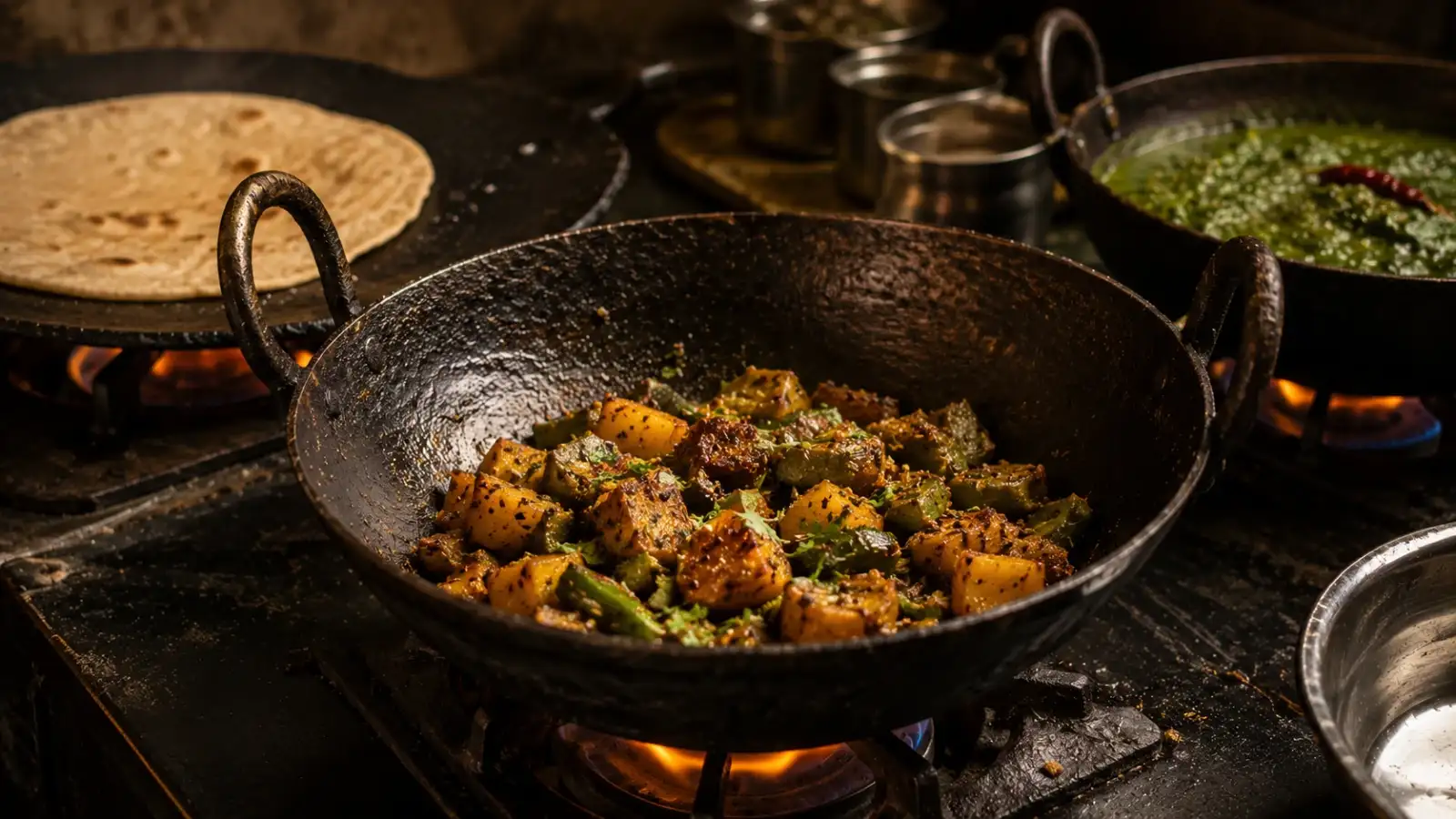
When you place a heavy iron kadai over a high flame, the pan absorbs immense heat and radiates it steadily across the surface without dropping temperature when cold ingredients are added. This intense, steady heat retention is crucial for high-temperature Indian cooking techniques. When you roast spices or fry dry vegetable masalas like bhindi fry or arbi fry, the high surface temperature sears the vegetables instantly without releasing excess trapped moisture. This creates a crispy, caramelized exterior while keeping the inside tender, avoiding the soggy texture that often occurs in thin modern pans.
This iron infusion subtle chemical reaction alters both the taste profile and visual appearance of certain traditional dishes. When preparing iron enriched spinach curries, black lentils, or chole chickpeas inside an iron pan, released iron reacts with natural plant compounds called tannins. This reaction deepens the colour of the curry into a dark, rich, and appetizing hue while adding a subtle, savory mineral depth to the gravy. This unique dark tone and authentic taste are nearly impossible to achieve using modern non-stick pans.
When cooking oil is heated repeatedly on an iron surface, fatty acids break down and bond chemically with the metal, creating a smooth, tough, and natural non-stick barrier. This polymerised oil seasoning layer releases subtle caramelized aromas into every new dish prepared inside the pan. When making flatbreads like roti, naan, or dosa on a seasoned iron tawa, the natural surface allows high heat transfer without sticking, producing a golden, smoky crust that enhances overall mouthfeel.
High thermal mass and intense steady heat retention
The physical properties of cast iron cookware explain much of its cooking superiority. Cast iron is a very dense metal with high thermal mass, meaning it takes longer to heat up, but holds onto thermal energy far better than thin aluminum or stainless steel.When you place a heavy iron kadai over a high flame, the pan absorbs immense heat and radiates it steadily across the surface without dropping temperature when cold ingredients are added. This intense, steady heat retention is crucial for high-temperature Indian cooking techniques. When you roast spices or fry dry vegetable masalas like bhindi fry or arbi fry, the high surface temperature sears the vegetables instantly without releasing excess trapped moisture. This creates a crispy, caramelized exterior while keeping the inside tender, avoiding the soggy texture that often occurs in thin modern pans.
Iron leaching and natural dark colour enhancement
One of the most fascinating aspects of cooking in unlined cast iron cookware is the natural chemical interaction between the metal surface and your food. As iron cookware heats up, tiny microscopic amounts of dietary iron leach naturally into the cooking dish.This iron infusion subtle chemical reaction alters both the taste profile and visual appearance of certain traditional dishes. When preparing iron enriched spinach curries, black lentils, or chole chickpeas inside an iron pan, released iron reacts with natural plant compounds called tannins. This reaction deepens the colour of the curry into a dark, rich, and appetizing hue while adding a subtle, savory mineral depth to the gravy. This unique dark tone and authentic taste are nearly impossible to achieve using modern non-stick pans.
Polymerised oil seasoning and non-stick crust formation
A well-used cast iron tawa or kadai is never just plain raw metal; it is covered in a slick, natural protective layer built up over years of daily cooking. This continuous coating forms through a process called oil polymerisation.When cooking oil is heated repeatedly on an iron surface, fatty acids break down and bond chemically with the metal, creating a smooth, tough, and natural non-stick barrier. This polymerised oil seasoning layer releases subtle caramelized aromas into every new dish prepared inside the pan. When making flatbreads like roti, naan, or dosa on a seasoned iron tawa, the natural surface allows high heat transfer without sticking, producing a golden, smoky crust that enhances overall mouthfeel.
Natural oil reduction and healthier, rich cooking
Because a well-seasoned iron pan develops its own smooth natural barrier, dishes require far less added cooking oil over time to prevent burning. The intense, evenly distributed heat ensures that spices fry quickly without swimming in excess fat, allowing pure spice notes to shine through clearly.Reclaiming time-tested culinary wisdom
Understanding why some Indian foods taste better when cooked in iron utensils proves that ancient kitchen wisdom holds genuine scientific merit. By embracing heavy iron cookware, you elevate the flavour, texture, and health value of your home-cooked meals.Next Story