Why Some Indian Sweets Don’t Need Refrigeration: The Science Behind Long-Lasting Mithai

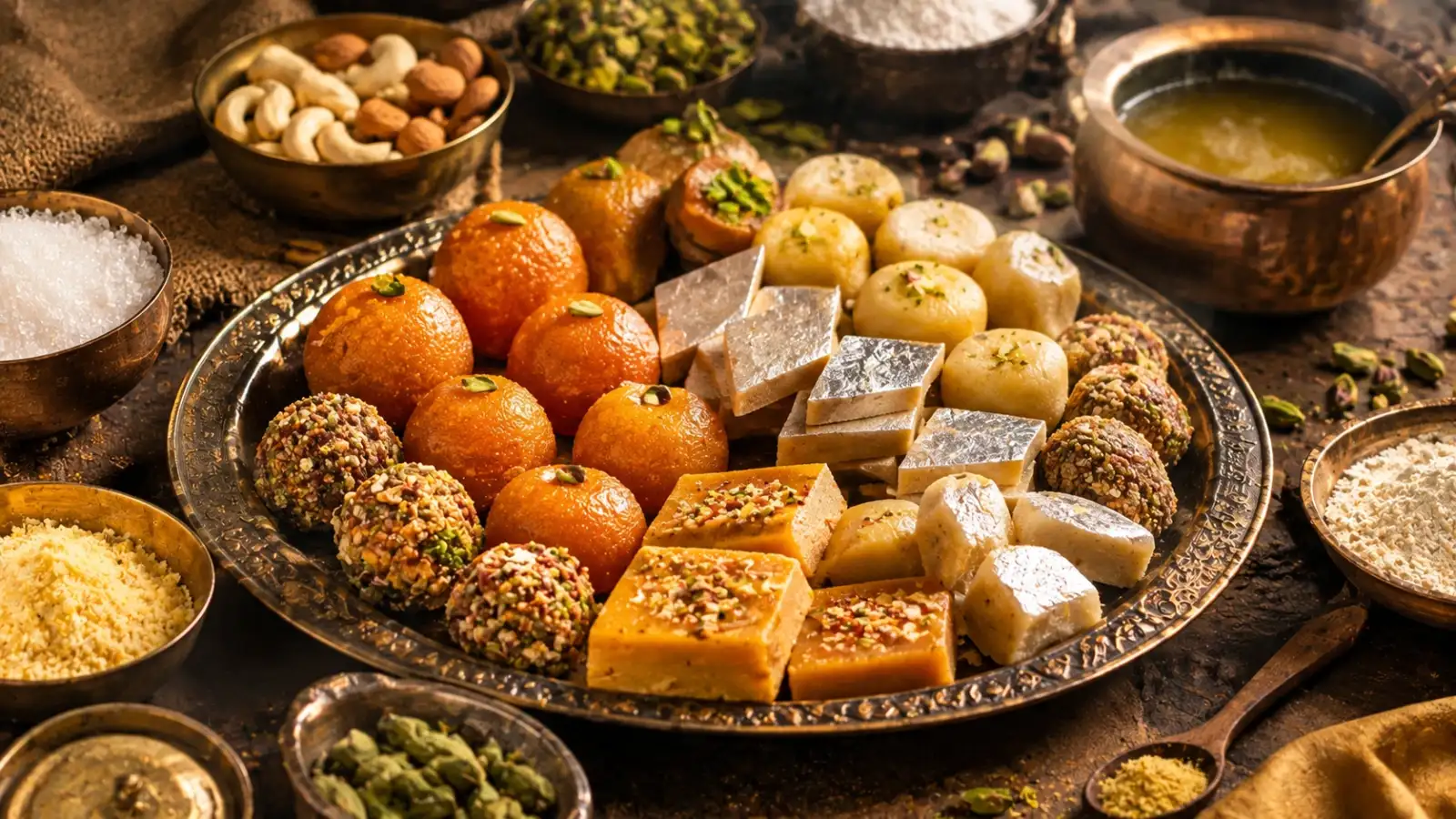
When you open a festive box of traditional confectionery, you are greeted by an array of textures, colours, and aromatic spices. While delicate milk-based treats like rasmalai or kalakand must be tucked away in the fridge almost immediately, sturdy delights like besan laddu, kaju katli, and mysore pak can sit comfortably on a kitchen counter for weeks without spoiling.
Hero Image


Long before modern electrical appliances and cold storage units existed, ancient confectioners perfected recipes that stayed fresh in warm climates. This was not a matter of luck, but a brilliant application of culinary chemistry. Exploring why some Indian sweets don't need refrigeration reveals how moisture reduction, high sugar concentrations, pure clarified butter, and natural frying techniques act as natural preservatives to protect these sweet treasures.

Controlling water activity and moisture reduction techniques

The single biggest catalyst for food spoilage is moisture. Bacteria, yeast, and mould spores require free water molecules to survive, multiply, and break down food ingredients. Confectioners control this vulnerability through a food science concept known as low water activity.


When making shelf-stable sweets, ingredients such as gram flour, semolina, or crushed nuts are slowly roasted in heavy iron cauldrons for extended periods. This continuous roasting process evaporates almost all residual water from the raw ingredients. In items like soan papdi or chakli-style sweet rosettes, the moisture content drops to near zero. Without water to support microbial life, bacteria simply cannot grow, allowing these crisp, dry treats to remain safe and delicious at room temperature for long stretches.

Sugar saturation and natural osmotic preservation

Sugar does far more than provide a delicious burst of sweetness; it is a powerful, natural preservative used in traditional food preparation worldwide. In dense confections like kaju katli or sugar-coated shakkarpara, sugar is added in concentrated quantities.


High sugar concentration creates a high osmotic pressure environment. When a microscopic bacterial cell or mould spore lands on a sugar-dense sweet, the high osmotic pressure draws moisture straight out of the microbe through its cell wall. This process, known as plasmolysis, dehydrates and neutralizes the bacteria before it can reproduce. As long as the sweet is stored in a dry, airtight container, the heavy sugar concentration forms an impenetrable barrier against environmental decay.

Pure clarified butter as a protective fat barrier

Clarified butter, universally known as ghee, plays a starring role in long-lasting confectionery like mohanthal, gond laddu, and mysore pak. Unlike raw butter, which contains water droplets and milk solids that turn rancid quickly, pure ghee is prepared by simmering butter until all moisture evaporates and milk proteins separate.

What remains is a pure, golden fat with extremely low moisture content. When sweets are bound together or fried in hot ghee, the fat coats every grain of flour and nut crumb, creating a protective waterproof seal. This fat barrier prevents ambient humidity from seeping into the sweet while slowing down oxidation. Interestingly, placing ghee-heavy sweets in a cold fridge actually ruins their texture by hardening the fats into a waxy block, whereas room temperature keeps them tender and melt-in-the-mouth.

Deep frying and the sealing power of sugar syrup

Many classic sweets undergo deep frying in ghee or oil before being steeped in hot sugar syrup. Deep frying instantly sterilizes the outer surface of the dough using high heat while driving out surface moisture.


When items like balushahi or badam halwa are subsequently coated in heavy, crystallized sugar syrup, the syrup cools into a hard outer shell. This crystallized crust acts like a natural wrapper, sealing the interior off from air and microbial spores.

Appreciating the brilliant heritage of traditional mithai

Understanding why some Indian sweets don't need refrigeration highlights the deep scientific wisdom embedded in traditional culinary arts. By balancing moisture, sugar, and fat, ancient cooks created sweet treats that survive the test of time without artificial chemicals or modern cold storage.