
Why Silence Makes Some People Think Worse: The Strange Comfort of Background Noise

There are people who can sit in a completely silent room and work for three hours. And then there are people who hear silence and immediately reach for their phone.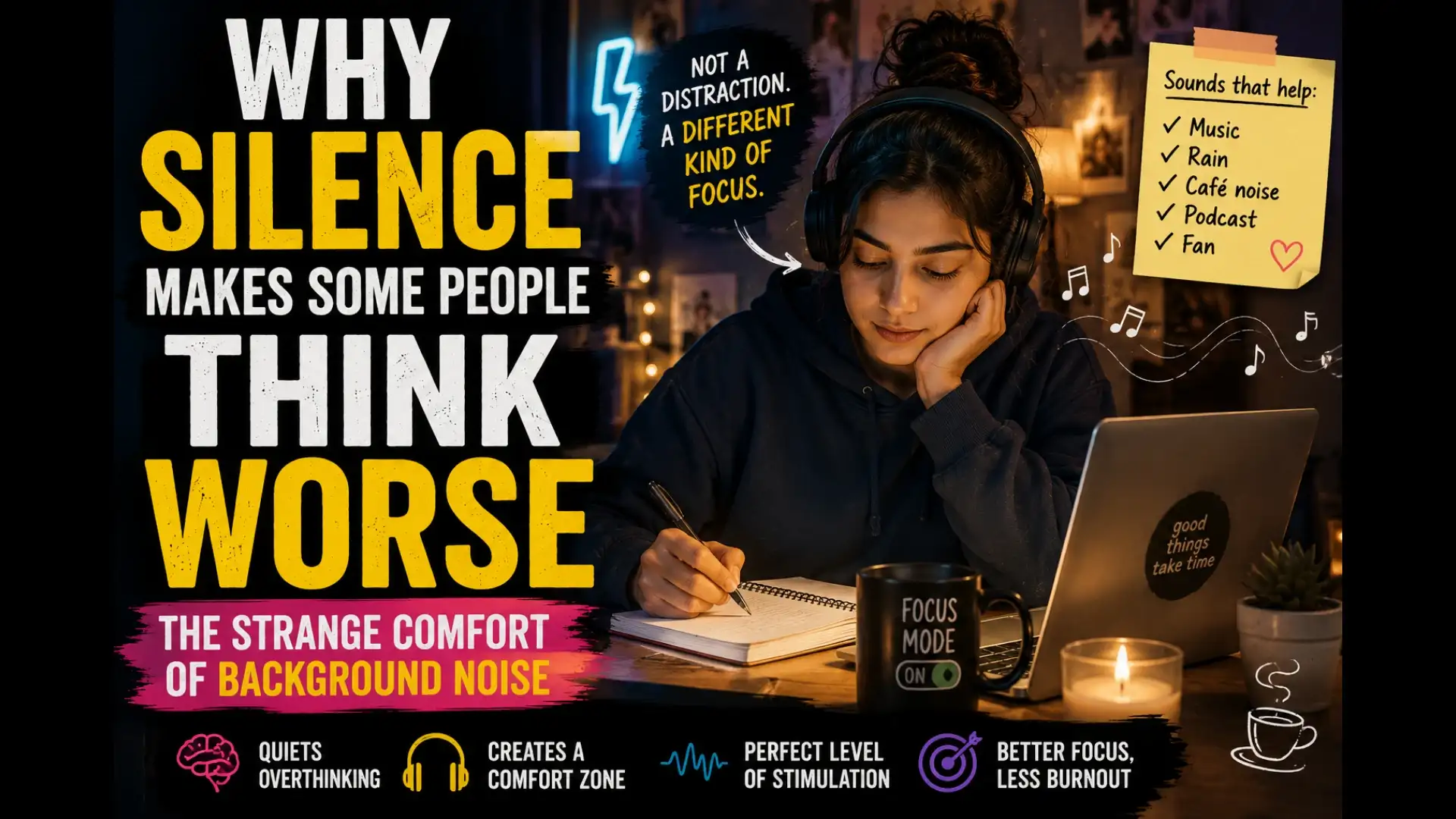
They put on music, then maybe a YouTube video, then a podcast. Maybe the television is playing something they've already watched for the fifth time. And somehow, that's when they finally start working. It sounds completely backwards. Wouldn't fewer sounds mean fewer distractions?
Apparently, not always. For some people, a little background noise doesn't interrupt their thoughts. It helps organise them.
Did I reply to that email? What am I doing next week? Why did I remember something embarrassing from 2019? A completely silent room can leave plenty of space for your mind to wander. Background noise can give that wandering mind something neutral to sit alongside.
But somewhere between those extremes, there is a sweet spot. A little sound can make the environment feel active without demanding your full attention.
That's why someone might work perfectly well with quiet music playing but struggle when a colleague suddenly starts having a loud conversation nearby. The problem isn't necessarily sound. It's a meaningful sound.
You already know what's coming. A brand-new podcast, on the other hand, might completely destroy your concentration because suddenly you're listening to every word. Background noise works best when it becomes almost invisible. You hear it. But you don't really listen to it.
The sound of people talking in a café can create the feeling that you're surrounded by activity even when you're working alone at home. The noise isn't necessarily helping you think harder. It may simply be helping you feel more comfortable while you think. And comfort matters more to concentration than we sometimes realise.
For some people, that creates exactly the kind of environment where their brain settles into work. It may also explain why ‘study with me’ videos and ambient sound recordings have become so popular. People aren't always looking for silence. They're looking for the right atmosphere.
The goal isn't to fill every second with sound. It's to create just enough stimulation to keep the environment from feeling distracting in its own way.
Because concentration isn't always about creating an empty environment. Sometimes it's about creating an environment where your brain finally feels comfortable enough to settle down. So if someone tells you they can't think without a little noise in the background, don't assume they're distracted. They might have simply figured out what kind of silence works for them.
They put on music, then maybe a YouTube video, then a podcast. Maybe the television is playing something they've already watched for the fifth time. And somehow, that's when they finally start working. It sounds completely backwards. Wouldn't fewer sounds mean fewer distractions?
Apparently, not always. For some people, a little background noise doesn't interrupt their thoughts. It helps organise them.
Silence Can Be Surprisingly Loud
When everything around you is quiet, your brain doesn't necessarily become quiet too. Quite the opposite. Without external sounds competing for your attention, you may suddenly notice every thought running through your head. What did that person mean by that message?Did I reply to that email? What am I doing next week? Why did I remember something embarrassing from 2019? A completely silent room can leave plenty of space for your mind to wander. Background noise can give that wandering mind something neutral to sit alongside.
The Brain Likes a Certain Amount of Stimulation
Think about trying to work in two extreme situations. The first is a completely silent room. The second is a nightclub where everyone is shouting. Neither is particularly helpful.But somewhere between those extremes, there is a sweet spot. A little sound can make the environment feel active without demanding your full attention.
That's why someone might work perfectly well with quiet music playing but struggle when a colleague suddenly starts having a loud conversation nearby. The problem isn't necessarily sound. It's a meaningful sound.
Why Familiar Noise Works So Well
This is why people often choose background sounds they already know. A familiar playlist, a television show they've seen before, rain sounds, and a café ambience video. Something predictable doesn't constantly ask the brain, “Pay attention to this.”You may also like
- Amitabh Bachchan was so popular in Egypt that Bollywood films were restricted in 1987; when Big B arrived in Cairo in 1991, it triggered a 'national crisis' in the country
- Unlock Radiant Skin with Quality Sleep: The Beauty Sleep Connection
- Jewellery Styling Tips for Teej 2026: Elevate Your Saree Look
- Neem Karoli Baba Ashram: Where to visit after seeing Neem Karoli Baba? These 7 places within a 50 km radius are the most special..
- “Men would never have to face...”: Keyaa Banerji lifted 140 kg at 45.7 kg, won world silver and still had to defend herself from online sexism
You already know what's coming. A brand-new podcast, on the other hand, might completely destroy your concentration because suddenly you're listening to every word. Background noise works best when it becomes almost invisible. You hear it. But you don't really listen to it.
Sometimes It's About Making a Space Feel Less Empty
There's also an emotional side to this. Silence can make a room feel strangely empty, especially when you're alone. A television murmuring in the background can make an apartment feel occupied. Music can make studying feel less lonely.The sound of people talking in a café can create the feeling that you're surrounded by activity even when you're working alone at home. The noise isn't necessarily helping you think harder. It may simply be helping you feel more comfortable while you think. And comfort matters more to concentration than we sometimes realise.
Why Cafés Are So Good for Work
Ever noticed how people love working in cafés? There are cups clinking, people chatting, chairs moving, coffee machines running and someone laughing at a table nearby. It's not quiet. But it's not chaotic either. It's a steady layer of sound.For some people, that creates exactly the kind of environment where their brain settles into work. It may also explain why ‘study with me’ videos and ambient sound recordings have become so popular. People aren't always looking for silence. They're looking for the right atmosphere.
But More Noise Isn't Always Better
There is definitely a point where background noise stops helping. If the music is too loud, you'll notice it. If the podcast is interesting, you'll start following the conversation. If someone nearby is arguing, your brain is going to want to know what happened.The goal isn't to fill every second with sound. It's to create just enough stimulation to keep the environment from feeling distracting in its own way.
Maybe Concentration Doesn't Always Look Like Silence
We've spent years being told that the best way to focus is to remove every possible distraction. But people don't all concentrate in the same way. Some need silence, some need music, some need the sound of rain, and some need the distant noise of other people existing around them, and maybe that's okay.Because concentration isn't always about creating an empty environment. Sometimes it's about creating an environment where your brain finally feels comfortable enough to settle down. So if someone tells you they can't think without a little noise in the background, don't assume they're distracted. They might have simply figured out what kind of silence works for them.






Loving Newspoint? Download the app now
