Why Some Plants Survive Years of Neglect While Others Die in Days

The vast disparity in houseplant survival rates stems directly from their ancestral origins. Plants that survive years of neglect typically evolved in harsh arid environments, rocky outcrops or competitive forest floors where water and nutrients were constantly scarce. Evolutionary adaptations taught these tough species to store moisture, conserve energy and tolerate extreme conditions without dying. Conversely, delicate varieties originate from tropical rainforests where high humidity, frequent rainfall and consistent warmth are guaranteed. When placed inside a modern living room, delicate houseplants miss their native habitats and collapse quickly without constant attention.
Water Storage Structures and Foliage Thickness
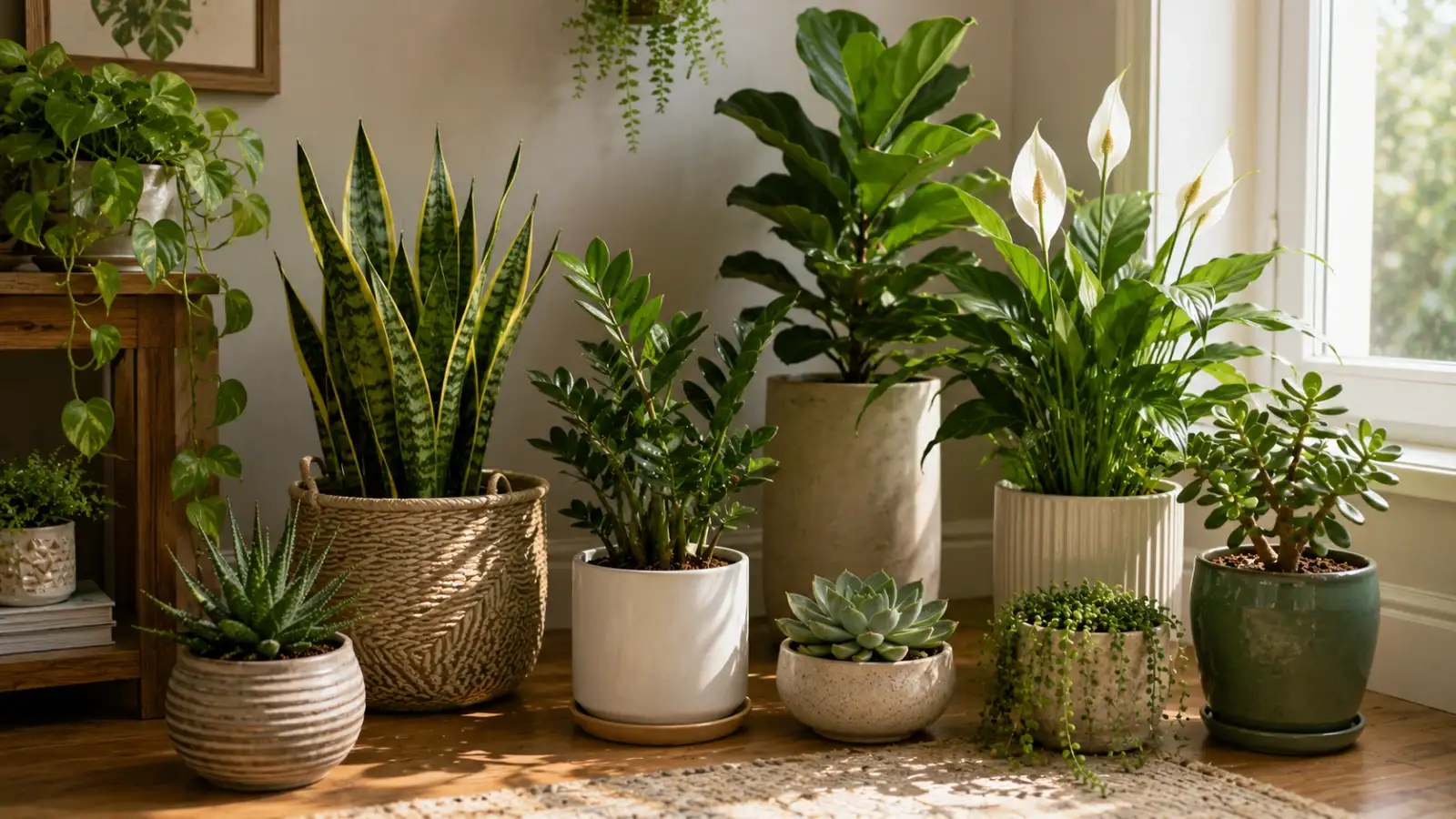
Drought tolerant houseplants possess specialised physical structures designed to hold water for months. Species like snake plants, ZZ plants and succulents feature thick fleshy leaves, bulbous stems or large underground rhizomes that act as living reservoirs. When you forget to water them, these resilient plants draw slowly from their internal water storage reserves without missing a beat. In sharp contrast, delicate houseplants have paper-thin foliage and fine fibrous roots that hold zero moisture. Without a steady supply of soil water, thin-leaved species dry out, drop foliage and perish within days.
Metabolic Rates and Photosynthetic Efficiency
Growth speed plays a critical role in how quickly a plant reacts to missed care. Resilient species operate on a remarkably slow metabolic rate, growing at a leisurely pace to conserve energy and nutrients. Many desert-dwelling varieties even use a specialized photosynthetic process that allows them to open leaf pores exclusively at night, drastically reducing moisture loss during hot daytime hours. Delicate plants, however, maintain high metabolic rates and rapid growth cycles that demand massive amounts of water and sunlight. When deprived of resources, their fast metabolism causes structural collapse almost immediately.
Root Resilience and Resistance to Soil Rot
Root structures vary dramatically between tough houseplants and fragile varieties. Robust species develop thick root systems that tolerate prolonged dry spells without shrivelling up. Their roots are coated in protective waxy layers that resist bacterial infections when soil conditions fluctuate. Fragile houseplants feature soft delicate root systems that are extraordinarily sensitive to both drought and excess moisture. A few extra days of bone-dry soil kills their root tips, while a single instance of soggy soil starves the roots of oxygen, triggering rapid root rot that destroys the entire plant overnight.
Tolerance for Changing Indoor Humidity and Light Levels
Modern indoor living spaces present challenging environments with dry air, seasonal draughts and inconsistent lighting. Resilient indoor varieties feature thick waxy leaf cuticles that lock in internal moisture, protecting foliage from dry central heating and air conditioning. They also adapt flexibly to low light corners where photosynthesis slows down safely. Delicate rainforest plants depend on dense ambient atmospheric humidity to keep their leaf tissue plump and healthy. When exposed to dry indoor air or direct sunlight, their leaves crisp, turn brown at the edges and drop off rapidly. Choosing tough houseplants built for harsh natural conditions ensures a green home that thrives effortlessly despite busy human schedules.
Water Storage Structures and Foliage Thickness
Drought tolerant houseplants possess specialised physical structures designed to hold water for months. Species like snake plants, ZZ plants and succulents feature thick fleshy leaves, bulbous stems or large underground rhizomes that act as living reservoirs. When you forget to water them, these resilient plants draw slowly from their internal water storage reserves without missing a beat. In sharp contrast, delicate houseplants have paper-thin foliage and fine fibrous roots that hold zero moisture. Without a steady supply of soil water, thin-leaved species dry out, drop foliage and perish within days.
Metabolic Rates and Photosynthetic Efficiency
Growth speed plays a critical role in how quickly a plant reacts to missed care. Resilient species operate on a remarkably slow metabolic rate, growing at a leisurely pace to conserve energy and nutrients. Many desert-dwelling varieties even use a specialized photosynthetic process that allows them to open leaf pores exclusively at night, drastically reducing moisture loss during hot daytime hours. Delicate plants, however, maintain high metabolic rates and rapid growth cycles that demand massive amounts of water and sunlight. When deprived of resources, their fast metabolism causes structural collapse almost immediately.
Root Resilience and Resistance to Soil Rot
Root structures vary dramatically between tough houseplants and fragile varieties. Robust species develop thick root systems that tolerate prolonged dry spells without shrivelling up. Their roots are coated in protective waxy layers that resist bacterial infections when soil conditions fluctuate. Fragile houseplants feature soft delicate root systems that are extraordinarily sensitive to both drought and excess moisture. A few extra days of bone-dry soil kills their root tips, while a single instance of soggy soil starves the roots of oxygen, triggering rapid root rot that destroys the entire plant overnight.
Tolerance for Changing Indoor Humidity and Light Levels
Modern indoor living spaces present challenging environments with dry air, seasonal draughts and inconsistent lighting. Resilient indoor varieties feature thick waxy leaf cuticles that lock in internal moisture, protecting foliage from dry central heating and air conditioning. They also adapt flexibly to low light corners where photosynthesis slows down safely. Delicate rainforest plants depend on dense ambient atmospheric humidity to keep their leaf tissue plump and healthy. When exposed to dry indoor air or direct sunlight, their leaves crisp, turn brown at the edges and drop off rapidly. Choosing tough houseplants built for harsh natural conditions ensures a green home that thrives effortlessly despite busy human schedules.
Next Story