
Why Do Squirrels Bury Food in Gardens, and How Do They Find It Again?

Have you ever watched a squirrel dig a small hole in your garden, place a nut inside and cover it with soil before running away? This familiar behaviour is more than a curious habit. Squirrels store food to help them survive periods when their usual food sources become scarce, and gardens often provide convenient places to create these hidden supplies.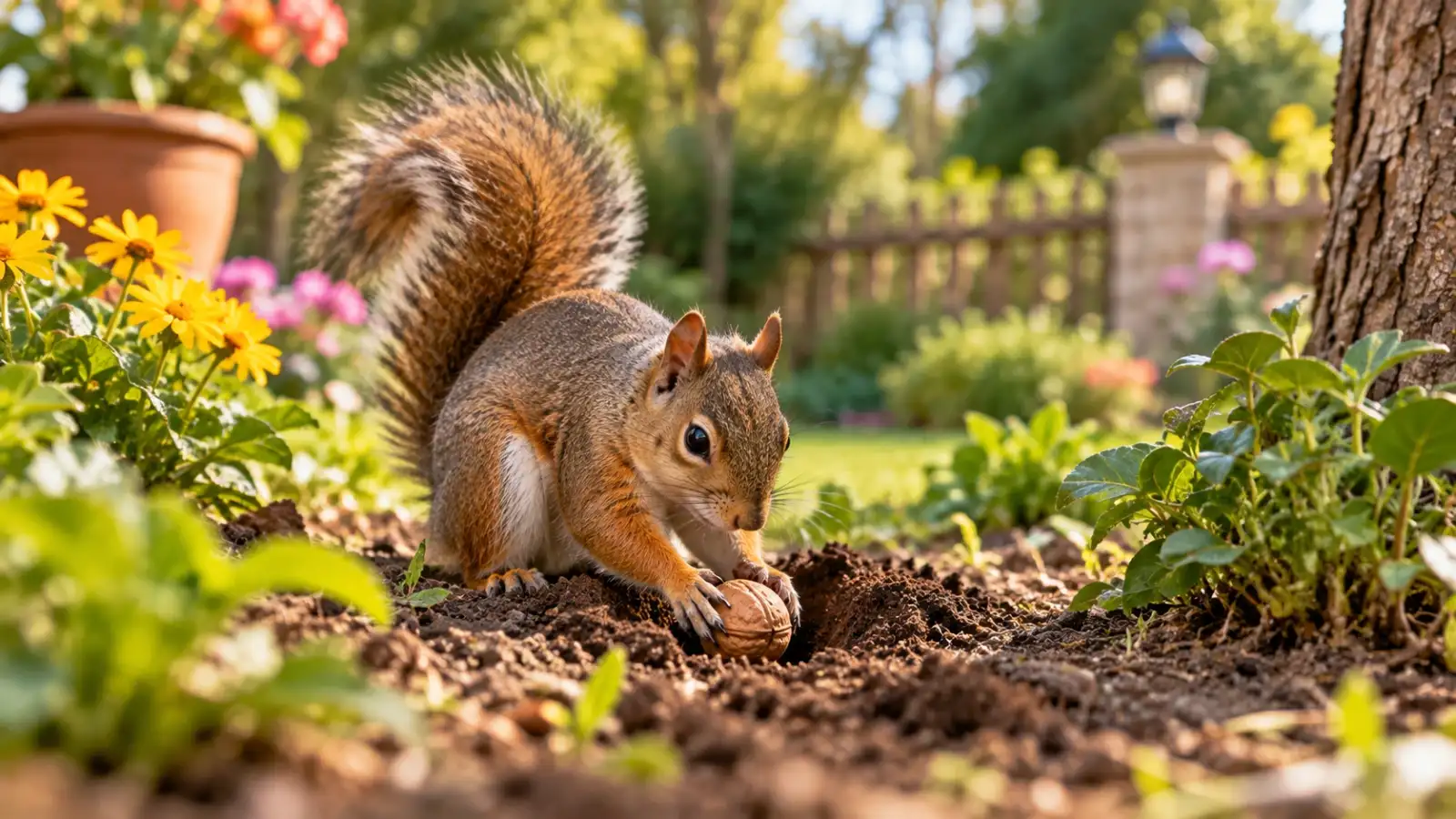
This behaviour is known as food caching. Many tree squirrels practise a strategy called scatter-hoarding, in which they bury individual food items or small collections in numerous locations instead of keeping everything in one place. Their ability to remember hiding spots, recognise landmarks and use their sense of smell helps them recover these supplies later. The process also has an unexpected benefit for gardens, as forgotten seeds and nuts can sometimes grow into new plants.
Acorns, walnuts, hazelnuts and other durable food items are particularly suitable for storage. Unlike soft fruits, which spoil relatively quickly, many nuts can remain edible for longer when buried under suitable conditions. Squirrels can therefore build up a collection of hidden food that helps them cope with changing weather and reduced availability.
This behaviour is especially important for species that remain active throughout winter. Instead of relying entirely on food they can find each day, they can retrieve previously stored supplies when fresh food is limited. However, not every squirrel species follows the same strategy, and some store food in larger, concentrated locations rather than scattering it across an area.
A squirrel may bury food near a tree, beneath a hedge or in a flowerbed because the soil is relatively easy to dig. Gardens with mature trees can be especially attractive when they produce acorns or other nuts. Bird feeders can also provide a regular source of seeds that squirrels may carry away and store.
Freshly disturbed soil sometimes attracts squirrels because it is easier to dig than compacted ground. This explains why gardeners occasionally discover small holes in recently planted beds or newly prepared lawns.
Although this activity can be frustrating, the squirrel is generally following its natural food-storage instincts rather than deliberately damaging plants. Covering vulnerable planting areas with suitable garden mesh can help protect bulbs and seedlings without harming wildlife.
They can use surrounding landmarks to recognise familiar areas. A tree trunk, fence, large stone, garden wall or distinctive patch of vegetation may help a squirrel identify where it previously buried a nut. Researchers have found that squirrels can use spatial information to relocate stored food, even when other cues are limited.
Some squirrels also appear to organise their caches according to food type or value. For example, they may treat preferred nuts differently from less desirable items. Such behaviour suggests that food storage involves more than simply hiding whatever they find.
Memory is not perfect, however. Squirrels may forget some locations, fail to recover certain items or lose food to other animals. Their success depends on factors such as the number of hiding places, changes in the surroundings and competition from other food-seeking animals.
A squirrel returning to a familiar garden may remember the general area where it placed a nut and then investigate the soil around that spot. Its sense of smell can help it identify food once it is close enough, although the strength of scent cues varies with the food, soil and weather conditions.
Moisture, soil composition and the depth at which an item is buried can influence how easily its scent reaches the surface. If a nut is buried too deeply or its location has changed significantly, finding it may become more difficult.
Squirrels can also investigate places where other animals have buried food. This means their searching behaviour is not limited to their own caches. They may recover their own supplies using memory while also taking advantage of food hidden by competitors.
Some observations and experiments suggest that certain squirrels use deceptive caching behaviour to reduce the risk of food theft. A squirrel may go through the motions of burying an item or choose a less obvious location when another squirrel is nearby.
Food theft is a real challenge for animals that store supplies in accessible places. A cache that takes time and energy to create may be lost if another animal discovers it. Spreading food across many locations reduces the risk of losing the entire collection at once.
However, not every incomplete digging action is deliberate deception. A squirrel may change its mind, move to another location or abandon a caching attempt for other reasons. The behaviour depends on the species and the circumstances.
Whether a seed grows depends on several conditions, including its viability, soil moisture, temperature, depth and access to suitable light. Not every buried nut becomes a seedling, as some are eaten, damaged, decay or remain dormant.
Nevertheless, squirrels can play a role in seed dispersal by carrying nuts away from the parent tree and burying them elsewhere. This may help certain tree species spread into new areas.
In a garden, this behaviour can occasionally produce unexpected seedlings near flowerbeds, lawns or the base of fences. If you find a young tree growing in an unsuitable location, you can identify it before deciding whether to leave it in place or transplant it when appropriate.
Cover newly planted bulbs and seedlings with suitable garden mesh secured firmly around the planting bed. Keep fallen nuts and fruit cleared from areas where digging has become a problem, and use squirrel-resistant bird feeders if birds are being deprived of food. Secure compost bins and avoid leaving easily accessible food scraps outdoors.
If squirrels repeatedly dig in loose soil, consider protecting the affected section with a suitable physical barrier until plants are established. Avoid using harmful chemicals, poisons or traps that could injure squirrels and other wildlife.
It is also worth accepting a little harmless digging as part of maintaining a wildlife-friendly garden. Squirrels may disturb a few patches of soil, but their food-storage behaviour is a natural adaptation that helps them survive changing conditions.
Their efforts are not always successful, and some caches are lost or forgotten. Yet those forgotten seeds can sometimes grow into new plants, making squirrels useful contributors to natural seed dispersal. A few small holes in the garden may therefore be evidence of an animal carrying out a behaviour shaped by survival, memory and its relationship with the surrounding environment.
This behaviour is known as food caching. Many tree squirrels practise a strategy called scatter-hoarding, in which they bury individual food items or small collections in numerous locations instead of keeping everything in one place. Their ability to remember hiding spots, recognise landmarks and use their sense of smell helps them recover these supplies later. The process also has an unexpected benefit for gardens, as forgotten seeds and nuts can sometimes grow into new plants.
1. Why Do Squirrels Bury Food?
Food availability changes throughout the year. During certain seasons, squirrels may find plenty of nuts, seeds and fruits. At other times, these resources become harder to locate. Burying food allows them to take advantage of periods of abundance and save some of their supplies for later.Acorns, walnuts, hazelnuts and other durable food items are particularly suitable for storage. Unlike soft fruits, which spoil relatively quickly, many nuts can remain edible for longer when buried under suitable conditions. Squirrels can therefore build up a collection of hidden food that helps them cope with changing weather and reduced availability.
This behaviour is especially important for species that remain active throughout winter. Instead of relying entirely on food they can find each day, they can retrieve previously stored supplies when fresh food is limited. However, not every squirrel species follows the same strategy, and some store food in larger, concentrated locations rather than scattering it across an area.
2. Why Do Squirrels Choose Gardens to Hide Their Food?
Gardens can provide an ideal combination of food, shelter and hiding places. Trees may supply nuts and seeds, while flowerbeds, lawns and loose soil offer convenient locations for digging. Fallen leaves, shrubs, garden pots and tree roots can also provide useful landmarks.A squirrel may bury food near a tree, beneath a hedge or in a flowerbed because the soil is relatively easy to dig. Gardens with mature trees can be especially attractive when they produce acorns or other nuts. Bird feeders can also provide a regular source of seeds that squirrels may carry away and store.
Freshly disturbed soil sometimes attracts squirrels because it is easier to dig than compacted ground. This explains why gardeners occasionally discover small holes in recently planted beds or newly prepared lawns.
Although this activity can be frustrating, the squirrel is generally following its natural food-storage instincts rather than deliberately damaging plants. Covering vulnerable planting areas with suitable garden mesh can help protect bulbs and seedlings without harming wildlife.
3. How Do Squirrels Remember Where They Buried Their Food?
One of the most fascinating aspects of squirrel behaviour is their spatial memory. Rather than burying food randomly and relying entirely on luck, many squirrels remember the locations of their hidden supplies.They can use surrounding landmarks to recognise familiar areas. A tree trunk, fence, large stone, garden wall or distinctive patch of vegetation may help a squirrel identify where it previously buried a nut. Researchers have found that squirrels can use spatial information to relocate stored food, even when other cues are limited.
Some squirrels also appear to organise their caches according to food type or value. For example, they may treat preferred nuts differently from less desirable items. Such behaviour suggests that food storage involves more than simply hiding whatever they find.
Memory is not perfect, however. Squirrels may forget some locations, fail to recover certain items or lose food to other animals. Their success depends on factors such as the number of hiding places, changes in the surroundings and competition from other food-seeking animals.
4. Do Squirrels Use Their Sense of Smell to Find Buried Nuts?
Smell is another useful tool, but it is not the only method squirrels use to locate food. Their ability to remember locations and recognise visual landmarks plays an important role in recovering buried supplies.A squirrel returning to a familiar garden may remember the general area where it placed a nut and then investigate the soil around that spot. Its sense of smell can help it identify food once it is close enough, although the strength of scent cues varies with the food, soil and weather conditions.
Moisture, soil composition and the depth at which an item is buried can influence how easily its scent reaches the surface. If a nut is buried too deeply or its location has changed significantly, finding it may become more difficult.
Squirrels can also investigate places where other animals have buried food. This means their searching behaviour is not limited to their own caches. They may recover their own supplies using memory while also taking advantage of food hidden by competitors.
5. Why Do Squirrels Sometimes Pretend to Bury Food?
If you watch squirrels closely, you may occasionally notice one making digging movements without leaving food behind. This can happen when a squirrel is disturbed or appears to be watched by another animal.Some observations and experiments suggest that certain squirrels use deceptive caching behaviour to reduce the risk of food theft. A squirrel may go through the motions of burying an item or choose a less obvious location when another squirrel is nearby.
Food theft is a real challenge for animals that store supplies in accessible places. A cache that takes time and energy to create may be lost if another animal discovers it. Spreading food across many locations reduces the risk of losing the entire collection at once.
However, not every incomplete digging action is deliberate deception. A squirrel may change its mind, move to another location or abandon a caching attempt for other reasons. The behaviour depends on the species and the circumstances.
6. Can Forgotten Squirrel Food Grow Into New Plants?
Yes, some forgotten caches can contribute to natural plant growth. When a squirrel buries an acorn or another viable seed and never retrieves it, the seed may remain in the soil long enough to germinate.Whether a seed grows depends on several conditions, including its viability, soil moisture, temperature, depth and access to suitable light. Not every buried nut becomes a seedling, as some are eaten, damaged, decay or remain dormant.
Nevertheless, squirrels can play a role in seed dispersal by carrying nuts away from the parent tree and burying them elsewhere. This may help certain tree species spread into new areas.
In a garden, this behaviour can occasionally produce unexpected seedlings near flowerbeds, lawns or the base of fences. If you find a young tree growing in an unsuitable location, you can identify it before deciding whether to leave it in place or transplant it when appropriate.
7. How Can Gardeners Manage Squirrel Digging Without Harming Them?
Squirrels are part of many garden ecosystems, and completely preventing their natural behaviour may be difficult. However, a few practical measures can reduce damage to vulnerable areas.Cover newly planted bulbs and seedlings with suitable garden mesh secured firmly around the planting bed. Keep fallen nuts and fruit cleared from areas where digging has become a problem, and use squirrel-resistant bird feeders if birds are being deprived of food. Secure compost bins and avoid leaving easily accessible food scraps outdoors.
If squirrels repeatedly dig in loose soil, consider protecting the affected section with a suitable physical barrier until plants are established. Avoid using harmful chemicals, poisons or traps that could injure squirrels and other wildlife.
It is also worth accepting a little harmless digging as part of maintaining a wildlife-friendly garden. Squirrels may disturb a few patches of soil, but their food-storage behaviour is a natural adaptation that helps them survive changing conditions.
What Squirrels Can Teach Us About Nature
The next time you see a squirrel burying a nut in your garden, remember that you are watching a sophisticated survival strategy in action. Food caching helps squirrels manage periods of scarcity, while their spatial memory, awareness of landmarks and sense of smell help them recover many of their hidden supplies.Their efforts are not always successful, and some caches are lost or forgotten. Yet those forgotten seeds can sometimes grow into new plants, making squirrels useful contributors to natural seed dispersal. A few small holes in the garden may therefore be evidence of an animal carrying out a behaviour shaped by survival, memory and its relationship with the surrounding environment.
Next Story