
The Monsoon Secret: Why Street Food Often Tastes Different During Rainy Weather

When gray storm clouds roll across the sky and heavy raindrops begin to fall on warm city pavements, human behavior undergoes a sudden, universal shift. Street food stalls that were quiet just moments before suddenly find themselves surrounded by eager crowds wrapped in raincoats and holding wet umbrellas. Hot fried fritters, steaming noodles, roasted corn on the cob, and spiced teas suddenly seem infinitely more appealing than they do on a dry, sunny afternoon. Most people agree that a crispy snack eaten under a canvas awning while watching rain wash down the street offers a level of deliciousness that indoor dining simply cannot replicate. While we often chalk this up to simple atmospheric comfort, real science, humidity dynamics, temperature physics, and human biology explain why street food often tastes different during rainy weather .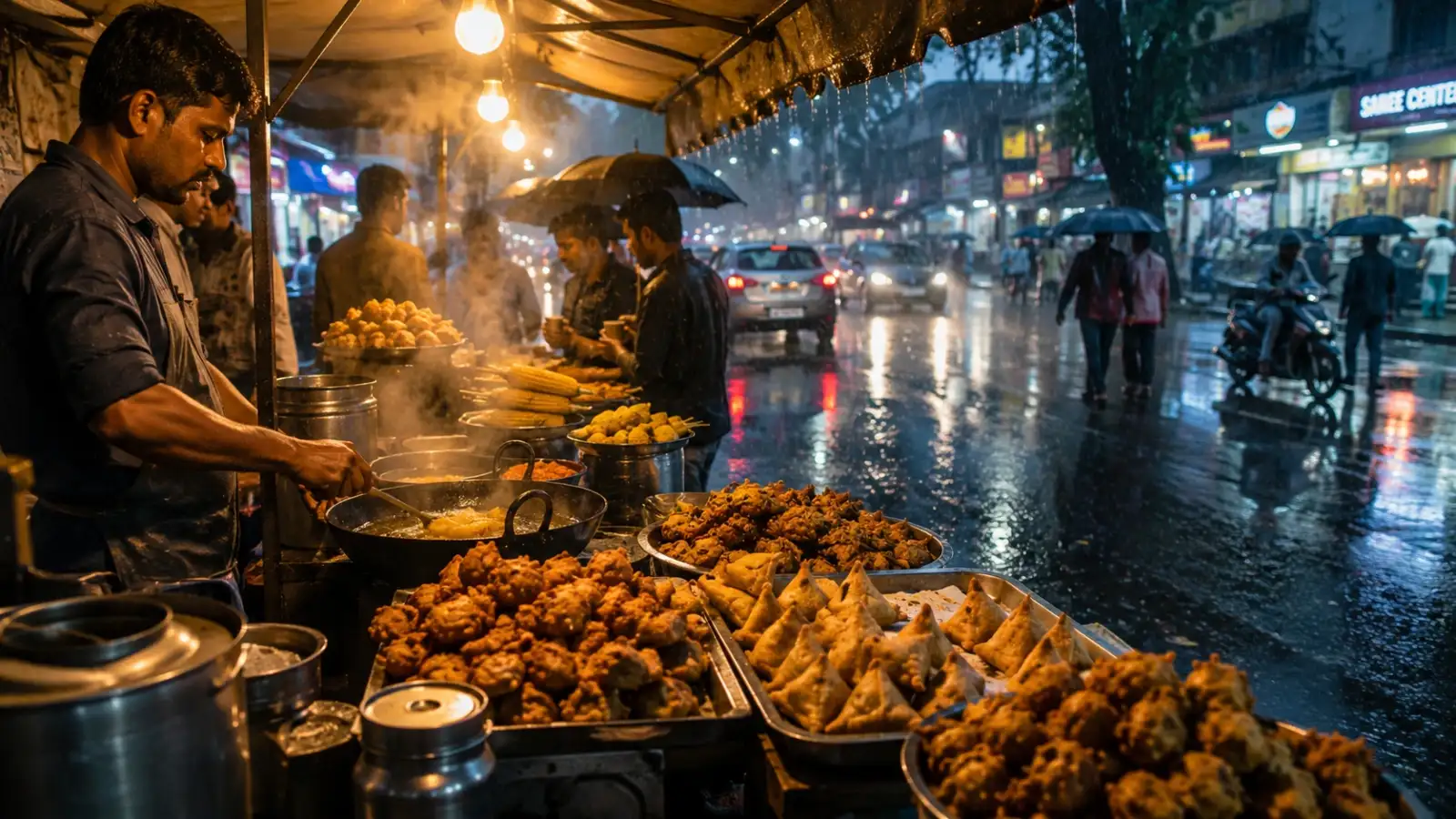
Rainy weather completely changes this physical process. High relative humidity fills the ambient air with tiny water droplets that trap volatile aroma compounds released from hot oil, roasting spices, and sizzling grills. The damp, heavy air holds these scent particles close to ground level, creating a thick, aromatic cloud around street food carts. When you step near a vendor during a heavy downpour, your olfactory system receives an intense, concentrated wave of aromatic signals, making every bite feel remarkably richer and more flavourful.
This thermal shift stimulates temperature-sensitive nerve receptors on your tongue and palate, heightening taste sensitivity. Furthermore, eating warm, carbohydrate-rich snacks in chilly weather triggers a gentle rise in internal body temperature, releasing serotonin and endorphins in the brain. This physiological comfort boost enhances emotional satisfaction, making the food taste far more delicious than it would in a warm room.
Receiving a fresh, piping hot snack straight from bubbling oil ensures maximum crunch. The auditory feedback of a loud, shattering crunch combined with a soft, warm interior creates a tactile contrast that keeps your brain engaged with every mouthful.
High atmospheric humidity and volatile aroma perception
Our sense of smell drives roughly eighty percent of what we perceive as flavour. Microscopic aroma molecules must float through the air and reach the receptors inside our noses for us to fully taste complex spices and cooked foods. On dry, scorching days, these delicate moisture molecules evaporate rapidly into the upper atmosphere before reaching our nostrils.Rainy weather completely changes this physical process. High relative humidity fills the ambient air with tiny water droplets that trap volatile aroma compounds released from hot oil, roasting spices, and sizzling grills. The damp, heavy air holds these scent particles close to ground level, creating a thick, aromatic cloud around street food carts. When you step near a vendor during a heavy downpour, your olfactory system receives an intense, concentrated wave of aromatic signals, making every bite feel remarkably richer and more flavourful.
You may also like
- Kylie Jenner Spotlights the Chic Lilian Bag at Malibu Wedding
- 6 Signs Someone Lies About Everything - Chanakya Niti
- An Evening at Swar Milan with Ghazal and Minu Bakshi's First Pune Performance
- You probably know your credit score, but do you know your physical fitness index?
- Why Yudhishthira Cursed All Women After Karna's Death
Contrast of skin temperature and internal comfort signals
The contrast between cold outdoor air and hot food creates a powerful sensory dynamic in human biology. Downpours cause ambient temperatures to drop suddenly, chilling your skin, hands, and face. When you take a bite of hot, freshly cooked street food in cool weather, your mouth experiences a dramatic thermal contrast.This thermal shift stimulates temperature-sensitive nerve receptors on your tongue and palate, heightening taste sensitivity. Furthermore, eating warm, carbohydrate-rich snacks in chilly weather triggers a gentle rise in internal body temperature, releasing serotonin and endorphins in the brain. This physiological comfort boost enhances emotional satisfaction, making the food taste far more delicious than it would in a warm room.
Humidity effects on crispy textures and sensory alertness
Rainy atmospheric conditions also alter how our brains perceive physical texture. Crispiness is a key indicator of freshness in fried snacks like samosas, onion bhajis, and churros. Because humid air threatens to soften crispy fried coatings quickly, vendors adapt by frying snacks to order in small, blazing hot batches.Receiving a fresh, piping hot snack straight from bubbling oil ensures maximum crunch. The auditory feedback of a loud, shattering crunch combined with a soft, warm interior creates a tactile contrast that keeps your brain engaged with every mouthful.
Nostalgia, shelter community, and psychological enjoyment
Food enjoyment is never purely physical; it is deeply entwined with memory, mood, and shared human experiences. Seeking shelter under a small street stall canopy alongside strangers creates a cozy, communal atmosphere. Sharing the simple pleasure of hot food while listening to the rhythmic sound of raindrops falling on iron roofs creates a mindful, comforting break from daily routines.Celebrating the atmospheric magic of monsoon bites
Understanding why street food often tastes different during rainy weather highlights how human biology, weather patterns, and sensory psychology interact. Rain transforms a simple street cart into a haven of rich aromas, comforting warmth, and unforgettable flavours.





Loving Newspoint? Download the app now
