
Why Do Supermarkets Put Essentials At The Back?

You walk into a supermarket for milk and bread. Five minutes later, you have somehow picked up biscuits, shampoo, snacks and something from the ‘special offer’ shelf that you never planned to buy. That is partly because of how supermarkets are designed. While not every store follows exactly the same layout, putting frequently needed essentials deeper inside the shop can encourage customers to pass more products along the way.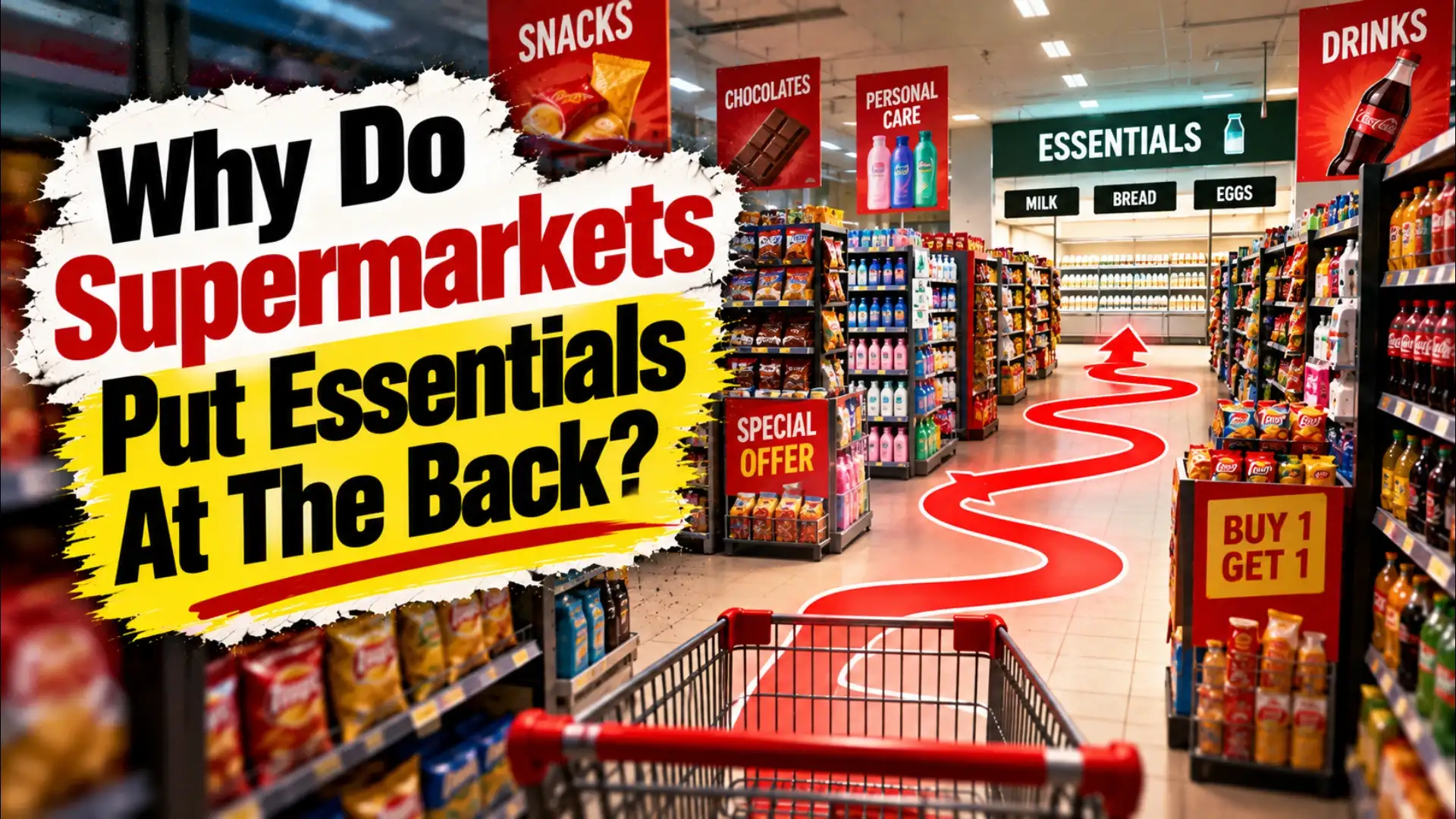
Placing some of these products further inside the store means customers may travel through several aisles before reaching them. Along the way, they encounter displays, promotions, seasonal products and things they may not have planned to buy. Even if you ignore most of them, you have still been exposed to those products. And sometimes, one of them catches your attention.
These arrangements reduce the effort required to notice and consider another product. That does not mean every unexpected purchase is the result of some secret supermarket trick. Shoppers have different habits, budgets and levels of planning.
But retailers pay attention to customer movement because product visibility matters. If a product is never noticed, it has little chance of being picked up. This is also why supermarket shopping can feel very different from ordering a single item online. In a physical store, the products around you become part of the shopping experience.
The checkout area, entrances and exits also have to accommodate large numbers of people without creating unnecessary congestion. So you should not assume that every supermarket deliberately places every essential item at the very back. Store size, building design, local shopping habits and the type of supermarket can all influence where products end up.
That is where planned shopping meets spontaneous shopping. So the next time you walk into a supermarket thinking, “I'm just buying milk,” pay attention to the route you take. The shelves, displays and products surrounding you are not necessarily random.
The supermarket is not simply a place where products are stored. It is a carefully organised space designed to help people navigate, discover and, sometimes, buy a little more than they originally planned. And that is how “just one thing” can become a surprisingly full shopping bag.
The Milk Is Not Always Where You Expect
If you have ever wondered why you cannot simply walk into a supermarket, grab milk and leave, the answer is partly logistical and partly strategic. Essential products tend to have a high purchase frequency. People regularly need things such as milk, bread, eggs and basic groceries, so stores know shoppers are likely to look for them.Placing some of these products further inside the store means customers may travel through several aisles before reaching them. Along the way, they encounter displays, promotions, seasonal products and things they may not have planned to buy. Even if you ignore most of them, you have still been exposed to those products. And sometimes, one of them catches your attention.
Your Shopping List Is Not Always In Charge
There is a big difference between what you intend to buy and what you notice while shopping. A supermarket can place certain products at eye level, create promotional displays near busy areas or position related products close to one another. A display of pasta sauce might sit near pasta. Snacks may appear along routes where shoppers naturally slow down.These arrangements reduce the effort required to notice and consider another product. That does not mean every unexpected purchase is the result of some secret supermarket trick. Shoppers have different habits, budgets and levels of planning.
You may also like
- Lichen Planus of the Vulva: Symptoms, Causes, and Treatment
- What Your Brain Actually Does During a Near-Death Experience: The Biology Behind the Light
- '100 aircraft a day will feel very small': At 15, Naman Pushp built a drone during lockdown; six years later, he is the founder of a $37 million aerospace venture
- Dubai: Italian designer Bertrando di Renzo shares 5 tips to transform your dining table
- Why Was Karna Served Gold in Heaven? The Secret
But retailers pay attention to customer movement because product visibility matters. If a product is never noticed, it has little chance of being picked up. This is also why supermarket shopping can feel very different from ordering a single item online. In a physical store, the products around you become part of the shopping experience.
Even The Aisles Have A Purpose
The layout is not only about getting customers to spend more. Supermarkets also have to deal with refrigeration, storage, restocking, product categories, staff movement and the physical shape of the building. Chilled and frozen products need specific equipment, while frequently purchased goods may need to be restocked more often.The checkout area, entrances and exits also have to accommodate large numbers of people without creating unnecessary congestion. So you should not assume that every supermarket deliberately places every essential item at the very back. Store size, building design, local shopping habits and the type of supermarket can all influence where products end up.
Why The ‘Quick Trip’ Gets Longer
Still, there is a reason a simple supermarket visit can turn into a tour of half the store. When you walk further to reach something you already intended to buy, you naturally pass more products and displays. Some will be ignored. Others may trigger a thought like, “Oh, we are running out of that.”That is where planned shopping meets spontaneous shopping. So the next time you walk into a supermarket thinking, “I'm just buying milk,” pay attention to the route you take. The shelves, displays and products surrounding you are not necessarily random.
The supermarket is not simply a place where products are stored. It is a carefully organised space designed to help people navigate, discover and, sometimes, buy a little more than they originally planned. And that is how “just one thing” can become a surprisingly full shopping bag.






Loving Newspoint? Download the app now
