
Why We Become Attached to Ordinary Objects From Our Childhood

Most adults hold onto at least one simple item from their early years, such as a tattered teddy bear, a faded blanket, or a smooth pebble picked up from a long-ago holiday. Psychology shows that these items often begin as transitional objects during early childhood. As young children slowly learn that they are separate from their primary caregivers, simple everyday possessions step in to offer comfort and safety. They act as an emotional bridge between complete reliance on parents and growing personal independence. Holding a familiar item helps little ones manage anxiety and navigate unfamiliar environments with confidence. The deep attachment formed during these formative years leaves a lasting imprint, making ordinary objects feel exceptionally valuable long into adulthood.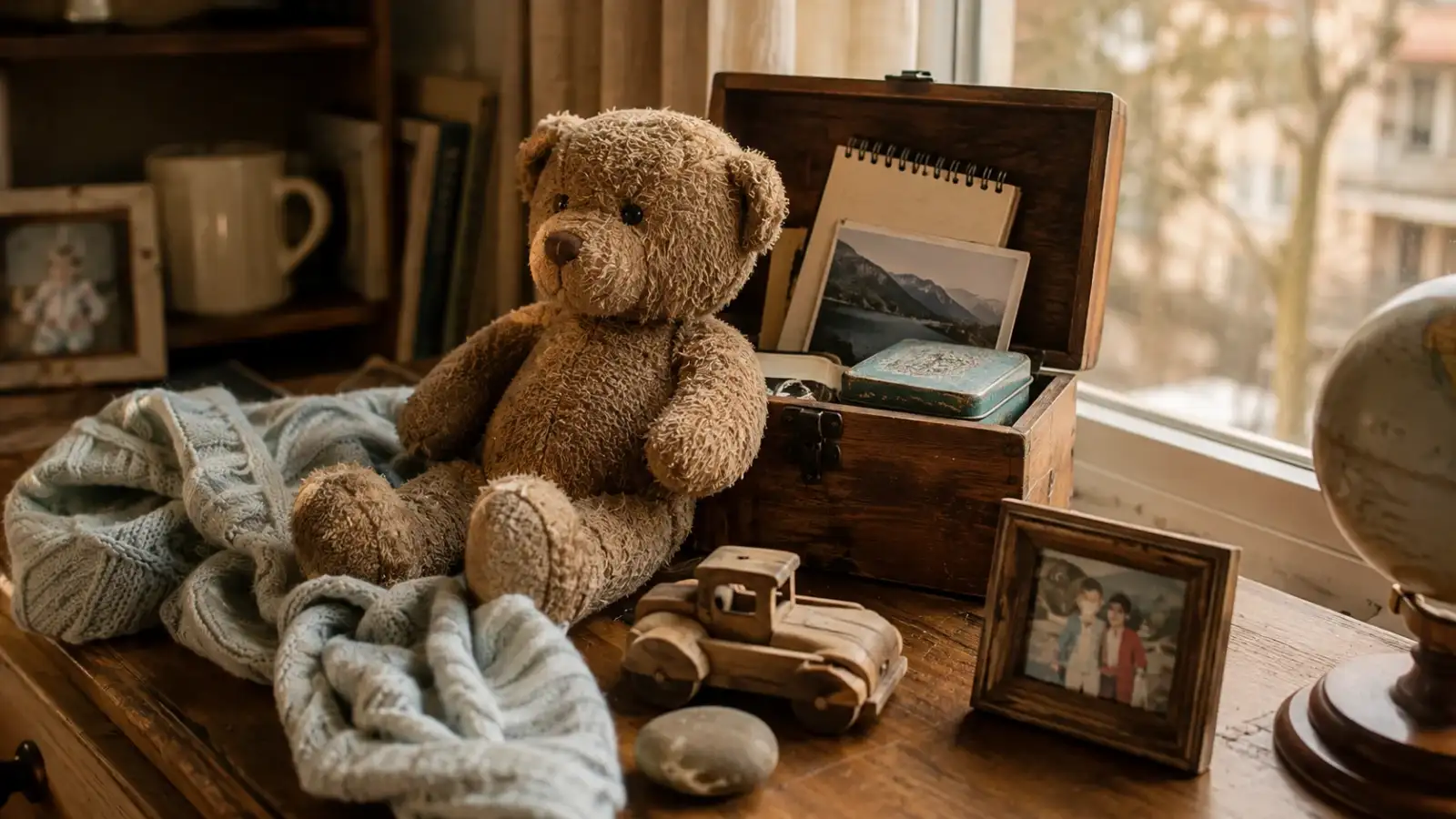
Tactile Memory and Sensory Connections to the Past
Our brains link physical touch directly with deep emotional memories. An ordinary childhood object serves as a physical trigger for sensory recollections that standard photos cannot match. Rubbing the worn fabric of an old jacket or feeling the weight of a wooden toy immediately brings back the exact sights, sounds, and feelings of simpler times. Scientists refer to this as implicit sensory memory, where physical textures act like a time capsule for past comfort. Because the brain stores these physical details alongside feelings of warmth, picking up cherished childhood objects offers instant stress relief and a grounding connection to our past.
Everyday Keepsakes as Anchors of Personal Identity
As time passes, people undergo endless changes in career, relationships, and living arrangements. During periods of major life transitions, keeping a few simple objects from our early years helps maintain a strong sense of personal identity. An inexpensive plastic trinket or an old chipped mug reminds us of who we were and where we came from. These items tell a personal story, keeping our history intact even when life around us feels chaotic. By keeping sentimental keepsakes nearby, we preserve a tangible link to our foundational years, reassuring ourselves that our core identity remains intact despite outer changes.
Symbolic Meaning and Emotional Safety Nets
The financial value of an item rarely dictates how much we love it. Ordinary objects become cherished keepsakes because of the symbolic meaning we project onto them. A simple metal key ring might represent the first house you lived in, while an old tin box might hold memories of rainy afternoons spent playing indoors. In moments of adult stress or burnout, looking at these items provides an instant emotional safety net. They remind us of times when life felt manageable, safe, and protected. This quiet psychological comfort helps adults regulate difficult emotions and tackle present challenges with renewed resilience.
Preserving Nostalgia and Comfort in Adult Life
Discarding old items can sometimes feel like throwing away a piece of our own history. Society often pressures adults to declutter and minimise possessions, but holding onto a few childhood objects is a natural and healthy human trait. These objects carry pure nostalgic comfort, free from the complexities of adult responsibilities. They serve as silent companions that offer quiet stability in a fast-paced world. Honouring the emotional value of ordinary keepsakes allows us to stay rooted, celebrating the childhood journeys that shaped us into who we are today.
Tactile Memory and Sensory Connections to the Past
Our brains link physical touch directly with deep emotional memories. An ordinary childhood object serves as a physical trigger for sensory recollections that standard photos cannot match. Rubbing the worn fabric of an old jacket or feeling the weight of a wooden toy immediately brings back the exact sights, sounds, and feelings of simpler times. Scientists refer to this as implicit sensory memory, where physical textures act like a time capsule for past comfort. Because the brain stores these physical details alongside feelings of warmth, picking up cherished childhood objects offers instant stress relief and a grounding connection to our past.
You may also like
- Peanuts With or Without Skin: Which Is Healthier and What Is the Best Way to Eat Them?
- 'This is my tiny house, though it looks straight out of a postcard, I live here': Woman reveals the issues she is facing living in a 'picture-perfect' house
- Why do Kodagu brides wear their saree backwards? The fascinating story behind their iconic drape
- Your child seems distracted while studying? These overlooked vision problems could be making reading and learning harder
- Why Zurich deserves more than a layover
Everyday Keepsakes as Anchors of Personal Identity
As time passes, people undergo endless changes in career, relationships, and living arrangements. During periods of major life transitions, keeping a few simple objects from our early years helps maintain a strong sense of personal identity. An inexpensive plastic trinket or an old chipped mug reminds us of who we were and where we came from. These items tell a personal story, keeping our history intact even when life around us feels chaotic. By keeping sentimental keepsakes nearby, we preserve a tangible link to our foundational years, reassuring ourselves that our core identity remains intact despite outer changes.
Symbolic Meaning and Emotional Safety Nets
The financial value of an item rarely dictates how much we love it. Ordinary objects become cherished keepsakes because of the symbolic meaning we project onto them. A simple metal key ring might represent the first house you lived in, while an old tin box might hold memories of rainy afternoons spent playing indoors. In moments of adult stress or burnout, looking at these items provides an instant emotional safety net. They remind us of times when life felt manageable, safe, and protected. This quiet psychological comfort helps adults regulate difficult emotions and tackle present challenges with renewed resilience.
Preserving Nostalgia and Comfort in Adult Life
Discarding old items can sometimes feel like throwing away a piece of our own history. Society often pressures adults to declutter and minimise possessions, but holding onto a few childhood objects is a natural and healthy human trait. These objects carry pure nostalgic comfort, free from the complexities of adult responsibilities. They serve as silent companions that offer quiet stability in a fast-paced world. Honouring the emotional value of ordinary keepsakes allows us to stay rooted, celebrating the childhood journeys that shaped us into who we are today.






Loving Newspoint? Download the app now
