
Balcony Garden Ideas: How to Create a Mini Ecosystem for Birds, Bees and Butterflies

Many apartment dwellers view a balcony as a concrete platform meant only for drying clothes or sipping morning tea. However, adding potted vegetation turns a bare outdoor space into a vibrant living micro habitat. Natural habitats thrive on structural depth, featuring tall tree canopies down to ground cover foliage.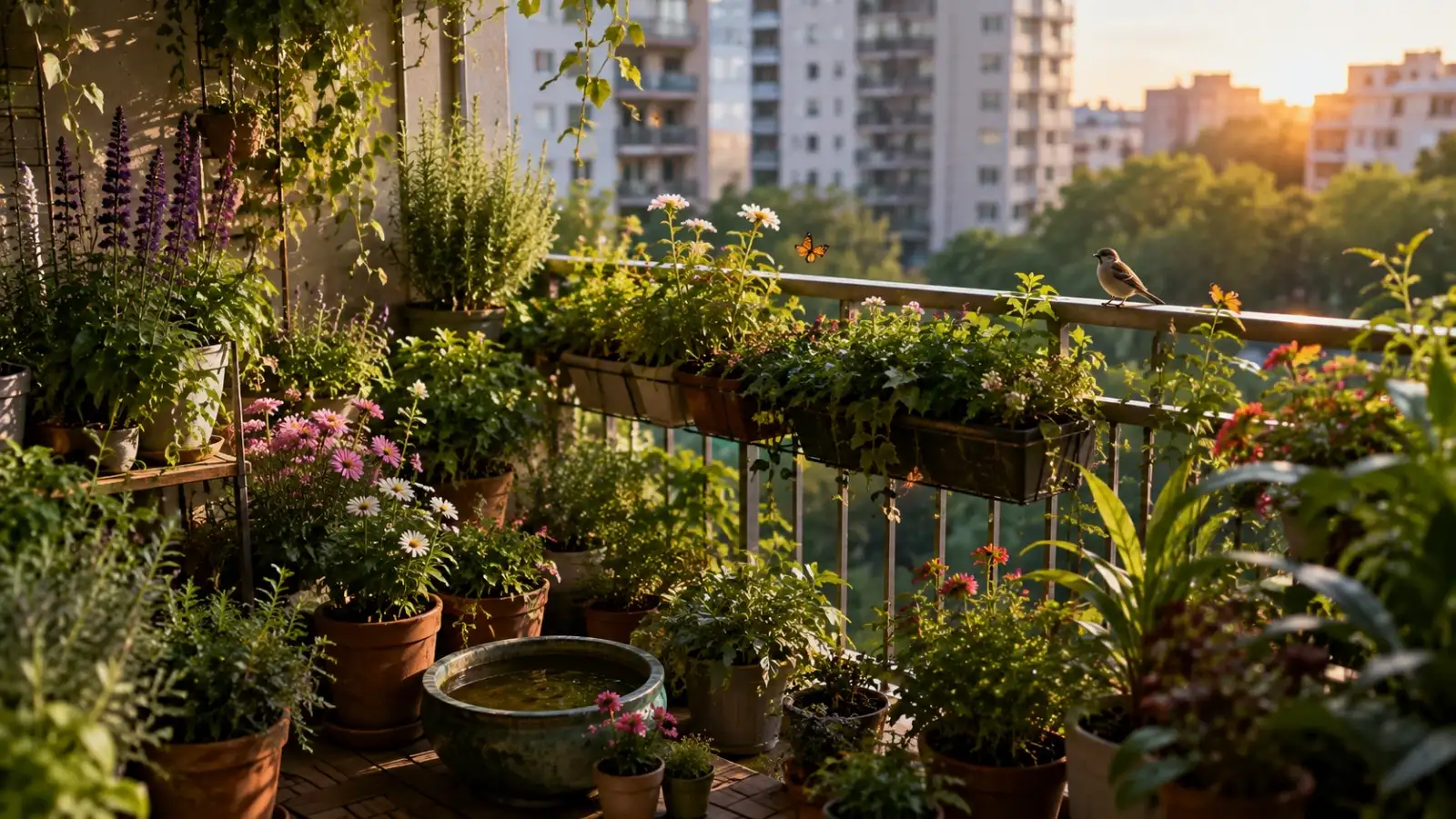
You can easily replicate this natural arrangement on a small balcony using varied container sizes. Combining tall potted shrubs like lavender, trailing ivy, and flowering perennials forms distinct environmental layers. These different heights offer sheltered nesting spots, perching ledges, and shaded retreats, turning a simple concrete balcony into an inviting shelter for visiting urban wildlife.
Attracting Essential Insect Pollinators and Urban Birds
High above busy city streets, flowering balcony plants act as vital oases for traveling urban pollinators. Bees, hoverflies, and butterflies navigate vast concrete expanses searching for food, making your balcony blossoms crucial feeding stops.
Growing native nectar plants alongside aromatic herbs provides a steady food supply throughout spring and summer. As beneficial insects arrive to harvest pollen, insect-eating songbirds like sparrows soon follow to hunt. Providing a shallow water dish alongside nectar flowers offers hydration, establishing a mini food chain high above ground level.
Fostering Subterranean Soil Life in Potted Containers
An ecosystem extends deep into organic soil, far beyond the surface plants we see. The potting mix resting inside balcony containers harbours billions of microscopic organisms, tiny springtails, and helpful soil mites. Adding organic compost, wood chip mulch, and natural fertilizers creates a thriving underground web.
These tiny decomposers break down fallen leaves, releasing vital minerals back to root systems while maintaining loose, healthy soil. This hidden microbial activity turns static potting soil into a self-sustaining underground network that keeps your balcony greenery healthy without heavy chemical treatments.
Creating Urban Wildlife Corridors Across Concrete Cities
Modern cities present significant barriers to wildlife, fragmenting natural habitats into isolated patches. Individual urban balconies work together like stepping stones, forming extensive green corridors through city neighborhoods.
When multiple apartment residents grow potted flowers and herbs, they build a green network connecting distant parks and reserves. This green grid allows insects and small birds to travel safely, gather food, and cross harsh paved landscapes. Your personal balcony garden plays an active role in supporting local urban biodiversity.
Microclimate Regulation and Natural Urban Cooling
A plant-filled balcony does far more than support local wildlife; it actively improves your immediate living space environment. Concrete and metal balcony railings absorb heat, making apartment interiors uncomfortably warm.
Foliage absorbs sunlight for natural photosynthesis, cooling surrounding air through moisture transpiration. Potted plants act as natural windbreakers, trap urban dust particles, and dampen harsh city noise. Creating a mini ecosystem outside your door lowers summer temperatures around your windows, giving you a quiet, refreshing space to connect with nature daily.
You can easily replicate this natural arrangement on a small balcony using varied container sizes. Combining tall potted shrubs like lavender, trailing ivy, and flowering perennials forms distinct environmental layers. These different heights offer sheltered nesting spots, perching ledges, and shaded retreats, turning a simple concrete balcony into an inviting shelter for visiting urban wildlife.
Attracting Essential Insect Pollinators and Urban Birds
High above busy city streets, flowering balcony plants act as vital oases for traveling urban pollinators. Bees, hoverflies, and butterflies navigate vast concrete expanses searching for food, making your balcony blossoms crucial feeding stops.
Growing native nectar plants alongside aromatic herbs provides a steady food supply throughout spring and summer. As beneficial insects arrive to harvest pollen, insect-eating songbirds like sparrows soon follow to hunt. Providing a shallow water dish alongside nectar flowers offers hydration, establishing a mini food chain high above ground level.
You may also like
- Boost Your Immunity Against Swine Flu: 3 Doctor-Recommended Drinks to Stay Safe
- Does the first husband still have to pay alimony if the wife remarries? Here is what the law says.
- When 'I'm fine' means anything but fine
- Which flight tickets are the cheapest between August 24 and August 30?
- The Parent-Child Connection
Fostering Subterranean Soil Life in Potted Containers
An ecosystem extends deep into organic soil, far beyond the surface plants we see. The potting mix resting inside balcony containers harbours billions of microscopic organisms, tiny springtails, and helpful soil mites. Adding organic compost, wood chip mulch, and natural fertilizers creates a thriving underground web.
These tiny decomposers break down fallen leaves, releasing vital minerals back to root systems while maintaining loose, healthy soil. This hidden microbial activity turns static potting soil into a self-sustaining underground network that keeps your balcony greenery healthy without heavy chemical treatments.
Creating Urban Wildlife Corridors Across Concrete Cities
Modern cities present significant barriers to wildlife, fragmenting natural habitats into isolated patches. Individual urban balconies work together like stepping stones, forming extensive green corridors through city neighborhoods.
When multiple apartment residents grow potted flowers and herbs, they build a green network connecting distant parks and reserves. This green grid allows insects and small birds to travel safely, gather food, and cross harsh paved landscapes. Your personal balcony garden plays an active role in supporting local urban biodiversity.
Microclimate Regulation and Natural Urban Cooling
A plant-filled balcony does far more than support local wildlife; it actively improves your immediate living space environment. Concrete and metal balcony railings absorb heat, making apartment interiors uncomfortably warm.
Foliage absorbs sunlight for natural photosynthesis, cooling surrounding air through moisture transpiration. Potted plants act as natural windbreakers, trap urban dust particles, and dampen harsh city noise. Creating a mini ecosystem outside your door lowers summer temperatures around your windows, giving you a quiet, refreshing space to connect with nature daily.






Loving Newspoint? Download the app now
