
Why Do You Forget Why You Entered a Room? The Science Behind the Doorway Effect

We have all experienced that puzzling moment of walking into a room only to completely forget why we went there in the first place. Scientists refer to this universal quirk of human memory as the doorway effect . The human mind organizes memories into structured episodes rather than a continuous stream of information.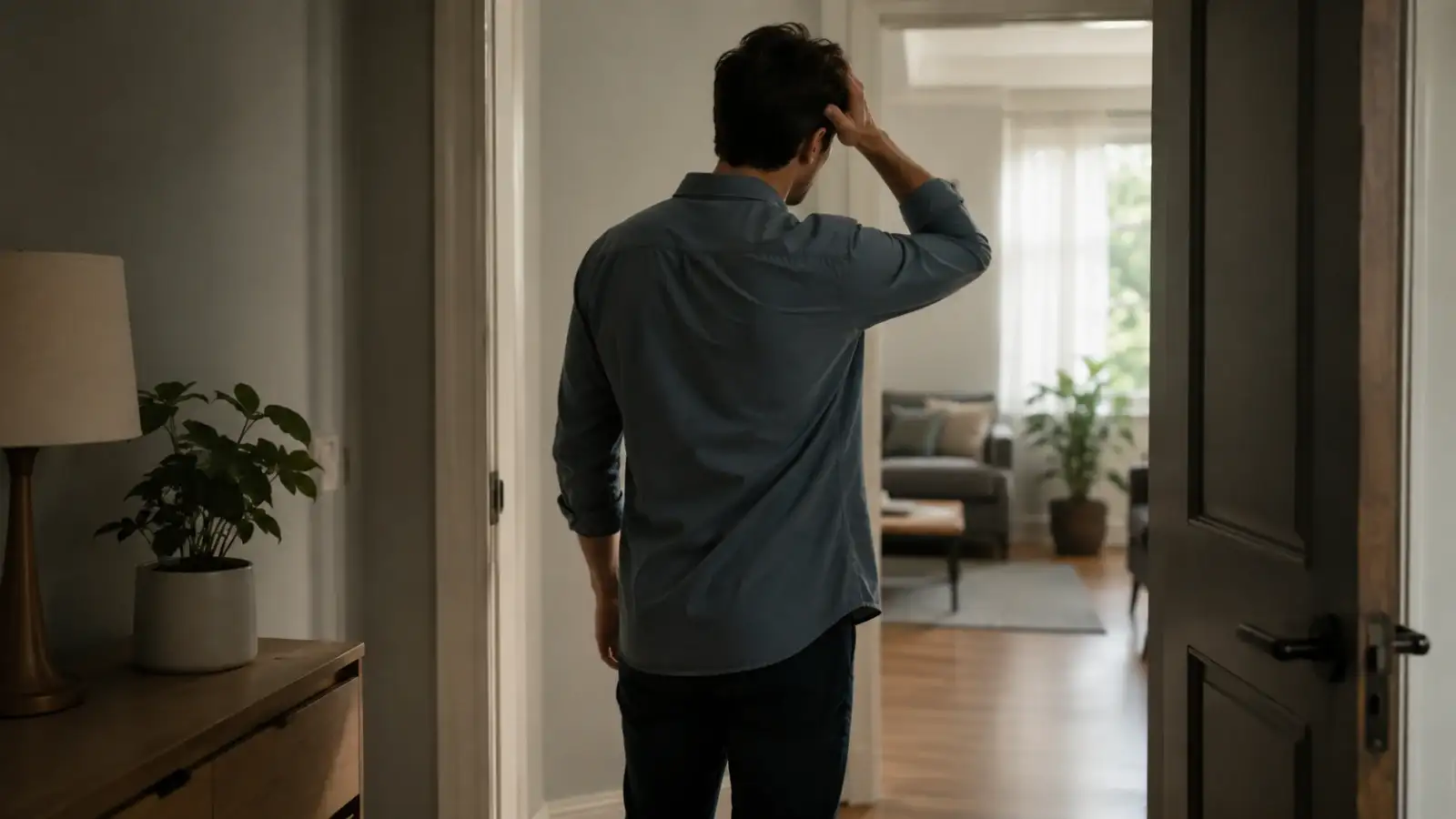
Passing through a physical doorway acts as an environmental boundary, signaling to your brain that one event has ended and another has begun. When you move from your kitchen to your bedroom, your mind automatically clears temporary working memory to prepare for the new environment. This automatic mental reset sweeps away your immediate goal, leaving you standing in the doorway wondering what you came for.
How Working Memory Stores and Filters Information
Your working memory acts like a temporary notepad that holds short term information while you perform active tasks. Unlike long term storage, which retains cherished memories for decades, working memory has a remarkably limited capacity. It can only hold a few thoughts or intentions at a single time.
When you decide to retrieve a pair of scissors from the study, that intention sits inside your fragile short term memory buffer. If you get distracted by a sudden noise, a phone notification, or a quick thought along the hallway, your brain discards the original goal to process new incoming sensory data. The intention vanishes before you reach your destination simply because your working memory was overwritten.
Environmental Context and Memory Recall Triggers
Memory relies heavily on context cues provided by your physical environment. When you form a plan in your living room, the surrounding sights, sounds, and smells become subconsciously linked to that specific thought. Moving to a completely different location removes those vital contextual triggers.
In the living room, looking at a messy coffee table reminds you to fetch a dust cloth. Once you step into the hallway, those visual triggers disappear, breaking the chain of memory recall. Returning to the original room often brings the forgotten intention rushing back immediately because your brain reconnects with the exact physical cues that sparked the original thought.
Multitasking Stress and Cognitive Overload
Modern lifestyles require us to process an overwhelming amount of information continuously. Walking down a hallway while mentally planning dinner, mentally drafting a work email, and checking your steps on a smartwatch creates heavy cognitive overload. When your brain attempts to manage multiple complex thoughts simultaneously, its ability to hold simple physical goals weakens significantly.
Stress, physical fatigue, and lack of sleep further reduce your working memory efficiency, making you far more susceptible to everyday forgetfulness . The doorway effect becomes much more pronounced when your mind is juggling too many mental tasks at once.
Practical Habits to Prevent Everyday Memory Gaps
While walking through doorways is an unavoidable part of daily life, simple habits can help protect your short term goals. One effective strategy involves verbalizing your goal out loud before stepping into another room. Saying I am getting my keys out loud reinforces the memory track in your brain, making it far harder to erase during location changes.
Another useful technique is visual imagery, where you mentally picture the item you need while walking toward it. Minimizing digital distractions, slowing down your physical pace, and focusing fully on one task at a time keeps working memory sharp, preventing those frustrating moments of entering a room and forgetting why you arrived.
Passing through a physical doorway acts as an environmental boundary, signaling to your brain that one event has ended and another has begun. When you move from your kitchen to your bedroom, your mind automatically clears temporary working memory to prepare for the new environment. This automatic mental reset sweeps away your immediate goal, leaving you standing in the doorway wondering what you came for.
How Working Memory Stores and Filters Information
Your working memory acts like a temporary notepad that holds short term information while you perform active tasks. Unlike long term storage, which retains cherished memories for decades, working memory has a remarkably limited capacity. It can only hold a few thoughts or intentions at a single time.
When you decide to retrieve a pair of scissors from the study, that intention sits inside your fragile short term memory buffer. If you get distracted by a sudden noise, a phone notification, or a quick thought along the hallway, your brain discards the original goal to process new incoming sensory data. The intention vanishes before you reach your destination simply because your working memory was overwritten.
You may also like
- Raksha Bandhan 2026: School children are in for a fun time with a plethora of holidays this week; schools are closed in many places today as well.
- While the world sleeps, this little boy wakes at 6 AM to feed stray dogs: His daily ritual of love, kindness and compassion is melting hearts across the internet
- ₹62,500 crore outlay, ₹39 lakh crore production... How will the new mobile scheme transform India's smartphone industry?
- Air travel is set to become even easier! Stamping of boarding passes to stop from September 1; here are the new rules..
- 8th Pay Commission: How will the 8th Pay Commission differ from the 7th Pay Commission? Know the 5 major changes..
Environmental Context and Memory Recall Triggers
Memory relies heavily on context cues provided by your physical environment. When you form a plan in your living room, the surrounding sights, sounds, and smells become subconsciously linked to that specific thought. Moving to a completely different location removes those vital contextual triggers.
In the living room, looking at a messy coffee table reminds you to fetch a dust cloth. Once you step into the hallway, those visual triggers disappear, breaking the chain of memory recall. Returning to the original room often brings the forgotten intention rushing back immediately because your brain reconnects with the exact physical cues that sparked the original thought.
Multitasking Stress and Cognitive Overload
Modern lifestyles require us to process an overwhelming amount of information continuously. Walking down a hallway while mentally planning dinner, mentally drafting a work email, and checking your steps on a smartwatch creates heavy cognitive overload. When your brain attempts to manage multiple complex thoughts simultaneously, its ability to hold simple physical goals weakens significantly.
Stress, physical fatigue, and lack of sleep further reduce your working memory efficiency, making you far more susceptible to everyday forgetfulness . The doorway effect becomes much more pronounced when your mind is juggling too many mental tasks at once.
Practical Habits to Prevent Everyday Memory Gaps
While walking through doorways is an unavoidable part of daily life, simple habits can help protect your short term goals. One effective strategy involves verbalizing your goal out loud before stepping into another room. Saying I am getting my keys out loud reinforces the memory track in your brain, making it far harder to erase during location changes.
Another useful technique is visual imagery, where you mentally picture the item you need while walking toward it. Minimizing digital distractions, slowing down your physical pace, and focusing fully on one task at a time keeps working memory sharp, preventing those frustrating moments of entering a room and forgetting why you arrived.






Loving Newspoint? Download the app now
