
Why Your Face Can Look Older Under Certain Lighting

There is a peculiar moment many people recognise. You look perfectly fine in your bedroom mirror, then walk into a brightly lit office bathroom and suddenly notice every pore, crease and shadow on your face. It can feel as though your skin has aged during the journey. It has not. Lighting can dramatically alter the way facial texture is perceived. The direction, softness and colour of light determine where shadows fall, and shadows can either hide or exaggerate the tiny changes that naturally appear on skin over time.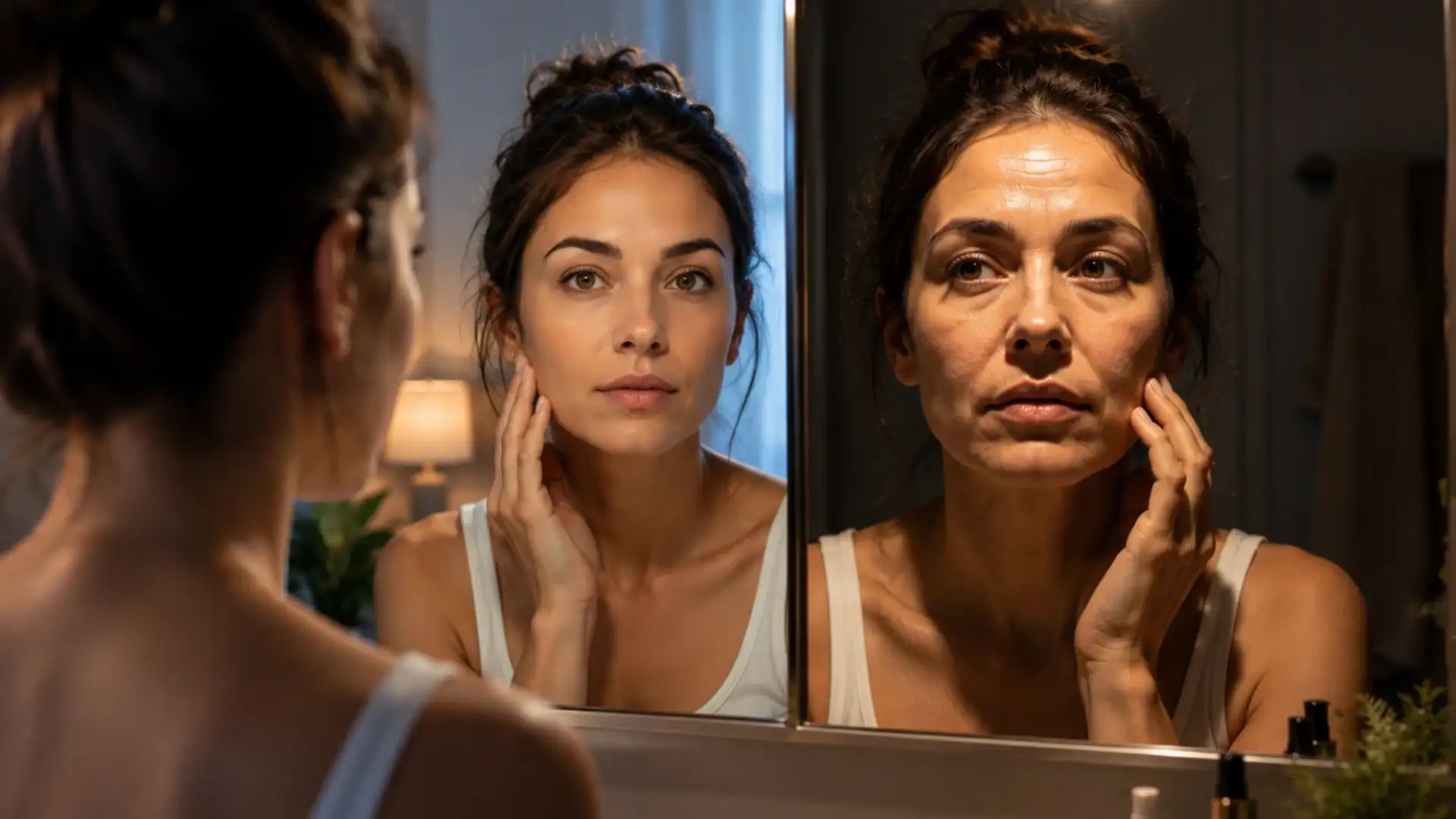
Soft, diffused illumination tends to reduce strong shadows, making facial texture appear smoother. A light positioned directly above the head can do the opposite. It can create shadows beneath the eyes, around the nose and beneath the lips.
That contrast can make normal facial contours look deeper than they really are.
Dryness, enlarged pores, fine lines and uneven pigmentation can all become more noticeable when light strikes the face from a particular direction. The same features may become far less visible when illumination is spread evenly across the skin.
This is one reason professional portrait photographers carefully consider lighting before taking photographs.
Warm indoor lighting can make the complexion appear softer and more golden, while cooler lighting can emphasise contrast and make redness or uneven tone more noticeable.
The surrounding environment matters as well. A brightly coloured wall, coloured clothing or even the colour of a bathroom can subtly influence the light reflected towards your face.
Research on facial perception shows that viewing distance and perspective can also alter how facial features are perceived.
That means a close-up selfie taken under overhead lighting is not necessarily a fair representation of your everyday appearance.
One harsh bathroom light should not convince you that you have suddenly aged five years.
Sometimes the problem is not your face. It is simply where the light happens to be coming from.
Shadows Make Texture More Visible
Fine lines and wrinkles are three-dimensional structures. They have tiny ridges and depressions that interact with light.Soft, diffused illumination tends to reduce strong shadows, making facial texture appear smoother. A light positioned directly above the head can do the opposite. It can create shadows beneath the eyes, around the nose and beneath the lips.
That contrast can make normal facial contours look deeper than they really are.
Texture Is Not the Same as Age
The appearance of ageing is partly about skin texture, but texture is not always obvious under every lighting condition.Dryness, enlarged pores, fine lines and uneven pigmentation can all become more noticeable when light strikes the face from a particular direction. The same features may become far less visible when illumination is spread evenly across the skin.
This is one reason professional portrait photographers carefully consider lighting before taking photographs.
Colour Temperature Changes Your Skin Too
Light does not only create shadows. It also changes colour perception.Warm indoor lighting can make the complexion appear softer and more golden, while cooler lighting can emphasise contrast and make redness or uneven tone more noticeable.
You may also like
- When the King Offered His Head
- Train Cancellations: These 18 trains will remain cancelled in September; passengers should check the railway's list.
- Government Offers Major EPF Opportunity: Names Can Be Added to Coverage Until October 31
- What happens if you don't show your Aadhaar card during a hotel raid?
- Meet the 'Almond Mom': Internet's latest viral parenting trend that can harm kids
The surrounding environment matters as well. A brightly coloured wall, coloured clothing or even the colour of a bathroom can subtly influence the light reflected towards your face.
Why Modern Mirrors Make This More Noticeable
Today, many people judge their skin through mirrors, phone cameras and video calls. These technologies expose the face to dramatically different lighting conditions.Research on facial perception shows that viewing distance and perspective can also alter how facial features are perceived.
That means a close-up selfie taken under overhead lighting is not necessarily a fair representation of your everyday appearance.
A Better Way to Judge Your Skin
If you genuinely want to assess changes in your skin, compare photographs taken in similar lighting, from a similar distance and at roughly the same time of day.One harsh bathroom light should not convince you that you have suddenly aged five years.
Sometimes the problem is not your face. It is simply where the light happens to be coming from.






Loving Newspoint? Download the app now
