
Why Your Lips Get Drier Than the Rest of Your Face

It can be the same day, the same weather and the same skincare routine, yet your cheeks feel perfectly comfortable while your lips are cracked and uncomfortable. That is not a coincidence. The skin covering the lips is structurally different from much of the skin on the rest of your face. It has a weaker ability to hold water and is exposed constantly to saliva, food, wind, temperature changes and repeated movement. Unlike the rest of the face, lips also lack the same protective oil-producing structures. The result is a part of the body that can lose moisture surprisingly quickly.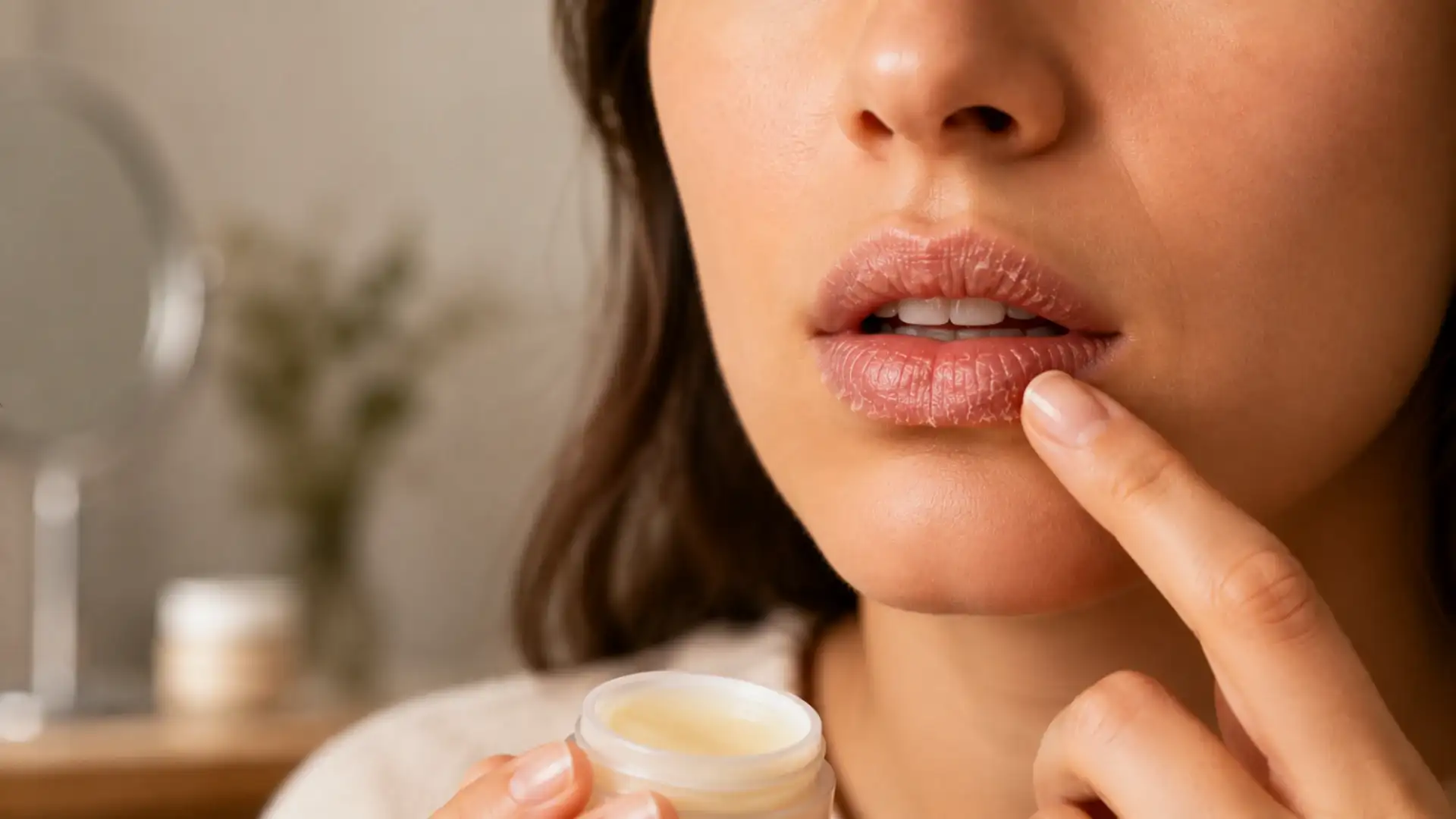
That means water can escape from lip tissue more readily.
Dry lips have also been associated with reduced water-holding capacity and changes in the skin barrier, including lower levels of certain ceramides.
You talk, eat, drink, smile and breathe through your mouth. Cold wind can dry their surface, while indoor heating and air-conditioning can reduce environmental humidity.
Then there is saliva. Licking your lips may feel soothing for a few seconds, but repeated wetting and drying can make the surface more irritated.
Some fragranced or flavoured products can irritate sensitive lips. If someone repeatedly applies a product and develops burning, redness or worsening dryness, the product itself may be contributing to the problem.
This is why a simple, bland barrier product can sometimes work better than an elaborate formula.
The American Academy of Dermatology recommends lip balm or petroleum jelly for maintaining moisture in dry lips.
A lip product containing appropriate sun protection can therefore be useful, particularly for prolonged outdoor exposure.
Their unusual structure explains why your lips can feel dry when the rest of your face does not.
The next time your cheeks feel fine but your lips are struggling, remember that your mouth is not simply another patch of facial skin. It has its own rules.
Lip Skin Has a Weaker Moisture Barrier
Research comparing lip and cheek skin has found that the lips have lower water content in the outer skin layer and higher transepidermal water loss.That means water can escape from lip tissue more readily.
Dry lips have also been associated with reduced water-holding capacity and changes in the skin barrier, including lower levels of certain ceramides.
Lips Face Constant Exposure
Your lips rarely get a break.You talk, eat, drink, smile and breathe through your mouth. Cold wind can dry their surface, while indoor heating and air-conditioning can reduce environmental humidity.
Then there is saliva. Licking your lips may feel soothing for a few seconds, but repeated wetting and drying can make the surface more irritated.
Why Lip Balm Sometimes Makes Things Worse
Not every lip product is equally helpful.Some fragranced or flavoured products can irritate sensitive lips. If someone repeatedly applies a product and develops burning, redness or worsening dryness, the product itself may be contributing to the problem.
You may also like
- When the King Offered His Head
- Train Cancellations: These 18 trains will remain cancelled in September; passengers should check the railway's list.
- Government Offers Major EPF Opportunity: Names Can Be Added to Coverage Until October 31
- What happens if you don't show your Aadhaar card during a hotel raid?
- Meet the 'Almond Mom': Internet's latest viral parenting trend that can harm kids
This is why a simple, bland barrier product can sometimes work better than an elaborate formula.
The American Academy of Dermatology recommends lip balm or petroleum jelly for maintaining moisture in dry lips.
The Forgotten Role of Sun Exposure
Lips also receive ultraviolet exposure, yet people often remember sunscreen for their cheeks and forehead while ignoring their mouth.A lip product containing appropriate sun protection can therefore be useful, particularly for prolonged outdoor exposure.
Why Dry Lips Are So Noticeable
Lips contain many sensory nerve endings and are involved in constant movement. Even a small amount of cracking can therefore become irritating.Their unusual structure explains why your lips can feel dry when the rest of your face does not.
The next time your cheeks feel fine but your lips are struggling, remember that your mouth is not simply another patch of facial skin. It has its own rules.






Loving Newspoint? Download the app now
