The Rainy Season Skin Shift: Why Your Skin Feels Different During Monsoon

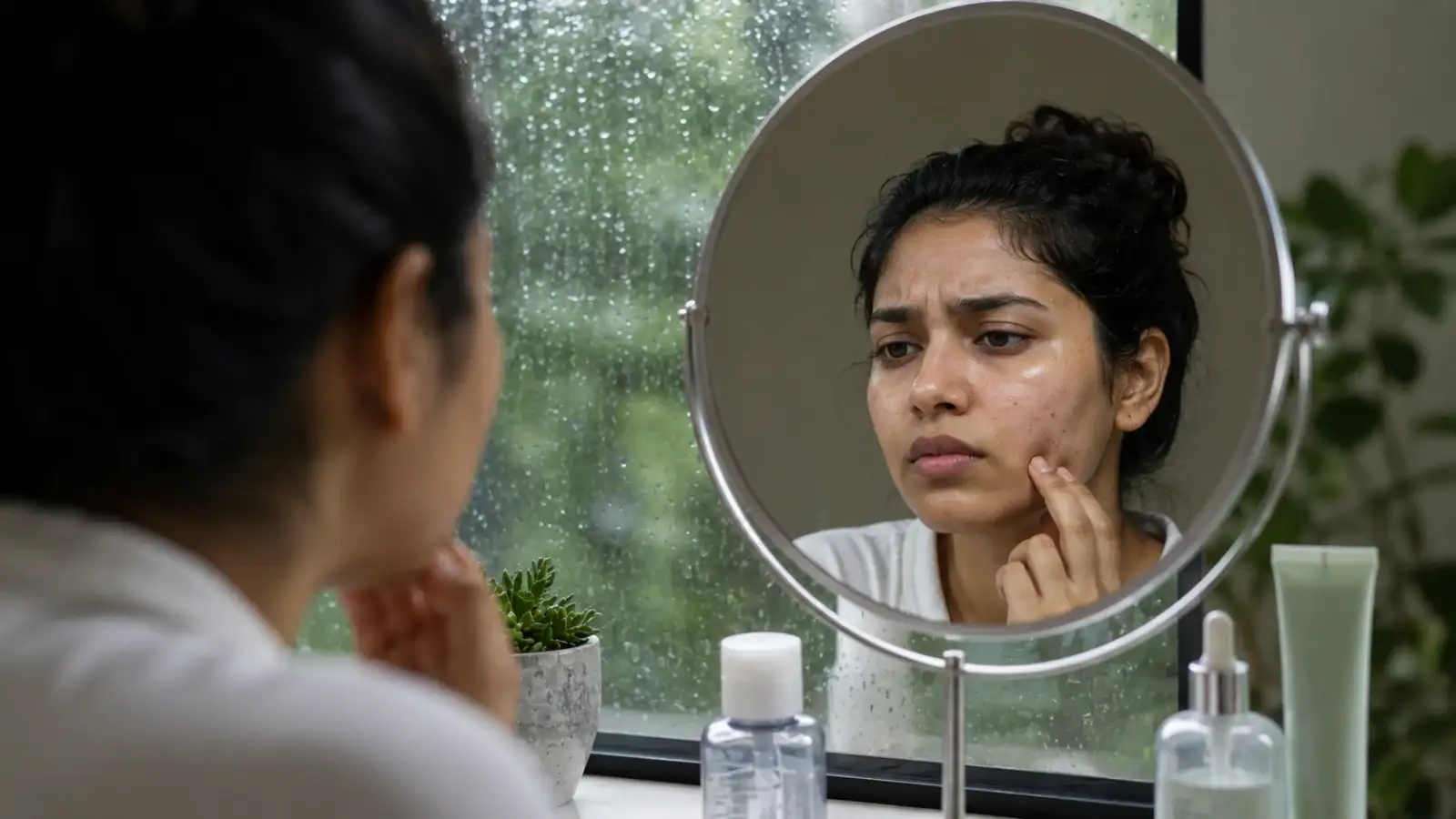
The arrival of the annual rains brings a welcome relief from scorching summer heat. Fresh cool breezes replace burning sunlight, and the smell of wet earth fills the air. However, while the countryside transforms into a lush green haven, your face might tell a completely different story. Many people notice that as soon as the rainy months begin, their usual skincare routine stops performing properly. Your face might feel constantly sticky, look unusually shiny, or suddenly break out in stubborn pimples along your forehead and jawline. It can feel deeply frustrating when your skin suddenly rebels without warning. Exploring why your skin feels different during monsoon and uncovering the science behind humidity and breakouts reveals how atmospheric moisture, shifting sebum levels, trapped sweat, and microscopic bacteria interact on your skin surface.
Hero Image


Atmospheric moisture and overloaded sebaceous glands

The primary trigger changing your skin texture during the rainy season is a dramatic rise in relative humidity. In dry or moderate weather, moisture on your skin evaporates quickly into the surrounding air, keeping your face feeling fresh. During the monsoon, however, the air is already saturated with water vapour. This high atmospheric humidity prevents normal evaporation, trapping heat and moisture directly against your face.

In response to elevated ambient moisture and surface heat, your sebaceous glands go into overdrive, producing far more natural oil, known as sebum, than your skin actually needs. Instead of keeping your skin soft and protected, this excess sebum pools on the surface of your face. The result is an uncomfortably greasy feeling that makes your face look shiny within hours of washing it.


The pore clogging mixture of sweat, oil, and pollution

Excess oil production is only the first step in the breakout process. Because sweat cannot evaporate efficiently in high humidity, it stays sitting on your face. When this lingering sweat mixes with your natural skin oils, dead skin cells, and daily airborne pollution particles, it forms a thick, sticky film across your face. This greasy emulsion sinks directly into your microscopic pores. As pores become blocked by this mixture of oil, dead skin, and dirt, small blockages form beneath the surface, creating the perfect recipe for blackheads, whiteheads, and sudden acne flare-ups.

A thriving breeding ground for acne causing bacteria

High humidity does not just block pores; it creates a warm, moist, anaerobic environment where microbes thrive. Naturally occurring skin bacteria, particularly Cutibacterium acnes, feed on the abundant supply of excess sebum inside trapped pores. As these bacteria feast and multiply rapidly inside your blocked hair follicles, your immune system responds by sending white blood cells to fight off the microbial overgrowth. This natural immune response triggers localized swelling, redness, and painful inflammatory pimples. Furthermore, warm damp conditions can also trigger fungal acne, causing itchy, uniform bumps along the hairline and forehead that closely resemble standard pimples.


Adapting your daily routine to balance skin health

Understanding how atmospheric moisture affects your face allows you to make smart adjustments to your daily regimen. Switch from heavy cream cleansers and rich lotions to gentle, pH-balanced gel cleansers and lightweight, water-based hydrators that nourish the skin without clogging pores. Skipping moisturizer entirely is a common mistake that backfires, as dehydrated skin will actually compensate by producing even more oil. Using gentle chemical exfoliants containing salicylic acid two or three times a week helps dissolve oil deep inside pores without irritating your surface barrier. Finally, always choose oil-free, non-comedogenic sunscreens to protect your skin from UV rays that easily penetrate cloudy skies.

Embracing seasonal skincare for a healthy glow

Ultimately, learning why your skin feels different during monsoon takes the guesswork out of seasonal skincare adjustments. By working in harmony with changing humidity levels rather than fighting them, you can keep your pores clear, balance natural oil production, and maintain a fresh, healthy glow through every heavy downpour.