
10 Places Around the World Where the Night Sky Looks Incredible

For most people, stargazing means looking up on a clear night and trying to spot a few familiar constellations. But in places far from major cities, the night sky can look completely different. The Milky Way becomes much more obvious, thousands of stars appear brighter and celestial objects that are almost invisible from urban areas become easier to see.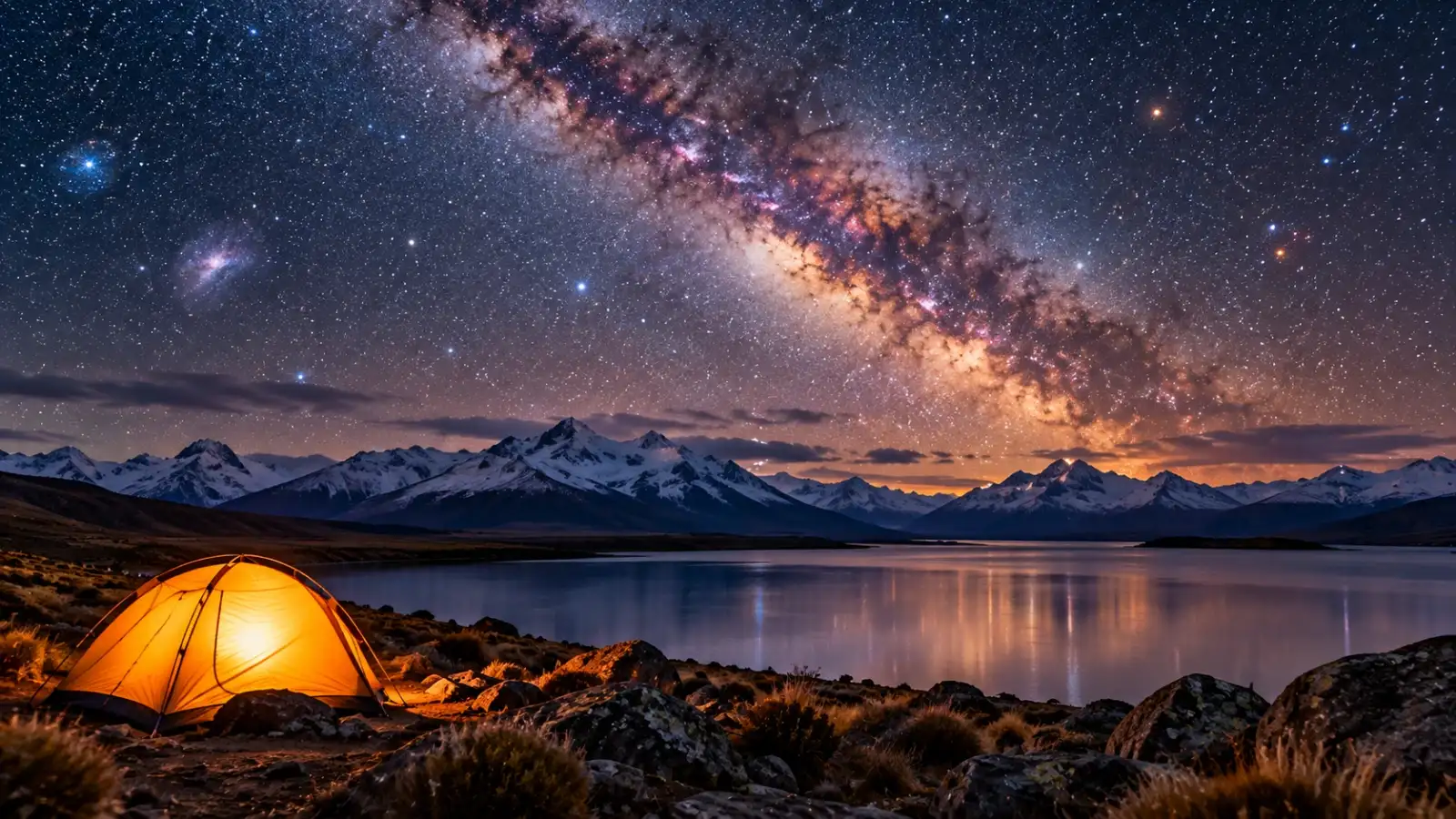
The best stargazing destinations generally share several characteristics. They have low levels of artificial light, relatively clear skies and atmospheric conditions that allow the stars to appear sharp. High-altitude locations can offer another advantage because there is less atmosphere above the observer, while deserts and remote islands often benefit from their distance from large sources of light pollution.
Some of the world's most famous observatories were built in exactly these kinds of environments. Others have become popular with travellers who simply want to experience a truly dark sky without needing professional astronomical equipment.
From Chile's high desert to New Zealand's mountains and the remote landscapes of Namibia, these destinations offer some of the world's most memorable opportunities to look beyond Earth.
The region's high-country landscape adds another dimension to the experience. Mountains surround the Mackenzie Basin, while Lake Tekapo and the Church of the Good Shepherd provide some of the area's most recognisable foregrounds for night photography.
The location is particularly interesting for visitors from the Northern Hemisphere because the southern sky contains celestial objects that cannot be seen from much of Europe or North America. On clear nights, the Milky Way can appear intensely detailed, while the Magellanic Clouds are among the southern-sky features that make the region special.
The area also has a cultural connection with astronomy. DarkSky International notes that Māori communities historically used the night sky for navigation and incorporated astronomy and star knowledge into their culture.
At the island's highest point, Roque de los Muchachos rises to about 2,426 metres above sea level and hosts a major astrophysical observatory. The combination of altitude, stable atmospheric conditions and limited light pollution makes the area exceptionally suited to observing the night sky.
La Palma's commitment to protecting its darkness goes beyond simply turning off unnecessary lights. The island has legislation designed to protect the quality of the night sky from light, atmospheric and radio-electric pollution. It also has a network of designated astronomical viewpoints where visitors can observe the sky.
This makes La Palma particularly appealing for travellers who want more than a single night of casual stargazing. Astronomy is incorporated into the island's tourism infrastructure, with viewpoints, guided experiences and opportunities to learn about constellations and astronomical research.
These characteristics have made the region an important location for major astronomical observatories. For visitors, however, some of the most memorable experiences can happen without professional equipment. Standing beneath an exceptionally dark sky in the desert can reveal an extraordinary number of stars with the naked eye.
The landscape also makes night photography particularly dramatic. Volcanic mountains, salt flats and desert plains can provide foregrounds beneath a dense field of stars.
The Atacama's astronomical appeal has been recognised in recent global stargazing assessments as well. A 2026 international index placed the Atacama among its leading clean-sky destinations, highlighting its combination of sky quality and exceptionally low light pollution.
For travellers, the attraction is therefore twofold. During the day, the desert offers an extraordinary geological landscape. After dark, the same emptiness becomes an advantage, creating a huge natural observatory beneath the stars.
The desert environment creates an impressive setting for night-time observation. During the day, travellers encounter dunes, mountains and open plains. Once the sun disappears, those same landscapes become silhouettes beneath an enormous sky.
Recent global comparisons of stargazing destinations have placed NamibRand among the world's darkest locations. A 2026 clean-sky index highlighted the reserve's exceptionally low light pollution, while noting that its remoteness can make access less straightforward than some other destinations.
The experience here is not about finding a brightly lit visitor centre or a large observatory. It is about being in a remote desert where the absence of artificial light allows the natural night to dominate the landscape.
For travellers who enjoy combining wilderness with astronomy, that combination is difficult to reproduce in a city-based observatory.
The mountain rises dramatically above the surrounding landscape, creating a very different environment from the tropical coastline below. At high elevations, temperatures can be surprisingly cold, particularly after sunset.
The summit area is home to major astronomical facilities, reflecting the exceptional scientific value of the location. Visitors should also be aware that access, altitude and conditions require careful planning, and some areas have specific restrictions.
For travellers interested in astronomy, Mauna Kea offers an unusual opportunity to see the relationship between scientific research and the natural environment. The mountain is not simply a scenic viewpoint. It is an active part of global astronomical observation.
The region's remote location and limited artificial lighting allow the stars to become highly visible after dark. The surrounding cliffs and desert formations also create dramatic silhouettes beneath the sky, making the experience particularly attractive to photographers.
Stargazing in Wadi Rum can be combined with other desert activities, including guided excursions and overnight stays. This means visitors do not have to treat astronomy as a separate activity. They can spend the day exploring the landscape before watching the sky change after sunset.
The combination of sandstone mountains, desert darkness and a clear sky gives Wadi Rum a distinctly cinematic atmosphere.
The park's mountainous landscape creates a dramatic setting for astronomy. During daylight, visitors can explore volcanic formations, walking trails and native wildlife. At night, the same protected landscape becomes a place to observe the southern sky.
Its location away from major cities is one of its biggest advantages. With fewer artificial lights competing with the stars, visitors can experience a much darker sky than they would in Australia's major urban centres.
For travellers who want to combine hiking and astronomy in the same trip, Warrumbungle offers a particularly attractive combination.
The park was designated Canada's darkest Dark Sky Preserve in 2009, and its remote location helps minimise artificial light. A recent global stargazing index placed Grasslands among the world's leading destinations for clean night skies.
The open prairie is particularly effective for astronomy because there are few physical obstacles blocking the horizon. On a clear night, the sky can seem to stretch endlessly in every direction.
The experience is also closely connected with the landscape's daytime character. Visitors may spend the day exploring grasslands and looking for wildlife before returning after sunset to see a completely different version of the park.
The region has also expanded its focus on protecting dark skies. DarkSky International lists AlUla's protected areas among its designated dark-sky locations, including AlUla Manara and AlGharameel Nature Reserve.
The combination of ancient rock formations and a dark desert sky creates a distinctive atmosphere. Instead of viewing stars against a completely flat horizon, visitors can see them framed by cliffs and geological formations that have existed for millions of years.
AlUla therefore offers a useful reminder that stargazing does not have to be separated from cultural travel. Ancient landscapes and the night sky can become part of the same experience.
Its location in a relatively remote part of the state helps protect the night environment from the light pollution associated with major cities. The park has dedicated astronomy areas where visitors can bring their own equipment or simply observe the sky with the naked eye.
Recent global stargazing comparisons have included Cherry Springs among leading destinations, demonstrating that extraordinary night skies are not limited to remote deserts or high mountains.
Its accessibility is part of its appeal. A traveller does not necessarily need to cross a continent or reach an extreme altitude to experience a genuinely dark sky. Sometimes the right protected landscape, combined with responsible lighting policies, is enough.
That is why many of the world's best astronomy destinations are deserts, mountains, protected parks and remote islands. Their geography naturally limits artificial light and, in some cases, provides clearer atmospheric conditions.
Dark-sky conservation is also about more than tourism. Artificial light at night can affect nocturnal wildlife and alter natural ecosystems. Protecting darkness therefore benefits both astronomy and the wider environment.
The best stargazing destinations are ultimately places where the night is allowed to remain genuinely dark. Whether that means standing beneath the mountains of New Zealand, watching stars above a Namibian desert or looking towards the Milky Way from La Palma, the experience begins with something remarkably simple, turning off the lights and looking up.
The best stargazing destinations generally share several characteristics. They have low levels of artificial light, relatively clear skies and atmospheric conditions that allow the stars to appear sharp. High-altitude locations can offer another advantage because there is less atmosphere above the observer, while deserts and remote islands often benefit from their distance from large sources of light pollution.
Some of the world's most famous observatories were built in exactly these kinds of environments. Others have become popular with travellers who simply want to experience a truly dark sky without needing professional astronomical equipment.
From Chile's high desert to New Zealand's mountains and the remote landscapes of Namibia, these destinations offer some of the world's most memorable opportunities to look beyond Earth.
Aoraki Mackenzie, New Zealand Offers Extraordinary Southern Hemisphere Skies
The Aoraki Mackenzie region on New Zealand's South Island is one of the world's most established dark-sky destinations. The Aoraki Mackenzie International Dark Sky Reserve covers Aoraki / Mount Cook National Park and the Mackenzie Basin, with lighting controls designed to protect the darkness of the night sky.The region's high-country landscape adds another dimension to the experience. Mountains surround the Mackenzie Basin, while Lake Tekapo and the Church of the Good Shepherd provide some of the area's most recognisable foregrounds for night photography.
The location is particularly interesting for visitors from the Northern Hemisphere because the southern sky contains celestial objects that cannot be seen from much of Europe or North America. On clear nights, the Milky Way can appear intensely detailed, while the Magellanic Clouds are among the southern-sky features that make the region special.
The area also has a cultural connection with astronomy. DarkSky International notes that Māori communities historically used the night sky for navigation and incorporated astronomy and star knowledge into their culture.
La Palma, Spain Has an Entire Culture Built Around the Night Sky
The Canary Island of La Palma has become one of Europe's leading destinations for astrotourism. Its high mountains, clean atmosphere and strict controls on light pollution have created conditions that are particularly favourable for astronomical observation.At the island's highest point, Roque de los Muchachos rises to about 2,426 metres above sea level and hosts a major astrophysical observatory. The combination of altitude, stable atmospheric conditions and limited light pollution makes the area exceptionally suited to observing the night sky.
La Palma's commitment to protecting its darkness goes beyond simply turning off unnecessary lights. The island has legislation designed to protect the quality of the night sky from light, atmospheric and radio-electric pollution. It also has a network of designated astronomical viewpoints where visitors can observe the sky.
This makes La Palma particularly appealing for travellers who want more than a single night of casual stargazing. Astronomy is incorporated into the island's tourism infrastructure, with viewpoints, guided experiences and opportunities to learn about constellations and astronomical research.
Atacama Desert , Chile Combines Dry Air With Exceptional Darkness
The Atacama Desert is already famous for being one of the driest environments on Earth, but its importance to astronomy is equally remarkable. Northern Chile offers high-altitude landscapes, exceptionally dry conditions and large areas far away from major sources of artificial light.These characteristics have made the region an important location for major astronomical observatories. For visitors, however, some of the most memorable experiences can happen without professional equipment. Standing beneath an exceptionally dark sky in the desert can reveal an extraordinary number of stars with the naked eye.
The landscape also makes night photography particularly dramatic. Volcanic mountains, salt flats and desert plains can provide foregrounds beneath a dense field of stars.
The Atacama's astronomical appeal has been recognised in recent global stargazing assessments as well. A 2026 international index placed the Atacama among its leading clean-sky destinations, highlighting its combination of sky quality and exceptionally low light pollution.
For travellers, the attraction is therefore twofold. During the day, the desert offers an extraordinary geological landscape. After dark, the same emptiness becomes an advantage, creating a huge natural observatory beneath the stars.
NamibRand Nature Reserve, Namibia Turns the Desert Into a Natural Observatory
Namibia's NamibRand Nature Reserve is another destination where isolation works in favour of astronomy. The reserve lies far from major urban centres, leaving artificial light largely absent from the surrounding landscape.The desert environment creates an impressive setting for night-time observation. During the day, travellers encounter dunes, mountains and open plains. Once the sun disappears, those same landscapes become silhouettes beneath an enormous sky.
Recent global comparisons of stargazing destinations have placed NamibRand among the world's darkest locations. A 2026 clean-sky index highlighted the reserve's exceptionally low light pollution, while noting that its remoteness can make access less straightforward than some other destinations.
The experience here is not about finding a brightly lit visitor centre or a large observatory. It is about being in a remote desert where the absence of artificial light allows the natural night to dominate the landscape.
For travellers who enjoy combining wilderness with astronomy, that combination is difficult to reproduce in a city-based observatory.
Mauna Kea, Hawaii Offers Astronomy at Extraordinary Altitude
Mauna Kea on Hawaii's Big Island is one of the world's most famous astronomical locations. Its high elevation, dry conditions and relatively low levels of atmospheric moisture have made the summit area an important site for astronomical research.The mountain rises dramatically above the surrounding landscape, creating a very different environment from the tropical coastline below. At high elevations, temperatures can be surprisingly cold, particularly after sunset.
The summit area is home to major astronomical facilities, reflecting the exceptional scientific value of the location. Visitors should also be aware that access, altitude and conditions require careful planning, and some areas have specific restrictions.
For travellers interested in astronomy, Mauna Kea offers an unusual opportunity to see the relationship between scientific research and the natural environment. The mountain is not simply a scenic viewpoint. It is an active part of global astronomical observation.
Wadi Rum, Jordan Adds Desert Landscapes to a Starry Sky
Wadi Rum is better known for its enormous sandstone formations and red desert landscapes, but its night-time scenery is equally compelling.The region's remote location and limited artificial lighting allow the stars to become highly visible after dark. The surrounding cliffs and desert formations also create dramatic silhouettes beneath the sky, making the experience particularly attractive to photographers.
Stargazing in Wadi Rum can be combined with other desert activities, including guided excursions and overnight stays. This means visitors do not have to treat astronomy as a separate activity. They can spend the day exploring the landscape before watching the sky change after sunset.
The combination of sandstone mountains, desert darkness and a clear sky gives Wadi Rum a distinctly cinematic atmosphere.
Warrumbungle National Park, Australia Is Built for Dark-Sky Experiences
In New South Wales, Warrumbungle National Park provides a strong example of how protected natural areas can preserve the night environment. It was recognised as Australia's first Dark Sky Park and is also associated with the nearby Siding Spring Observatory. Recent international stargazing assessments have placed the park among the world's leading destinations.The park's mountainous landscape creates a dramatic setting for astronomy. During daylight, visitors can explore volcanic formations, walking trails and native wildlife. At night, the same protected landscape becomes a place to observe the southern sky.
Its location away from major cities is one of its biggest advantages. With fewer artificial lights competing with the stars, visitors can experience a much darker sky than they would in Australia's major urban centres.
For travellers who want to combine hiking and astronomy in the same trip, Warrumbungle offers a particularly attractive combination.
Grasslands National Park, Canada Offers Huge Open Horizons
Grasslands National Park in Saskatchewan provides a very different stargazing environment. There are no towering mountains or dramatic cliffs dominating the horizon. Instead, enormous stretches of prairie create a wide, open view of the sky.The park was designated Canada's darkest Dark Sky Preserve in 2009, and its remote location helps minimise artificial light. A recent global stargazing index placed Grasslands among the world's leading destinations for clean night skies.
The open prairie is particularly effective for astronomy because there are few physical obstacles blocking the horizon. On a clear night, the sky can seem to stretch endlessly in every direction.
The experience is also closely connected with the landscape's daytime character. Visitors may spend the day exploring grasslands and looking for wildlife before returning after sunset to see a completely different version of the park.
AlUla, Saudi Arabia Puts Ancient Landscapes Beneath the Stars
AlUla has become an increasingly prominent destination for desert travel, and its night sky is an important part of the region's appeal. The surrounding landscape contains sandstone formations, canyons and archaeological sites, creating dramatic settings for astronomy.The region has also expanded its focus on protecting dark skies. DarkSky International lists AlUla's protected areas among its designated dark-sky locations, including AlUla Manara and AlGharameel Nature Reserve.
The combination of ancient rock formations and a dark desert sky creates a distinctive atmosphere. Instead of viewing stars against a completely flat horizon, visitors can see them framed by cliffs and geological formations that have existed for millions of years.
AlUla therefore offers a useful reminder that stargazing does not have to be separated from cultural travel. Ancient landscapes and the night sky can become part of the same experience.
Cherry Springs State Park, USA Makes Dark Skies Accessible
Pennsylvania may not be the first place that comes to mind when people think about astronomy, but Cherry Springs State Park has earned a strong reputation for its dark skies.Its location in a relatively remote part of the state helps protect the night environment from the light pollution associated with major cities. The park has dedicated astronomy areas where visitors can bring their own equipment or simply observe the sky with the naked eye.
Recent global stargazing comparisons have included Cherry Springs among leading destinations, demonstrating that extraordinary night skies are not limited to remote deserts or high mountains.
Its accessibility is part of its appeal. A traveller does not necessarily need to cross a continent or reach an extreme altitude to experience a genuinely dark sky. Sometimes the right protected landscape, combined with responsible lighting policies, is enough.
Why Dark Skies Matter More Than Expensive Equipment
A telescope can reveal extraordinary objects, but the quality of the surrounding sky often matters more than expensive equipment for a casual stargazer. Light pollution can wash out faint stars and celestial structures, making even a clear night appear relatively empty.That is why many of the world's best astronomy destinations are deserts, mountains, protected parks and remote islands. Their geography naturally limits artificial light and, in some cases, provides clearer atmospheric conditions.
Dark-sky conservation is also about more than tourism. Artificial light at night can affect nocturnal wildlife and alter natural ecosystems. Protecting darkness therefore benefits both astronomy and the wider environment.
The best stargazing destinations are ultimately places where the night is allowed to remain genuinely dark. Whether that means standing beneath the mountains of New Zealand, watching stars above a Namibian desert or looking towards the Milky Way from La Palma, the experience begins with something remarkably simple, turning off the lights and looking up.
Next Story