
10 Fascinating Underground Places Where People Once Built Entire Communities

Beneath the streets, mountains and rocky landscapes of several countries lie extraordinary underground settlements that reveal how people adapted to challenging living conditions. Some were created to escape invasions, while others provided protection from extreme temperatures, harsh weather or limited space. These underground places feature tunnels, homes, churches, storage rooms and even entire networks of interconnected spaces. Although many are no longer permanently inhabited, they continue to attract travellers interested in history, architecture and unusual ways of life. From Turkey's multi-level underground complexes to Australia's desert shelters, these destinations demonstrate how human creativity has shaped communities beneath the Earth's surface.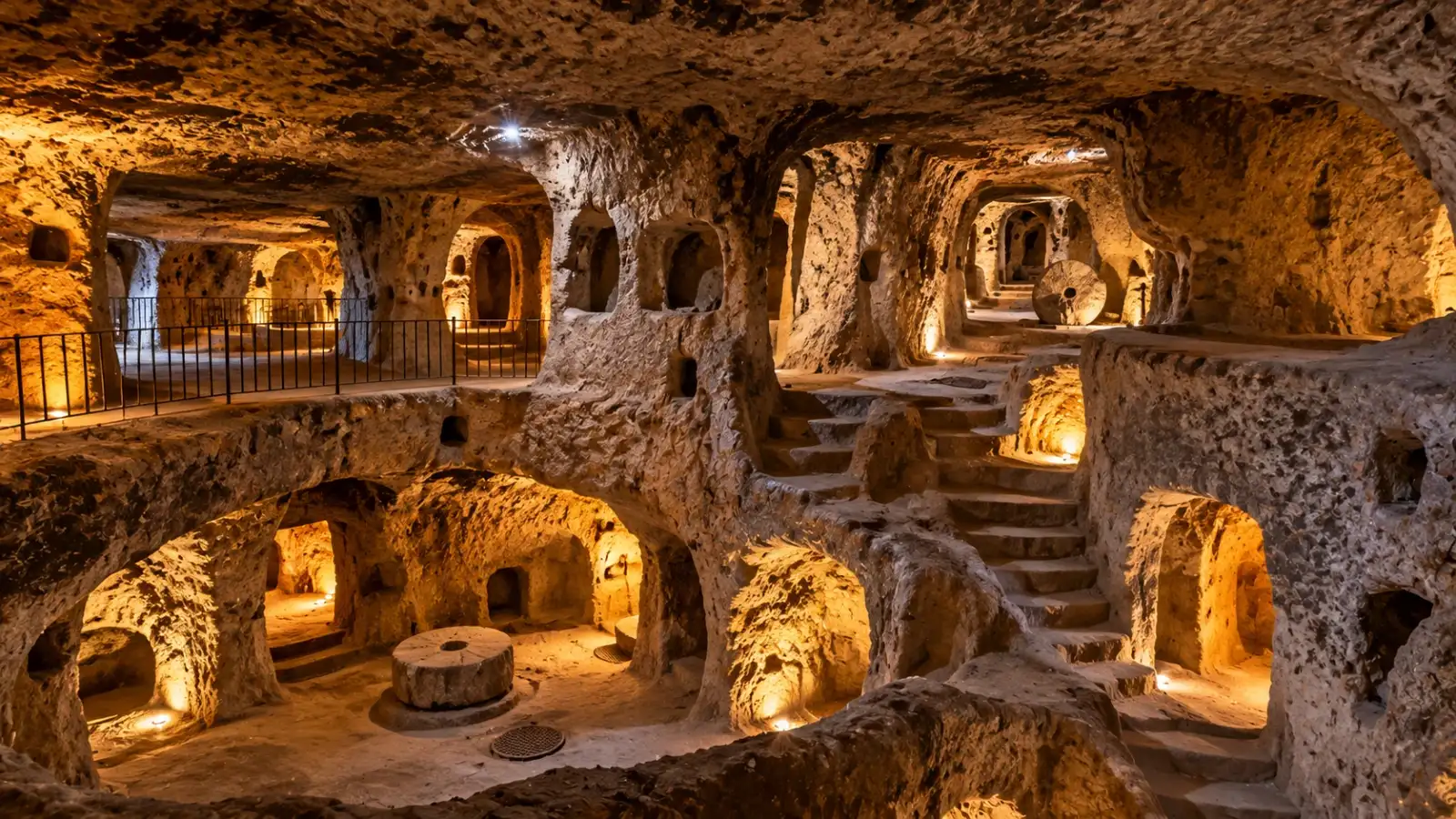
The complex is believed to have developed over several historical periods, with substantial use during the Byzantine era. It could accommodate large numbers of people seeking shelter during periods of danger.
One of its most interesting features is the system of ventilation shafts that helped circulate air through the deeper sections. Heavy stone doors could also be rolled across certain entrances to restrict access.
Today, visitors can explore designated sections of this extraordinary underground complex and learn how its inhabitants managed daily life below ground.
The complex includes areas believed to have been used for food storage, cooking, living and keeping animals. Its narrow passageways and low ceilings reflect the practical challenges of constructing a settlement underground.
Kaymakli is particularly interesting because its layout demonstrates how communities organised different activities within a limited underground space. Visitors can explore several accessible levels and observe the architectural techniques used by earlier inhabitants.
The town became an important opal-mining centre during the twentieth century. Miners and residents began creating underground living spaces within the soft rock to maintain more comfortable indoor temperatures.
Today, Coober Pedy has underground homes, accommodation, shops and places of worship. Visitors can explore former mining tunnels, underground churches and heritage attractions to understand how residents adapted to life in the desert.
The underground spaces include rooms, passages and areas that could accommodate people and livestock. Some sections also contain traces of earlier activities, showing how the complex evolved over time.
Today, Naours is a heritage attraction where visitors can explore parts of the tunnels and learn about the history of underground refuges in the region.
People have inhabited the area for thousands of years, and its architecture developed through repeated adaptation to the natural terrain. Some homes were built directly into caves, while others combined natural rock spaces with constructed stone façades.
Although Matera is not an entirely underground city, its cave-based architecture makes it one of the world's most distinctive historic settlements. Visitors can explore restored cave homes, museums and rock-cut churches.
Rather than excavating an entire underground settlement, residents adapted existing caves and rocky spaces into homes, shops and restaurants. In several streets, massive rock formations form the roofs of buildings, creating a striking architectural effect.
The town's layout follows a narrow river gorge, giving it a distinctive appearance. Visitors can walk through streets where natural stone seems to hang directly above everyday buildings.
The mine contains impressive salt sculptures, underground lakes, chapels and large chambers. One of its best-known attractions is St Kinga's Chapel, where walls, decorations and chandeliers feature salt craftsmanship.
Mining activity at Wieliczka began in the medieval period, and the site became an important part of Poland's economic history. Today, guided tours allow visitors to explore selected underground sections.
Some of these spaces date back to the Etruscan period, while others were developed or modified during later centuries. They served different purposes, including water collection, food storage, workshops and other everyday activities.
Orvieto Underground tours reveal how residents used the natural rock beneath their homes to create additional working and storage spaces. The experience offers a different perspective on the town's history beyond its famous cathedral and medieval streets.
The complex included churches, living quarters, storage spaces and defensive features. Its Church of the Dormition is particularly notable for its historic wall paintings.
Vardzia was designed as a religious and defensive settlement rather than a conventional underground city. Its location within a mountain provided protection and made use of the surrounding rocky landscape.
The network reportedly included passages, storage areas and spaces intended to support people during emergencies. It was not an ancient residential settlement but a modern underground infrastructure project.
Access to the network has been restricted and changed over time, so visitors should check current official access arrangements before planning a trip. Its history provides an unusual example of how underground construction has been used for modern emergency preparedness.
The world's underground cities and settlements reveal how people have adapted to different challenges by making use of the space beneath their feet. From Cappadocia's multi-level shelters and Coober Pedy's temperature-controlled homes to Matera's ancient cave dwellings, each destination reflects a different relationship between people and their environment. Some were built for protection, others for practical living or industrial purposes. Today, these places offer travellers an opportunity to explore unusual architecture and understand how communities developed in extraordinary surroundings.
1. Derinkuyu, Turkey: An Underground City With Multiple Levels
Located in Turkey's Cappadocia region, Derinkuyu is one of the most remarkable underground settlements ever discovered. It extends across multiple levels beneath the ground and contains rooms, storage areas, ventilation shafts, wells and narrow passageways.The complex is believed to have developed over several historical periods, with substantial use during the Byzantine era. It could accommodate large numbers of people seeking shelter during periods of danger.
One of its most interesting features is the system of ventilation shafts that helped circulate air through the deeper sections. Heavy stone doors could also be rolled across certain entrances to restrict access.
Today, visitors can explore designated sections of this extraordinary underground complex and learn how its inhabitants managed daily life below ground.
2. Kaymakli, Turkey: A Network of Underground Homes
Another remarkable destination in Cappadocia is Kaymakli Underground City . Unlike a conventional settlement, it consists of interconnected chambers, corridors and spaces carved into soft volcanic rock.The complex includes areas believed to have been used for food storage, cooking, living and keeping animals. Its narrow passageways and low ceilings reflect the practical challenges of constructing a settlement underground.
Kaymakli is particularly interesting because its layout demonstrates how communities organised different activities within a limited underground space. Visitors can explore several accessible levels and observe the architectural techniques used by earlier inhabitants.
3. Coober Pedy, Australia: A Town Beneath the Desert
Coober Pedy in South Australia is famous for its underground homes, locally known as dugouts. Unlike ancient underground cities built primarily for protection, many of these homes developed as a practical response to the region's extreme desert temperatures.The town became an important opal-mining centre during the twentieth century. Miners and residents began creating underground living spaces within the soft rock to maintain more comfortable indoor temperatures.
Today, Coober Pedy has underground homes, accommodation, shops and places of worship. Visitors can explore former mining tunnels, underground churches and heritage attractions to understand how residents adapted to life in the desert.
4. Naours, France: A Hidden Underground Refuge
Naours, in northern France, contains an extensive network of underground galleries and chambers beneath the countryside of Picardy. Known as the Cité Souterraine de Naours, the complex was used by local communities as a refuge during periods of conflict.The underground spaces include rooms, passages and areas that could accommodate people and livestock. Some sections also contain traces of earlier activities, showing how the complex evolved over time.
Today, Naours is a heritage attraction where visitors can explore parts of the tunnels and learn about the history of underground refuges in the region.
5. Matera, Italy: Ancient Homes Carved Into Rock
Matera, in southern Italy, is known for its Sassi districts, where homes, churches and other spaces were carved into limestone rock. Its historic settlement includes cave dwellings arranged along a dramatic landscape of ravines and rocky slopes.People have inhabited the area for thousands of years, and its architecture developed through repeated adaptation to the natural terrain. Some homes were built directly into caves, while others combined natural rock spaces with constructed stone façades.
Although Matera is not an entirely underground city, its cave-based architecture makes it one of the world's most distinctive historic settlements. Visitors can explore restored cave homes, museums and rock-cut churches.
6. Setenil de las Bodegas, Spain: Homes Beneath Giant Rocks
Setenil de las Bodegas, a small town in southern Spain, is famous for its unusual houses built beneath enormous natural rock overhangs.Rather than excavating an entire underground settlement, residents adapted existing caves and rocky spaces into homes, shops and restaurants. In several streets, massive rock formations form the roofs of buildings, creating a striking architectural effect.
The town's layout follows a narrow river gorge, giving it a distinctive appearance. Visitors can walk through streets where natural stone seems to hang directly above everyday buildings.
7. Wieliczka, Poland: An Underground World of Salt
The Wieliczka Salt Mine near Kraków is an extraordinary underground complex created through centuries of salt extraction. Although it is a former industrial site rather than a residential city, its network of chambers and tunnels resembles an underground world.The mine contains impressive salt sculptures, underground lakes, chapels and large chambers. One of its best-known attractions is St Kinga's Chapel, where walls, decorations and chandeliers feature salt craftsmanship.
Mining activity at Wieliczka began in the medieval period, and the site became an important part of Poland's economic history. Today, guided tours allow visitors to explore selected underground sections.
8. Orvieto Underground, Italy: A City Beneath a City
The Italian hilltop town of Orvieto has an extensive underground network of caves, tunnels, wells and chambers carved into volcanic rock.You may also like
- 'I'm REALLY worried about my...': Woman seeks financial advice after discovering parents have no retirement savings after spending Rs 17 lakh on her wedding
- Wavy Hair Care: Why It Needs Its Own Routine
- Why Does Your Hair Reject Moisture? Understanding Hair Porosity
- Fine or Thin Hair? One Difference Could Change Your Entire Haircare Routine
- Wearing Compression Clothing at the Gym? Here's What It Actually Does
Some of these spaces date back to the Etruscan period, while others were developed or modified during later centuries. They served different purposes, including water collection, food storage, workshops and other everyday activities.
Orvieto Underground tours reveal how residents used the natural rock beneath their homes to create additional working and storage spaces. The experience offers a different perspective on the town's history beyond its famous cathedral and medieval streets.
9. Vardzia, Georgia: A Monastery Carved Into a Mountain
Vardzia is a remarkable cave monastery complex in southern Georgia, carved into the slopes of Mount Erusheti. Developed mainly during the twelfth century under Queen Tamar's reign, it once contained hundreds of chambers connected through tunnels and passageways.The complex included churches, living quarters, storage spaces and defensive features. Its Church of the Dormition is particularly notable for its historic wall paintings.
Vardzia was designed as a religious and defensive settlement rather than a conventional underground city. Its location within a mountain provided protection and made use of the surrounding rocky landscape.
10. Beijing's Underground City, China: A Cold War-Era Shelter Network
Beijing's Underground City, known as Dixia Cheng, is a network of tunnels constructed during the Cold War period in the late twentieth century. It was developed as a civil defence project during a time of heightened international tensions.The network reportedly included passages, storage areas and spaces intended to support people during emergencies. It was not an ancient residential settlement but a modern underground infrastructure project.
Access to the network has been restricted and changed over time, so visitors should check current official access arrangements before planning a trip. Its history provides an unusual example of how underground construction has been used for modern emergency preparedness.
The world's underground cities and settlements reveal how people have adapted to different challenges by making use of the space beneath their feet. From Cappadocia's multi-level shelters and Coober Pedy's temperature-controlled homes to Matera's ancient cave dwellings, each destination reflects a different relationship between people and their environment. Some were built for protection, others for practical living or industrial purposes. Today, these places offer travellers an opportunity to explore unusual architecture and understand how communities developed in extraordinary surroundings.






Loving Newspoint? Download the app now
