
World's oldest person lived to 117: Scientists studied her gut bacteria and found a surprisingly youthful pattern linked to healthy ageing


Living to 117 is rare enough. But when scientists examined Maria Branyas Morera , they found something even more intriguing: parts of her biology did not look as old as her birth certificate suggested.
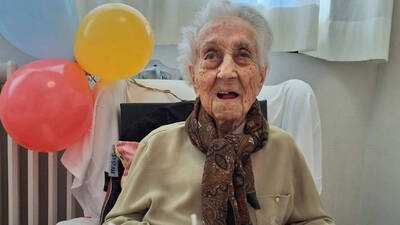
Branyas, who died in August 2024 at 117 years and 168 days, was the world's oldest verified living person. Researchers from several institutions studied her blood, saliva, urine and stool to understand what made her ageing so unusual. Their findings were published in Cell Reports Medicine in 2025.
Her gut carried a surprisingly youthful signalThe stool analysis stood out. Branyas had a diverse gut microbiome with a notably high presence of beneficial bacteria, particularly Bifidobacterium .
These bacteria are often associated with healthier gut function and were unusually abundant despite her extreme age. Researchers described her microbiome as having features resembling those seen in considerably younger people.
That matters because ageing can bring changes in the gut microbial community. Branyas appeared to have retained a microbial profile that researchers considered unusually youthful.
Three yogurts were part of her routineThere is an interesting everyday detail behind the laboratory findings. Branyas reportedly ate three yogurts every day and followed a Mediterranean-style diet containing foods such as vegetables, fruit, legumes, fish and olive oil.
Researchers suggested that her diet may have helped support the bacteria found in her gut. But this does not mean three yogurts can reproduce her lifespan. Her microbiome was also shaped by her genetics, age, environment and years of dietary habits.
Her genes may have given her another layer of protectionThe gut was only one piece of the puzzle. The researchers also identified rare genetic variants linked with processes involving cardiovascular health, immune function, cognition and longevity .
At the same time, her body showed clear signs of extreme ageing, including very short telomeres and other age-related cellular changes. This makes her case more interesting, not less. She did not simply escape ageing. Some systems aged considerably while others remained unusually resilient.
The lesson is not to copy Maria exactlyBranyas' story offers a useful reminder about gut health: there is no single ideal microbiome that works for everyone.
Food changes the gut environment, but individual microbiomes respond differently. Genetics also matters. The researchers themselves caution that findings from one extraordinary person cannot be directly applied to the wider population and need confirmation in larger studies.
Her life therefore raises a more interesting question than simply, “What did she eat?” Healthy ageing may depend on several small advantages working together, including genetics, diet, physical activity, social connection and the body's ability to keep inflammation under control.
Disclaimer: This article discusses findings from a study of one exceptionally long-lived individual. The results do not prove that yogurt, Bifidobacterium or a particular diet can extend lifespan.
Branyas, who died in August 2024 at 117 years and 168 days, was the world's oldest verified living person. Researchers from several institutions studied her blood, saliva, urine and stool to understand what made her ageing so unusual. Their findings were published in Cell Reports Medicine in 2025.
Her gut carried a surprisingly youthful signalThe stool analysis stood out. Branyas had a diverse gut microbiome with a notably high presence of beneficial bacteria, particularly Bifidobacterium .
These bacteria are often associated with healthier gut function and were unusually abundant despite her extreme age. Researchers described her microbiome as having features resembling those seen in considerably younger people.
That matters because ageing can bring changes in the gut microbial community. Branyas appeared to have retained a microbial profile that researchers considered unusually youthful.
Three yogurts were part of her routineThere is an interesting everyday detail behind the laboratory findings. Branyas reportedly ate three yogurts every day and followed a Mediterranean-style diet containing foods such as vegetables, fruit, legumes, fish and olive oil.
Researchers suggested that her diet may have helped support the bacteria found in her gut. But this does not mean three yogurts can reproduce her lifespan. Her microbiome was also shaped by her genetics, age, environment and years of dietary habits.
Her genes may have given her another layer of protectionThe gut was only one piece of the puzzle. The researchers also identified rare genetic variants linked with processes involving cardiovascular health, immune function, cognition and longevity .
At the same time, her body showed clear signs of extreme ageing, including very short telomeres and other age-related cellular changes. This makes her case more interesting, not less. She did not simply escape ageing. Some systems aged considerably while others remained unusually resilient.
The lesson is not to copy Maria exactlyBranyas' story offers a useful reminder about gut health: there is no single ideal microbiome that works for everyone.
Food changes the gut environment, but individual microbiomes respond differently. Genetics also matters. The researchers themselves caution that findings from one extraordinary person cannot be directly applied to the wider population and need confirmation in larger studies.
Her life therefore raises a more interesting question than simply, “What did she eat?” Healthy ageing may depend on several small advantages working together, including genetics, diet, physical activity, social connection and the body's ability to keep inflammation under control.
Disclaimer: This article discusses findings from a study of one exceptionally long-lived individual. The results do not prove that yogurt, Bifidobacterium or a particular diet can extend lifespan.
Next Story