
Annakut 2026: Why Krishna Is Offered 56 Dishes, the Meaning of Chappan Bhog


Walk into a Krishna temple on Annakut, and the sight can stop you in your tracks. Dish after dish arranged in tiers before the deity. Golden laddoos, pale white rasgullas, crisp kachoris, steaming khichdi, bowls of kheer, mountains of rice, trays of fruit. The display seems endless. It’s called chhappan bhog, fifty-six offerings, and it sits at the centre of Annakut, observed in India on Tuesday, November 10, 2026, alongside Govardhan Puja.
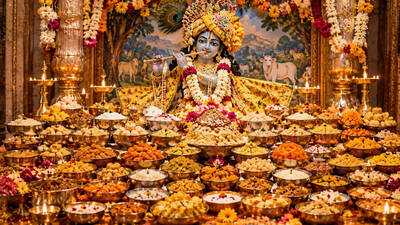
Annakut: A Mountain Made of FoodThe word Annakut means “heap of grain” or “mountain of food.” The idea is simple. Just as Krishna once lifted Govardhan, the hill that fed the people of Braj, devotees now offer him a hill of their own, built from food.
It’s a harvest festival of gratitude. By early November, the kharif crops have been gathered. New rice, fresh vegetables and seasonal sweets fill kitchens. Offering the best of them to Krishna before eating is a way of thanking the source of abundance.
Why Fifty-Six?Several explanations exist, and they’ve all been passed down lovingly.
The eight meals. The most widely told version comes from the Govardhan story. As a child, Krishna was used to eating eight times a day. While holding up the hill for seven days, he went without food. When the storm ended, the grateful people of Braj prepared all the meals he’d missed. Seven days with eight meals each makes fifty-six.
The lotus of Goloka. A more spiritual explanation comes from Vaishnav tradition. In Goloka, Krishna’s eternal abode, he’s described as seated at the centre of a great lotus. Its petals are arranged in three layers of eight, sixteen and thirty-two. Together, they total fifty-six. Each petal is home to one of his devoted companions. Offering fifty-six dishes is like serving every petal of that divine flower.
The gopis’ vow. A third story says the gopis of Vrindavan once kept a month-long fast, praying for Krishna as their beloved. When their wish was granted, they celebrated with a feast of fifty-six items.
Whichever story a family prefers, the message is the same. They offer Krishna abundance out of love, not obligation.
What Goes Into Chhappan BhogThere’s no single fixed list. Temples and families across regions prepare their own versions. But certain categories almost always appear.
Sweets. Laddoos, pedas, barfi, jalebi, rabri, malpua, rasgulla and Krishna’s favourite, makhan mishri, a simple mix of fresh butter and crystal sugar.
Rice dishes. Plain rice, khichdi, kheer and sometimes sweet saffron rice.
Breads. Puri, paratha, kachori and other fried or griddle breads.
Savouries. Mathri, namkeen, pakoras and spiced snacks.
Vegetables and dals. Several sabzis, kadhi and dal preparations.
Fruits and dry fruits. Seasonal fruits, almonds, cashews and raisins.
Drinks and finishers. Milk, buttermilk and finally a betel leaf, tambula, served at the end as is done after a royal meal.
In Rajasthan and Uttar Pradesh, many homes also make a special Annakut sabzi, a mixed vegetable dish cooked with whatever the season offers, eaten with bajra roti or puri.
Famous Annakut CelebrationsThe Shrinathji temple in Nathdwara, Rajasthan, is known for one of the country's grandest Annakut displays. Huge heaps of rice and hundreds of dishes are arranged before the deity. In Mathura and Vrindavan, temples dedicated to Krishna hold elaborate chhappan bhog ceremonies, and devotees walk the Govardhan parikrama the same day.
Offering Annakut at HomeFamilies don’t need fifty-six dishes to take part. Krishna is said to accept whatever is offered with love. Even five or seven simple items, prepared freshly and placed before him with a tulsi leaf on each, carry the same meaning.
Food should be vegetarian, made without onion and garlic, and kept aside before anyone tastes it. After the aarti, share it as prasad with family, neighbours, and anyone in need.
Annakut: A Mountain Made of FoodThe word Annakut means “heap of grain” or “mountain of food.” The idea is simple. Just as Krishna once lifted Govardhan, the hill that fed the people of Braj, devotees now offer him a hill of their own, built from food.
It’s a harvest festival of gratitude. By early November, the kharif crops have been gathered. New rice, fresh vegetables and seasonal sweets fill kitchens. Offering the best of them to Krishna before eating is a way of thanking the source of abundance.
One Powerful Mantra Jaap Unlock Prosperity , Wealth , Health | Prabhuji Nityanand Charandas
Why Fifty-Six?Several explanations exist, and they’ve all been passed down lovingly.
The eight meals. The most widely told version comes from the Govardhan story. As a child, Krishna was used to eating eight times a day. While holding up the hill for seven days, he went without food. When the storm ended, the grateful people of Braj prepared all the meals he’d missed. Seven days with eight meals each makes fifty-six.
The lotus of Goloka. A more spiritual explanation comes from Vaishnav tradition. In Goloka, Krishna’s eternal abode, he’s described as seated at the centre of a great lotus. Its petals are arranged in three layers of eight, sixteen and thirty-two. Together, they total fifty-six. Each petal is home to one of his devoted companions. Offering fifty-six dishes is like serving every petal of that divine flower.
The gopis’ vow. A third story says the gopis of Vrindavan once kept a month-long fast, praying for Krishna as their beloved. When their wish was granted, they celebrated with a feast of fifty-six items.
Whichever story a family prefers, the message is the same. They offer Krishna abundance out of love, not obligation.
What Goes Into Chhappan BhogThere’s no single fixed list. Temples and families across regions prepare their own versions. But certain categories almost always appear.
Sweets. Laddoos, pedas, barfi, jalebi, rabri, malpua, rasgulla and Krishna’s favourite, makhan mishri, a simple mix of fresh butter and crystal sugar.
Rice dishes. Plain rice, khichdi, kheer and sometimes sweet saffron rice.
Breads. Puri, paratha, kachori and other fried or griddle breads.
Savouries. Mathri, namkeen, pakoras and spiced snacks.
Vegetables and dals. Several sabzis, kadhi and dal preparations.
Fruits and dry fruits. Seasonal fruits, almonds, cashews and raisins.
Drinks and finishers. Milk, buttermilk and finally a betel leaf, tambula, served at the end as is done after a royal meal.
In Rajasthan and Uttar Pradesh, many homes also make a special Annakut sabzi, a mixed vegetable dish cooked with whatever the season offers, eaten with bajra roti or puri.
Famous Annakut CelebrationsThe Shrinathji temple in Nathdwara, Rajasthan, is known for one of the country's grandest Annakut displays. Huge heaps of rice and hundreds of dishes are arranged before the deity. In Mathura and Vrindavan, temples dedicated to Krishna hold elaborate chhappan bhog ceremonies, and devotees walk the Govardhan parikrama the same day.
Offering Annakut at HomeFamilies don’t need fifty-six dishes to take part. Krishna is said to accept whatever is offered with love. Even five or seven simple items, prepared freshly and placed before him with a tulsi leaf on each, carry the same meaning.
Food should be vegetarian, made without onion and garlic, and kept aside before anyone tastes it. After the aarti, share it as prasad with family, neighbours, and anyone in need.
Next Story