
Durga Puja Altar Decoration Ideas With Red and White Flowers for Navratri

Red and white flowers can give a Durga Puja altar a traditional yet elegant appearance. Red is widely associated with Goddess Durga's strength, energy and power, while white often represents peace, purity and devotion. Together, these colours create a balanced setting for prayer, whether the altar is arranged in a dedicated puja room, a living room corner or a community pandal. You do not need an elaborate mandap or expensive accessories to achieve an attractive result. Fresh roses, white chrysanthemums, marigold garlands, a clean fabric backdrop and carefully placed lamps can transform a simple space into a welcoming place of worship.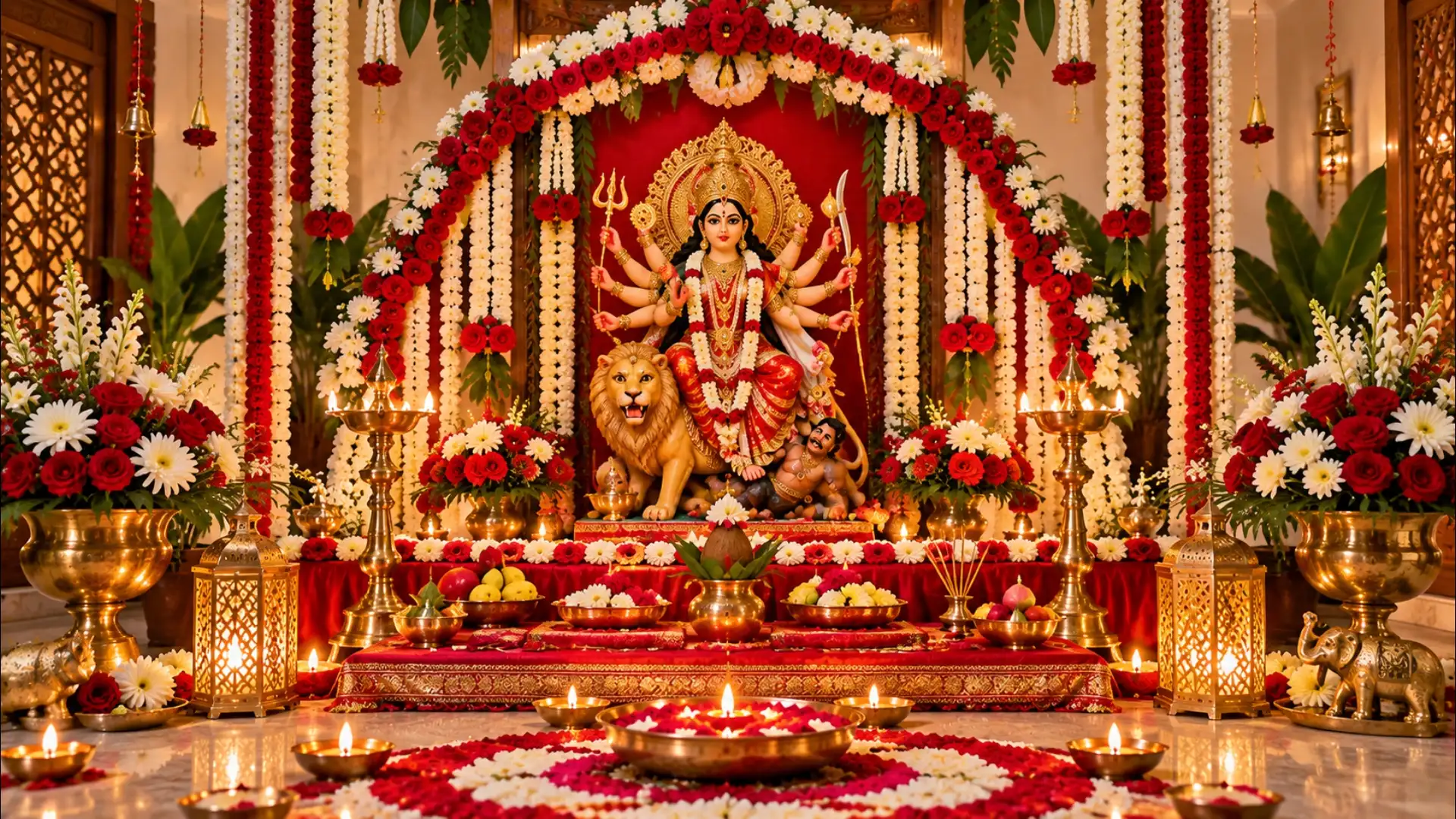
A red backdrop with white floral strings creates a striking contrast, while a white background decorated with red roses looks softer and more understated. You can also use alternating red and white fabric panels to give the altar a layered appearance.
Keep the backdrop proportionate to the space. In a small home, a simple fabric panel often works better than a large decorative structure that makes the area feel crowded.
Marigold garlands can add a traditional orange and yellow accent without overpowering the main colour scheme. Lotus flowers may also be used where available and appropriate to your family's worship practices.
Choose fresh, locally available flowers and replace wilted arrangements regularly. Avoid placing loose petals where they might obstruct worshippers or come into contact with burning lamps.
If you light oil lamps, place them on a heat-resistant surface and maintain a safe distance from flowers, fabric and electrical decorations. Battery-operated diyas can provide a similar visual effect in compact spaces where an open flame is unsuitable.
You can also place a small floral arrangement on either side of the platform to frame the altar. Leave sufficient space for offerings and daily rituals.
For community celebrations, ensure that garlands and decorative panels are secured properly and that the altar does not obstruct entrances, walkways or emergency exits.
Create a Red and White Backdrop
Begin by choosing a clean, stable platform for the idol or photograph of Goddess Durga. Cover it with a red, white or cream cloth, depending on the look you prefer.A red backdrop with white floral strings creates a striking contrast, while a white background decorated with red roses looks softer and more understated. You can also use alternating red and white fabric panels to give the altar a layered appearance.
Keep the backdrop proportionate to the space. In a small home, a simple fabric panel often works better than a large decorative structure that makes the area feel crowded.
Arrange Fresh Flowers Around the Altar
Red roses and white chrysanthemums are useful choices for creating a two-colour floral arrangement. You can place them in separate bowls, alternate them along the edge of the platform or use them to frame the deity's image.Marigold garlands can add a traditional orange and yellow accent without overpowering the main colour scheme. Lotus flowers may also be used where available and appropriate to your family's worship practices.
Choose fresh, locally available flowers and replace wilted arrangements regularly. Avoid placing loose petals where they might obstruct worshippers or come into contact with burning lamps.
Decorate With Traditional Diyas and Brass Accessories
Brass lamps, small bells and traditional पूजा utensils can complement the flowers without competing for attention. Arrange these items symmetrically if you want a formal look, or keep the display simple for a more contemporary home altar.If you light oil lamps, place them on a heat-resistant surface and maintain a safe distance from flowers, fabric and electrical decorations. Battery-operated diyas can provide a similar visual effect in compact spaces where an open flame is unsuitable.
Add Rangoli and Floral Details
A small rangoli in red, white and yellow can mark the entrance to the prayer area. Flower petals are particularly suitable if you want a natural design that is easy to remove after the festival.You can also place a small floral arrangement on either side of the platform to frame the altar. Leave sufficient space for offerings and daily rituals.
Make the Decoration Practical and Affordable
Use existing brass accessories, reusable backdrops and decorations from previous festivals. Buying flowers in season from a nearby market can also help control costs.For community celebrations, ensure that garlands and decorative panels are secured properly and that the altar does not obstruct entrances, walkways or emergency exits.
Next Story