
How to Decorate Your Kalash Sthapana Setup at Home During Navratri

Navratri marks the beginning of nine days of devotion, celebration and worship of Goddess Durga. For many families, the festival starts with Kalash Sthapana, also known as Ghatasthapana, a ritual that symbolises an auspicious beginning and the invocation of divine energy. Alongside the religious ceremonies, decorating the puja space has become an important part of preparing the home for the festival. From fresh marigold garlands and colourful rangoli to traditional brass lamps and neatly arranged flowers, even a small corner can be transformed into a welcoming place for prayer. The best Navratri Kalash Sthapana decoration ideas combine traditional elements with simple, practical touches.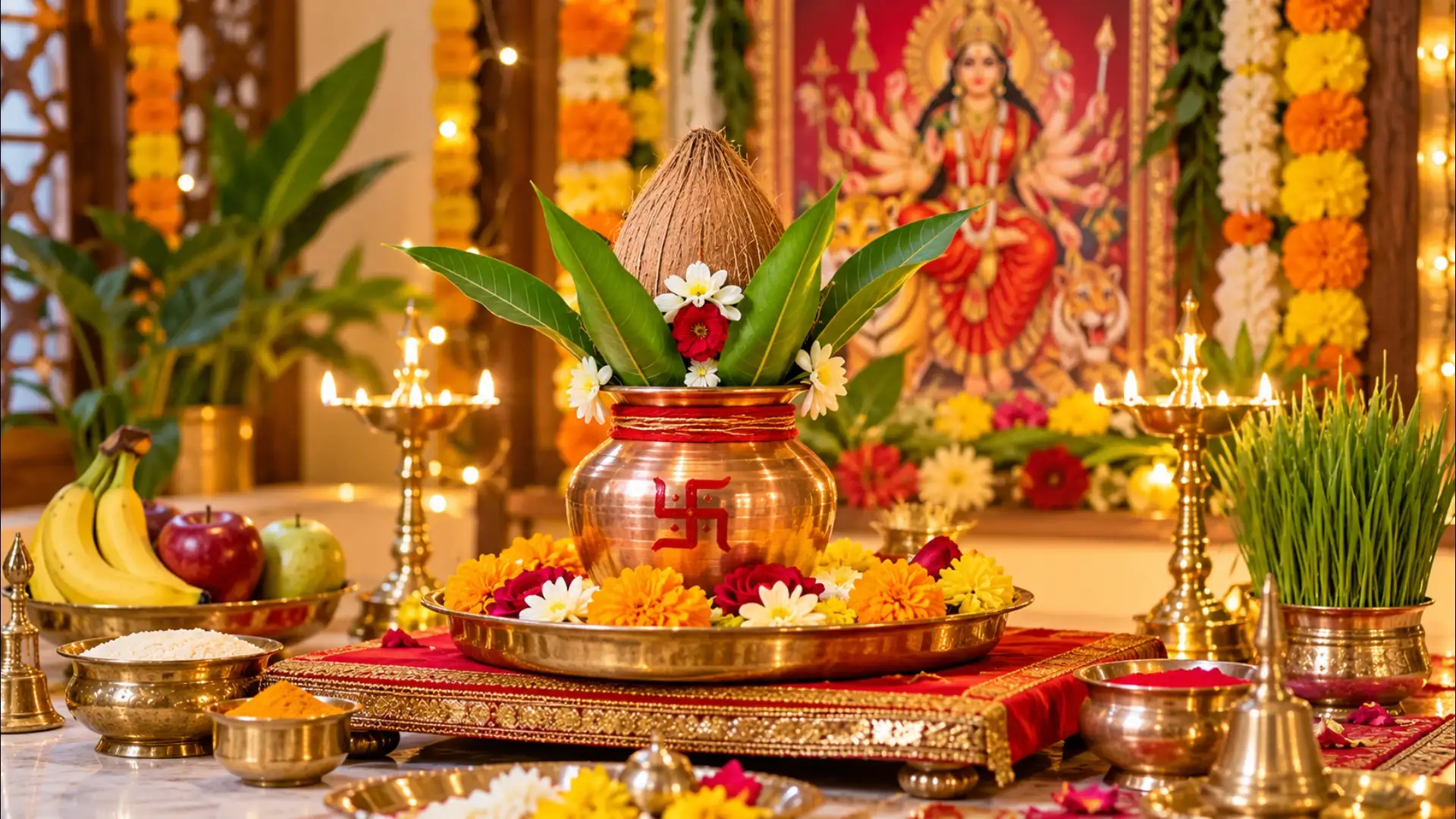
Place a low wooden chowki or a small platform covered with a red, yellow or cream cloth. Keep the Kalash in the designated position according to your family's religious tradition and follow the guidance used for the ritual.
Avoid overcrowding the platform with decorative objects. The Kalash should remain the main focus of the arrangement.
Fresh roses can add red and pink accents, while white flowers offer a softer appearance. Choose flowers that are readily available locally to keep the arrangement affordable.
Replace wilted flowers regularly, especially if the Kalash is placed near a diya or other heat source.
Traditional brass or clay diyas add warmth to the setting. Position them on a stable, heat-resistant surface, away from flower garlands, curtains and loose fabric. Battery-operated lights are a useful alternative in homes where an open flame is unsuitable.
For a modern home, warm white fairy lights can complement traditional decorations. Keep electrical wires away from water used in the ritual and ensure that the setup remains tidy.
Reusable fabric backdrops, existing brass utensils and decorations saved from previous festivals can reduce costs and waste. Natural flowers and leaves can also be composted after use where practical.
Choose a Clean and Peaceful Puja Corner
The first step is selecting a suitable place for the Kalash Sthapana. Many families prefer a clean prayer room or a quiet corner of the living room, where daily worship can take place without disturbance.Place a low wooden chowki or a small platform covered with a red, yellow or cream cloth. Keep the Kalash in the designated position according to your family's religious tradition and follow the guidance used for the ritual.
Avoid overcrowding the platform with decorative objects. The Kalash should remain the main focus of the arrangement.
Decorate With Marigold and Fresh Flowers
Marigold flowers are a popular choice for Navratri decoration because their bright yellow and orange shades create a festive atmosphere. You can hang short garlands behind the altar, frame the prayer space with flowers or arrange loose petals around the platform.You may also like
- Why Hanging Lemon and Green Chillies Outside Your Door During Navratri Holds Deep Spiritual Significance
- Win Big Battles in Silence: The Power of Calm and Wit from the Legend of Hanuman and Surasa
- Navratri Kanya Pujan: Never Give These 3 Inauspicious Gifts on Ashtami & Navami
- Retrograde Saturn in Uttarabhadrapada: 5 Signs Set for Big Career & Wealth Gains
- Navratri Day 2: Auspicious Puja Timings, Jasmine Flower Offerings
Fresh roses can add red and pink accents, while white flowers offer a softer appearance. Choose flowers that are readily available locally to keep the arrangement affordable.
Replace wilted flowers regularly, especially if the Kalash is placed near a diya or other heat source.
Add Rangoli and Traditional Diyas
A small rangoli at the entrance to the puja area can make the decoration feel complete. Use flower petals, rice flour or coloured powders to create a simple circular pattern around the platform, leaving enough room for people to move safely.Traditional brass or clay diyas add warmth to the setting. Position them on a stable, heat-resistant surface, away from flower garlands, curtains and loose fabric. Battery-operated lights are a useful alternative in homes where an open flame is unsuitable.
Use Red and Yellow for a Festive Look
Red is strongly associated with Goddess Durga, while yellow and orange bring brightness to the decoration. A red backdrop, yellow marigold strings and a few brass accessories can create a coordinated appearance without expensive purchases.For a modern home, warm white fairy lights can complement traditional decorations. Keep electrical wires away from water used in the ritual and ensure that the setup remains tidy.
Make Small Spaces Look Beautiful
A compact puja corner does not require a large backdrop or elaborate decorations. A small chowki, two flower garlands, a modest rangoli and a pair of diyas may be sufficient.Reusable fabric backdrops, existing brass utensils and decorations saved from previous festivals can reduce costs and waste. Natural flowers and leaves can also be composted after use where practical.






Loving Newspoint? Download the app now
