
Why Is Kusha Grass Used in Shradh Rituals? Know Its Traditional Significance

Pitru Paksha 2026 will begin on 27 September and end on 10 October with Sarva Pitru Amavasya. During this period, Hindu families traditionally perform Shradh and other rituals to remember and honour their ancestors. One material that repeatedly appears in these ceremonies is Kusha grass, also known as Darbha. Its use is rooted in ancient Hindu ritual traditions and is associated with purity, sacredness and the proper performance of offerings.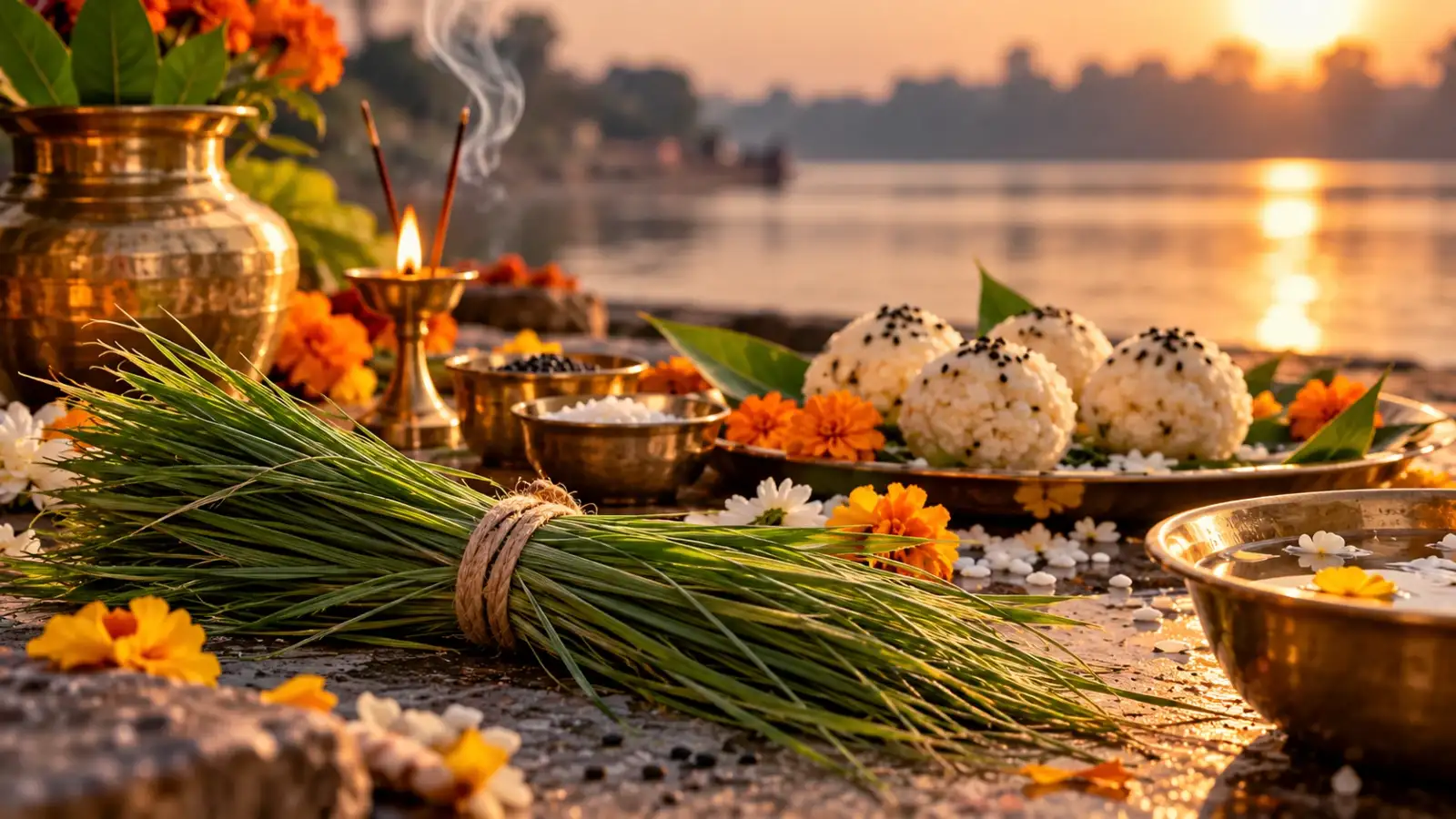
Ancient Hindu texts give Kusha several ritual functions. It can be spread as a ceremonial seat, placed around a ritual area, held during certain rites and used in connection with offerings. Traditional texts also associate it with purity and the preparation of a sacred ritual space.
Because of these longstanding associations, Kusha became an important part of ceremonies in which offerings are made to deities or ancestors.
Traditional texts specifically describe Darbha being used during Shraddha for placing offerings. The Brahmanda Purana, for example, describes Pinda offerings being placed over Darbha grass and gives instructions concerning its form and placement.
This means Kusha is not simply an ornamental addition to Shradh. Within the traditional ritual framework, it has a prescribed function.
Traditional texts describe these offerings being placed on Darbha or Kusha grass. The Brahmanda Purana specifically mentions spreading Darbha for Pinda offerings and gives instructions regarding the direction in which the grass should be positioned.
The Skanda Purana also describes placing cooked rice offerings on sacred grass during Shraddha. These references show that the use of Kusha has a specific place within the traditional procedure rather than being a modern custom added later.
In ritual settings, Kusha may be used to prepare a clean sacred area, create ritual seats or handle water and offerings. Some traditions also use rings made from Darbha, known as Pavitra, during religious ceremonies.
Its use therefore represents more than the physical grass itself. Traditionally, it helps establish the ritual environment in which prayers and offerings are performed.
The Garuda Purana's description of Shraddha includes Kusha cushions and sacred Kusha knots as part of the ceremony. It also describes the use of Kusha in connection with water and offerings made during the ritual.
This connection between Kusha, water and ancestral offerings helps explain why the grass continues to appear in traditional Shradh procedures.
The Brahmanda Purana includes a traditional account connecting Kusha with Prajapati and subsequently explains why the grass is honoured during Shraddha. The Skanda Purana likewise records a sacred origin for ritual grass and describes its use during ancestral rites.
Such accounts belong to religious tradition and should be understood as part of Hindu sacred literature rather than as scientific explanations for the grass's properties.
Some families perform Shradh at home, while others conduct the ceremony at temples, pilgrimage centres or near sacred rivers. A priest may prescribe a particular procedure based on the family's tradition and the relevant Panchang.
Therefore, there is no single universal method for handling Kusha during every Shradh ceremony.
Its significance comes from several layers of tradition. It is regarded as sacred, associated with ritual purity, used for preparing ritual spaces and seats, and specifically mentioned in traditional texts describing Shraddha and Pinda offerings.
For families observing Pitru Paksha, the presence of Kusha can therefore represent continuity with older ritual practices passed down through generations.
As Pitru Paksha 2026 approaches, families following these customs may use Kusha during Shradh, Tarpan or Pinda related ceremonies according to their regional and family traditions. Since ritual procedures can vary, those seeking to perform a specific ceremony should follow the guidance of their family tradition or a knowledgeable priest.
What Is Kusha Grass?
Kusha is a sacred grass traditionally identified with Desmostachya bipinnata. It is also widely known as Darbha. The grass has long, narrow blades and has been used in Hindu rituals for centuries.Ancient Hindu texts give Kusha several ritual functions. It can be spread as a ceremonial seat, placed around a ritual area, held during certain rites and used in connection with offerings. Traditional texts also associate it with purity and the preparation of a sacred ritual space.
Because of these longstanding associations, Kusha became an important part of ceremonies in which offerings are made to deities or ancestors.
Why Is Kusha Used During Shradh?
One of the main traditional reasons for using Kusha in Shradh is its association with purity and sacredness. Ancestral rituals are performed according to prescribed procedures, and Kusha is used at different stages to maintain the ritual arrangement.Traditional texts specifically describe Darbha being used during Shraddha for placing offerings. The Brahmanda Purana, for example, describes Pinda offerings being placed over Darbha grass and gives instructions concerning its form and placement.
This means Kusha is not simply an ornamental addition to Shradh. Within the traditional ritual framework, it has a prescribed function.
Kusha Grass and Pinda Offerings
Pinda Daan is one of the practices associated with ancestral ceremonies. Pindas are traditionally prepared offerings, commonly involving cooked rice and other prescribed ingredients.Traditional texts describe these offerings being placed on Darbha or Kusha grass. The Brahmanda Purana specifically mentions spreading Darbha for Pinda offerings and gives instructions regarding the direction in which the grass should be positioned.
The Skanda Purana also describes placing cooked rice offerings on sacred grass during Shraddha. These references show that the use of Kusha has a specific place within the traditional procedure rather than being a modern custom added later.
Kusha as a Symbol of Purity
Purity is an important concept in Hindu ritual practice, and Kusha is traditionally connected with this idea. Several Hindu texts describe Darbha as sacred and associate it with purification.In ritual settings, Kusha may be used to prepare a clean sacred area, create ritual seats or handle water and offerings. Some traditions also use rings made from Darbha, known as Pavitra, during religious ceremonies.
Its use therefore represents more than the physical grass itself. Traditionally, it helps establish the ritual environment in which prayers and offerings are performed.
Kusha Grass in Tarpan
Tarpan involves offering water while remembering the ancestors. The procedure differs between communities, but Darbha is traditionally used in some forms of Tarpan and Shradh.The Garuda Purana's description of Shraddha includes Kusha cushions and sacred Kusha knots as part of the ceremony. It also describes the use of Kusha in connection with water and offerings made during the ritual.
This connection between Kusha, water and ancestral offerings helps explain why the grass continues to appear in traditional Shradh procedures.
The Mythological Association of Kusha
Hindu religious literature also provides mythological explanations for the sacred status of Kusha. Some Puranic accounts connect the origin of sacred grass with Prajapati, while other traditions associate Darbha with divine protection and ritual purity.The Brahmanda Purana includes a traditional account connecting Kusha with Prajapati and subsequently explains why the grass is honoured during Shraddha. The Skanda Purana likewise records a sacred origin for ritual grass and describes its use during ancestral rites.
Such accounts belong to religious tradition and should be understood as part of Hindu sacred literature rather than as scientific explanations for the grass's properties.
Does Every Family Use Kusha in the Same Way?
No. Shradh procedures vary across regions, communities and family traditions. The precise use of Kusha, the number of blades, their arrangement, the direction in which they are placed and the accompanying mantras can differ.Some families perform Shradh at home, while others conduct the ceremony at temples, pilgrimage centres or near sacred rivers. A priest may prescribe a particular procedure based on the family's tradition and the relevant Panchang.
Therefore, there is no single universal method for handling Kusha during every Shradh ceremony.
Why Kusha Remains Important During Pitru Paksha
Pitru Paksha is fundamentally a period of remembrance and ancestral observance. Kusha forms part of the traditional ritual framework through which families express that remembrance.Its significance comes from several layers of tradition. It is regarded as sacred, associated with ritual purity, used for preparing ritual spaces and seats, and specifically mentioned in traditional texts describing Shraddha and Pinda offerings.
For families observing Pitru Paksha, the presence of Kusha can therefore represent continuity with older ritual practices passed down through generations.
As Pitru Paksha 2026 approaches, families following these customs may use Kusha during Shradh, Tarpan or Pinda related ceremonies according to their regional and family traditions. Since ritual procedures can vary, those seeking to perform a specific ceremony should follow the guidance of their family tradition or a knowledgeable priest.
Next Story