
Traditional Indian Diwali Gifts and What Each One Means

Diwali gifts travel between homes carrying more weight than the boxes suggest. Each traditional choice traces back to a meaning the festival itself holds, prosperity, light, sweetness, protection, and knowing that meaning changes how the gift lands, both for the person giving and the one receiving.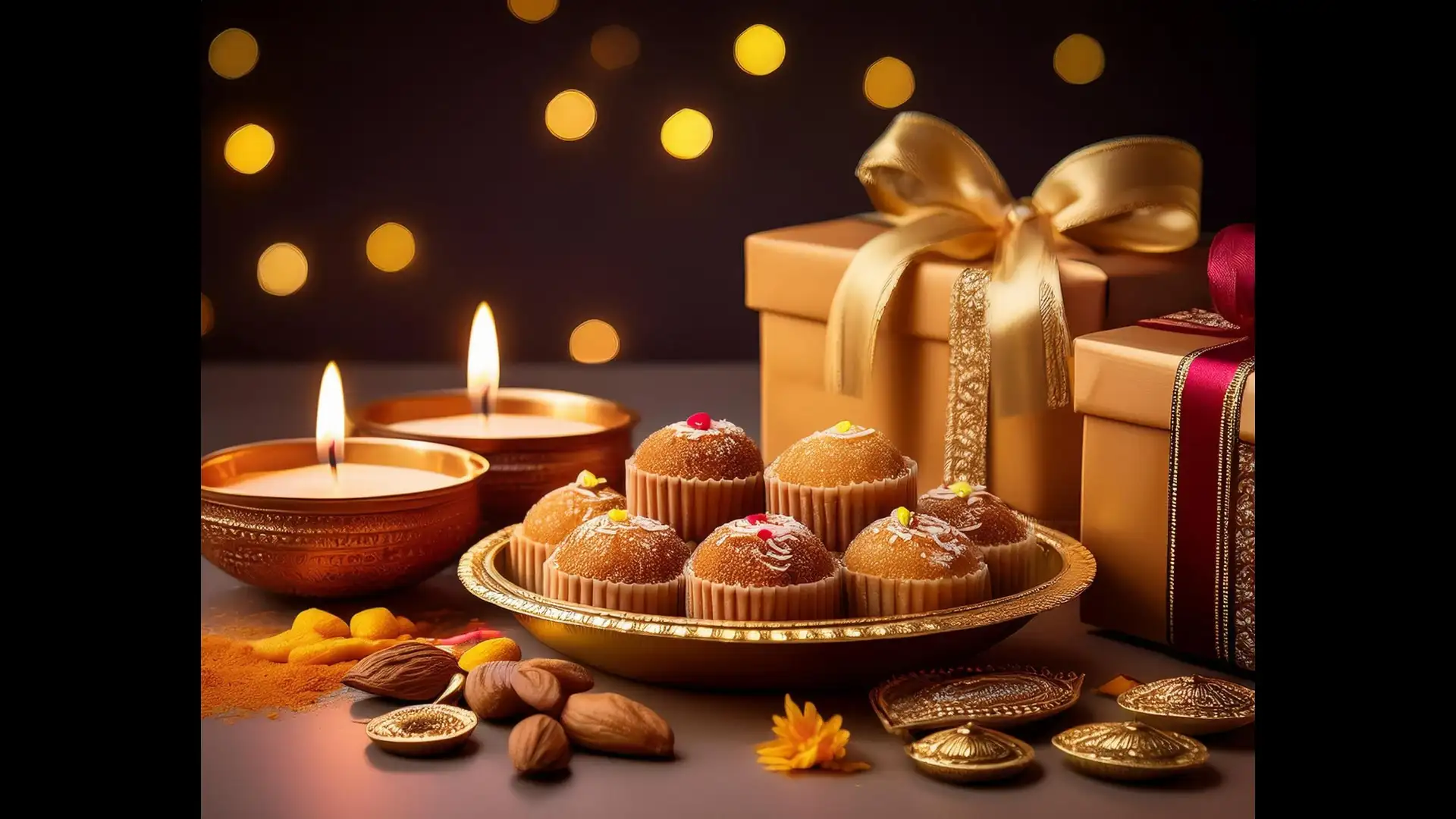
Mithai: The Language of Sweetness
A box of sweets is the oldest Diwali offering in popular tradition. The gesture connects to the belief that Lakshmi's arrival in a home brings abundance, and sweetness is how abundance tastes. Particular sweets carry regional weight: motichoor laddoo in Rajasthan and UP, kaju katli across much of north and west India, mysore pak in Karnataka. The choice of sweet often signals where a family's roots lie. Gifting mithai from a local halwai rather than a branded tin carries the additional warmth of something made by hand nearby. The box says: I thought about this enough to choose it, not just to buy it.Dry Fruits: Prosperity You Can Store
The dry fruit hamper became a Diwali staple because it solved a practical problem elegantly. Almonds, cashews, pistachios, and walnuts keep for weeks, travel well, and were historically expensive enough to signal genuine generosity. In popular tradition, offering something nourishing and lasting at Diwali aligns with the festival's association with Lakshmi, whose blessings are understood as enduring rather than fleeting. The hamper also crosses dietary restrictions easily, which is why it became the default corporate gift, a choice that suits everyone without requiring the giver to know much about the recipient.Diyas and Lamps: Light as the Gift Itself
A clay diya is the most literal Diwali gift there is. The festival's name comes from the Sanskrit dipavali, a row of lamps, and the diya is its irreducible symbol. In popular tradition, lighting a diya at the threshold invites Lakshmi in and keeps Alakshmi, the goddess of misfortune, out. Gifting a set of diyas, especially hand-painted ones from Varanasi or Jaipur, gives someone the means to perform that act of welcome themselves. Brass and silver lamps carry the same meaning with greater permanence; families pass them down. The gift of a lamp is, in a direct sense, the gift of the festival.Silver Coins and Idols: Lakshmi at the Centre
Silver coins bearing the image of Lakshmi and Ganesha are gifted and also used in the Diwali puja. In popular tradition, Ganesha removes obstacles and Lakshmi brings prosperity; their pairing on a coin makes it both a gift and a ritual object. The silver itself carries meaning: it is associated with the moon, with purity, and in many households it is the metal kept for sacred use. Gifting a silver coin is understood as wishing the recipient a year of the goddess's favour. Small silver idols serve the same purpose and often become permanent fixtures in a home's puja space.Choosing the Right Gift
The traditional gifts are not interchangeable. Each one speaks a slightly different language. Mithai is warmth and shared celebration. Dry fruits are generous practicality. A diya is the festival itself, handed over. A silver coin is a blessing made tangible. The right choice depends less on the occasion's formality and more on what you actually want to say. A close friend gets the hand-painted diya set you found at a craft fair. A colleague gets the dry fruit hamper. A parent or elder gets the silver coin, because it honours the puja they will perform. The tradition already made the decision; you only need to know what the tradition means.Next Story