
Navratri 2026: 7 Flowers to offer Maa Durga for wealth, protection, love and success


Walk into any flower market during Navratri, and you will find people buying garlands, roses, lotus and whatever fresh flowers are available for Puja.
Most of us choose flowers based on availability. And there is nothing wrong with that.
But in Devi worship, certain flowers have their own traditional significance. So, instead of buying the same flowers every day, you can also choose them according to the purpose of your prayer.
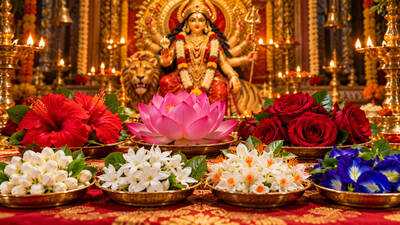
Here are seven flowers you may consider offering to Maa Durga this Navratri.
1. Red HibiscusIf you are worshipping Maa Durga for courage and protection, start with Red Hibiscus.
Commonly called Gudhal, this flower has a particularly strong association with Maa Kali and Shakti worship.
I would suggest offering it when you are dealing with fear, uncertainty, opposition or a difficult situation that requires courage.
The idea is to seek strength rather than remain worried about what might happen next.
2. LotusA Lotus is not always easy to find at your neighbourhood flower shop. But if you can arrange one, consider offering it during Navratri.
Lotus is associated with purity, prosperity and Maa Lakshmi.
For those seeking financial stability, business growth or better opportunities, it can be offered with a Sankalpa for prosperity.
And remember, prosperity is not only about earning. Learning to manage what you already have matters equally.
3. Red RoseThis one is particularly relevant for relationships.
Offer Red Rose while praying for love, harmony in marriage and better understanding between family members.
But I would also suggest doing something else.
If there has been an unnecessary argument at home, take the initiative to resolve it. Don't carry the same disagreement throughout all nine days.
Sometimes a small change in communication is more useful than an elaborate remedy.
4. MograI personally like Mogra for evening Puja.
Its fragrance is pleasant, and will make your prayer space feel fresh.
Mogra is associated with purity and peace. You can offer it while praying for emotional balance, relief from everyday worries and a peaceful atmosphere at home.
There is no need to fill the entire room with flowers. A few fresh ones are sufficient.
5. JasminePlanning to start Durga Saptashati Path this Navratri?
Or perhaps a daily mantra chanting routine?
Consider offering Jasmine, commonly called Chameli.
The flower is associated with devotion and purity, making it a suitable choice for prayers connected with spiritual growth and discipline.
My suggestion would be to choose one practice you can continue even after Navratri.
6. ParijatParijat, or Harsingar, is easily recognised by its white petals and orange centre.
It is traditionally associated with devotion and divine grace.
You can offer Parijat while praying for the well-being of your parents, children and other family members.
It is also a thoughtful choice when your Sankalpa includes gratitude towards elders and ancestors, although that is a personal devotional association rather than a prescribed benefit of the flower.
7. AparajitaAnd finally, Aparajita.
Its name means undefeated. Interestingly, Aparajita is also a name associated with Devi.
In several regional traditions, the flower has a connection with Goddess worship and victory.
I would particularly suggest it for those preparing for an examination, facing professional competition, dealing with obstacles or trying to complete something that has been pending for months.
Offer it with a prayer for courage, determination and success.
Most of us choose flowers based on availability. And there is nothing wrong with that.
But in Devi worship, certain flowers have their own traditional significance. So, instead of buying the same flowers every day, you can also choose them according to the purpose of your prayer.
Here are seven flowers you may consider offering to Maa Durga this Navratri.
1. Red HibiscusIf you are worshipping Maa Durga for courage and protection, start with Red Hibiscus.
Commonly called Gudhal, this flower has a particularly strong association with Maa Kali and Shakti worship.
I would suggest offering it when you are dealing with fear, uncertainty, opposition or a difficult situation that requires courage.
The idea is to seek strength rather than remain worried about what might happen next.
2. LotusA Lotus is not always easy to find at your neighbourhood flower shop. But if you can arrange one, consider offering it during Navratri.
Lotus is associated with purity, prosperity and Maa Lakshmi.
For those seeking financial stability, business growth or better opportunities, it can be offered with a Sankalpa for prosperity.
And remember, prosperity is not only about earning. Learning to manage what you already have matters equally.
3. Red RoseThis one is particularly relevant for relationships.
Offer Red Rose while praying for love, harmony in marriage and better understanding between family members.
But I would also suggest doing something else.
If there has been an unnecessary argument at home, take the initiative to resolve it. Don't carry the same disagreement throughout all nine days.
Sometimes a small change in communication is more useful than an elaborate remedy.
4. MograI personally like Mogra for evening Puja.
Its fragrance is pleasant, and will make your prayer space feel fresh.
Mogra is associated with purity and peace. You can offer it while praying for emotional balance, relief from everyday worries and a peaceful atmosphere at home.
There is no need to fill the entire room with flowers. A few fresh ones are sufficient.
5. JasminePlanning to start Durga Saptashati Path this Navratri?
Or perhaps a daily mantra chanting routine?
Consider offering Jasmine, commonly called Chameli.
The flower is associated with devotion and purity, making it a suitable choice for prayers connected with spiritual growth and discipline.
My suggestion would be to choose one practice you can continue even after Navratri.
6. ParijatParijat, or Harsingar, is easily recognised by its white petals and orange centre.
It is traditionally associated with devotion and divine grace.
You can offer Parijat while praying for the well-being of your parents, children and other family members.
It is also a thoughtful choice when your Sankalpa includes gratitude towards elders and ancestors, although that is a personal devotional association rather than a prescribed benefit of the flower.
7. AparajitaAnd finally, Aparajita.
Its name means undefeated. Interestingly, Aparajita is also a name associated with Devi.
In several regional traditions, the flower has a connection with Goddess worship and victory.
I would particularly suggest it for those preparing for an examination, facing professional competition, dealing with obstacles or trying to complete something that has been pending for months.
Offer it with a prayer for courage, determination and success.
Next Story