
Pitru Paksha Across India: How Different States Observe Ancestor Remembrance

Pitru Paksha is observed across India as a period dedicated to remembering and honouring ancestors. Families traditionally perform rituals such as Shraddha, Tarpan and Pind Daan, with practices varying according to regional customs, family traditions and local religious traditions.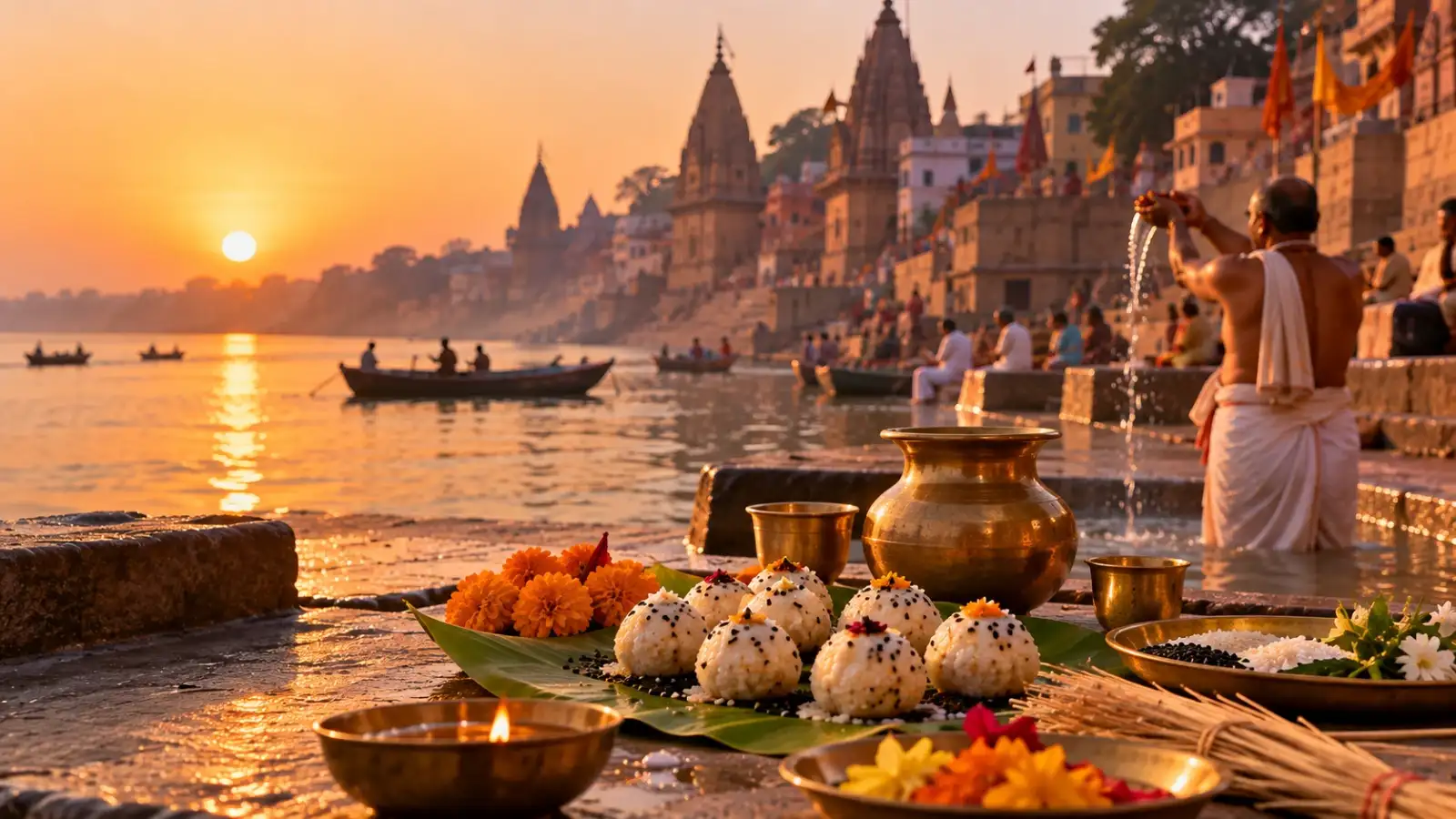
The observance is particularly visible in pilgrimage centres such as Gaya, Varanasi, Prayagraj and Haridwar, but ancestor remembrance is not limited to these places. In many homes, families perform rituals locally, prepare food associated with the occasion and make offerings as part of their own customs.
In 2026, the main Pitru Paksha period runs from 27 September to 10 October, ending with Sarva Pitru Amavasya. September 26 is observed separately as Purnima Shraddha, which is why different calendars can sometimes appear to show different starting dates.
Bihar Tourism identifies the Phalgu River, Vishnupad Temple, Sita Kund and other locations among the important ritual sites in Gaya. The state's tourism department describes Pitru Paksha as a 16-day period dedicated to paying homage to ancestors, with Shraddha, Tarpan and Pind Daan forming important parts of the observance.
The Phalgu River has a particularly important place in the local tradition. Vishnupad Temple is another major site, while Sita Kund is associated with the traditional account of Sita performing Pind Daan for Dasharatha. These stories are part of the religious traditions associated with Gaya.
Varanasi's ghats provide settings for different religious practices, although not every ghat serves exactly the same purpose. Prayag Ghat, Panchganga Ghat and Mansarovar Ghat in Varanasi are traditionally associated with ancestral rites, while the wider riverfront is used for bathing, prayer and other religious observances.
Prayagraj has its own importance because of the confluence of the Ganga, Yamuna and the traditionally recognised Saraswati. For families, performing rituals near a sacred river can form part of a wider pilgrimage and remembrance tradition.
The exact ritual, location and procedure can differ between families, so visitors should follow the guidance of the priest or tradition they are observing.
Traditional accounts of regional Shraddha practices note that Mahalaya Shraddha is particularly significant in Maharashtra. Food prepared during the observance can include regional dishes, followed by customary offerings and remembrance practices.
The important point is that Pitru Paksha does not necessarily mean travelling to a famous pilgrimage site. In Maharashtra, many families observe the period through household rituals, food traditions and offerings carried out according to their family customs.
This gives the observance a distinctly domestic character, with remembrance becoming part of the rhythm of family life.
As in neighbouring western Indian regions, food and offerings can form an important part of the observance. The details are not identical from one community to another, and family traditions often determine which foods, prayers and offerings are used.
Regional descriptions of Shraddha practices distinguish Maharashtra and Gujarat from eastern Indian traditions, where Tarpan on Mahalaya Amavasya has a particularly visible role.
For travellers, this is a useful reminder that Pitru Paksha is not a single uniform ceremony followed identically throughout India.
Tarpan is traditionally performed by offering water, often with sesame, as part of ancestor remembrance. Sacred rivers and water bodies can become important settings for these observances, and many people gather along riverbanks for the ritual.
Mahalaya also has a broader cultural significance in Bengal because it traditionally marks the beginning of the festive period leading towards Durga Puja. This gives the day a distinctive place within the region's annual cultural calendar.
Regional descriptions of Shraddha practices identify Bengal, Odisha and Assam as areas where Tarpan is particularly prominent during Mahalaya Amavasya.
The state has a particularly strong relationship with rivers, temples and coastal pilgrimage sites, which means religious observances often take place within broader sacred landscapes.
As elsewhere in India, the details can vary significantly between communities. It is therefore more accurate to speak of shared principles of remembrance rather than suggesting that every Odia family follows precisely the same ritual sequence.
Regional references to Shraddha specifically identify Odisha among the eastern states where Tarpan has an important role during Mahalaya Amavasya.
Rice, sesame and milk are among the offerings mentioned in descriptions of Assamese Shraddha practices.
The Brahmaputra and other rivers are central to Assam's cultural landscape, and water-based rituals have a visible place in many religious traditions. However, individual families and communities may follow different procedures based on their customs.
The wider cultural diversity of Assam also means that Hindu ancestor-remembrance traditions exist alongside many other religious and community practices.
The ritual can be connected with sacred groves or temple-related spaces known locally as Kavu or Deva Sthanam.
Kerala's lush landscape and strong temple traditions give these observances a setting that looks very different from the riverbank rituals seen in northern India.
The underlying purpose remains remembrance of departed family members, but the ritual language, offerings and setting demonstrate how the same broad tradition can develop distinct regional forms.
Traditional descriptions of southern Indian Shraddha practices mention offerings on banana leaves, coconuts, betel-related items, food and Dakshina, with Brahmin Bhoj also forming part of some traditions.
Tamil households may follow detailed family-specific customs, and the ritual can be performed at home or at an appropriate sacred location.
The food component is often particularly visible, demonstrating how ancestor remembrance can become closely connected with cooking and family traditions.
Descriptions of southern Indian Shraddha traditions identify Karnataka with its own observances, while also noting that practices vary across the wider region.
This variation is especially important when comparing states. The broad concept of honouring ancestors may be shared, but the names, dates, foods, offerings and ritual settings can differ considerably.
In some communities, family members may also combine ancestor remembrance with local temple or household traditions.
Pind Daan can involve offerings made from ingredients such as rice, barley, sesame, milk, honey and ghee. Sacred locations including Gaya, Kashi, Prayagraj and other pilgrimage centres are traditionally associated with such rituals.
However, families do not necessarily need to travel to one of these pilgrimage centres. Ancestor remembrance can also take place at home or at locally significant water bodies and temples.
The choice of ritual location often depends on family tradition, the deceased person's death anniversary or tithi, and guidance from the family's priest.
Tarpan generally involves ritual offerings of water, while Pind Daan involves symbolic food offerings. Shraddha is a broader term covering ceremonies and offerings performed in honour of ancestors.
The exact meaning and procedure can vary according to religious school, region and family tradition. These practices should therefore be understood within their respective cultural and religious contexts rather than reduced to one standard ceremony.
The food served can therefore differ dramatically between states. A household in Maharashtra may prepare foods associated with its local Mahalaya traditions, while a family in South India may follow a different menu and serving practice. Regional descriptions of Shraddha specifically note these differences in food and offerings.
In many families, the meal is not treated simply as an ordinary household lunch. It forms part of the ritual framework through which ancestors are remembered and family obligations are observed.
In Bihar, Gaya's sacred sites make Pind Daan particularly prominent. In Bengal, Mahalaya and Tarpan have a strong public and cultural presence. In Maharashtra and Gujarat, household traditions and regional foods form important parts of the observance, while southern states have their own Pitru Karma traditions.
There is therefore no single "Indian Pitru Paksha ceremony". There are many regional expressions connected by the common idea of remembering and honouring ancestors.
Photographs, stories, traditional recipes and family gatherings can become part of remembrance alongside formal religious rituals. These personal practices may not appear in official descriptions of Shraddha, but they can be meaningful parts of how families remember previous generations.
The diversity of customs across India shows how ancestor remembrance has remained closely connected with local culture. From the banks of the Phalgu in Gaya to the rivers of Bengal and the household traditions of southern India, Pitru Paksha takes many forms while retaining its central theme of remembering those who came before.
The observance is particularly visible in pilgrimage centres such as Gaya, Varanasi, Prayagraj and Haridwar, but ancestor remembrance is not limited to these places. In many homes, families perform rituals locally, prepare food associated with the occasion and make offerings as part of their own customs.
In 2026, the main Pitru Paksha period runs from 27 September to 10 October, ending with Sarva Pitru Amavasya. September 26 is observed separately as Purnima Shraddha, which is why different calendars can sometimes appear to show different starting dates.
Bihar Has Gaya at the Centre of Pitru Paksha
Among India's major ancestral pilgrimage destinations, Gaya in Bihar occupies a particularly important position. During Pitru Paksha, large numbers of devotees travel to the city to perform Pind Daan and Tarpan for departed family members.Bihar Tourism identifies the Phalgu River, Vishnupad Temple, Sita Kund and other locations among the important ritual sites in Gaya. The state's tourism department describes Pitru Paksha as a 16-day period dedicated to paying homage to ancestors, with Shraddha, Tarpan and Pind Daan forming important parts of the observance.
The Phalgu River has a particularly important place in the local tradition. Vishnupad Temple is another major site, while Sita Kund is associated with the traditional account of Sita performing Pind Daan for Dasharatha. These stories are part of the religious traditions associated with Gaya.
Uttar Pradesh Has Several Major Ancestral Centres
In Uttar Pradesh, ancestor remembrance is closely connected with important pilgrimage cities along the Ganga. Varanasi, Prayagraj and other sacred locations attract families for rituals associated with Shraddha and Tarpan.Varanasi's ghats provide settings for different religious practices, although not every ghat serves exactly the same purpose. Prayag Ghat, Panchganga Ghat and Mansarovar Ghat in Varanasi are traditionally associated with ancestral rites, while the wider riverfront is used for bathing, prayer and other religious observances.
Prayagraj has its own importance because of the confluence of the Ganga, Yamuna and the traditionally recognised Saraswati. For families, performing rituals near a sacred river can form part of a wider pilgrimage and remembrance tradition.
The exact ritual, location and procedure can differ between families, so visitors should follow the guidance of the priest or tradition they are observing.
Maharashtra Gives Mahalaya Its Own Regional Character
Maharashtra has distinctive household traditions associated with Mahalaya and Pitru Paksha. Regional customs can include preparing specific foods and making offerings as part of remembrance.Traditional accounts of regional Shraddha practices note that Mahalaya Shraddha is particularly significant in Maharashtra. Food prepared during the observance can include regional dishes, followed by customary offerings and remembrance practices.
The important point is that Pitru Paksha does not necessarily mean travelling to a famous pilgrimage site. In Maharashtra, many families observe the period through household rituals, food traditions and offerings carried out according to their family customs.
This gives the observance a distinctly domestic character, with remembrance becoming part of the rhythm of family life.
Gujarat Combines Household Traditions With Ritual Offerings
Gujarat also has regional variations in the way Shraddha and ancestor remembrance are observed. Families may perform rituals at home or visit sacred locations depending on their traditions.As in neighbouring western Indian regions, food and offerings can form an important part of the observance. The details are not identical from one community to another, and family traditions often determine which foods, prayers and offerings are used.
Regional descriptions of Shraddha practices distinguish Maharashtra and Gujarat from eastern Indian traditions, where Tarpan on Mahalaya Amavasya has a particularly visible role.
For travellers, this is a useful reminder that Pitru Paksha is not a single uniform ceremony followed identically throughout India.
West Bengal Marks Mahalaya With Tarpan
In West Bengal, Mahalaya has a particularly strong cultural presence. The day marks an important point in the Bengali calendar and is closely associated with remembrance of ancestors.Tarpan is traditionally performed by offering water, often with sesame, as part of ancestor remembrance. Sacred rivers and water bodies can become important settings for these observances, and many people gather along riverbanks for the ritual.
Mahalaya also has a broader cultural significance in Bengal because it traditionally marks the beginning of the festive period leading towards Durga Puja. This gives the day a distinctive place within the region's annual cultural calendar.
Regional descriptions of Shraddha practices identify Bengal, Odisha and Assam as areas where Tarpan is particularly prominent during Mahalaya Amavasya.
Odisha Has Its Own Ritual Traditions
Odisha also observes ancestor remembrance through regional customs involving Tarpan and Shraddha. Water, sesame and ritual offerings form part of practices observed by families according to their traditions.The state has a particularly strong relationship with rivers, temples and coastal pilgrimage sites, which means religious observances often take place within broader sacred landscapes.
As elsewhere in India, the details can vary significantly between communities. It is therefore more accurate to speak of shared principles of remembrance rather than suggesting that every Odia family follows precisely the same ritual sequence.
Regional references to Shraddha specifically identify Odisha among the eastern states where Tarpan has an important role during Mahalaya Amavasya.
Assam Connects Ancestor Remembrance With Tarpan
Assam's traditions also demonstrate how Pitru Paksha can take different forms across eastern and northeastern India. Tarpan, involving ritual offerings of water and other prescribed materials, is an important form of ancestor remembrance.Rice, sesame and milk are among the offerings mentioned in descriptions of Assamese Shraddha practices.
The Brahmaputra and other rivers are central to Assam's cultural landscape, and water-based rituals have a visible place in many religious traditions. However, individual families and communities may follow different procedures based on their customs.
The wider cultural diversity of Assam also means that Hindu ancestor-remembrance traditions exist alongside many other religious and community practices.
Kerala Calls Ancestor Rituals Bali
In Kerala, ancestor remembrance has its own terminology and regional character. Shraddha is commonly referred to as Bali in descriptions of Kerala's traditions, with rice and bananas among the offerings associated with the ritual.The ritual can be connected with sacred groves or temple-related spaces known locally as Kavu or Deva Sthanam.
Kerala's lush landscape and strong temple traditions give these observances a setting that looks very different from the riverbank rituals seen in northern India.
The underlying purpose remains remembrance of departed family members, but the ritual language, offerings and setting demonstrate how the same broad tradition can develop distinct regional forms.
Tamil Nadu Follows Pitru Karma Traditions
In Tamil Nadu and other parts of southern India, ancestor rituals are commonly described under the broader term Pitru Karma. Mahalaya Amavasya is an important occasion for performing these observances.Traditional descriptions of southern Indian Shraddha practices mention offerings on banana leaves, coconuts, betel-related items, food and Dakshina, with Brahmin Bhoj also forming part of some traditions.
Tamil households may follow detailed family-specific customs, and the ritual can be performed at home or at an appropriate sacred location.
The food component is often particularly visible, demonstrating how ancestor remembrance can become closely connected with cooking and family traditions.
Karnataka Has Its Own Regional Practices
Karnataka also observes ancestor remembrance through Pitru Karma and related traditions. Regional customs can differ, with particular days and ritual practices carrying importance in different communities.Descriptions of southern Indian Shraddha traditions identify Karnataka with its own observances, while also noting that practices vary across the wider region.
This variation is especially important when comparing states. The broad concept of honouring ancestors may be shared, but the names, dates, foods, offerings and ritual settings can differ considerably.
In some communities, family members may also combine ancestor remembrance with local temple or household traditions.
Rajasthan and Other North Indian States
Rajasthan, Haryana and other parts of northern India share several broad Shraddha and Pind Daan traditions with Uttar Pradesh and Bihar.Pind Daan can involve offerings made from ingredients such as rice, barley, sesame, milk, honey and ghee. Sacred locations including Gaya, Kashi, Prayagraj and other pilgrimage centres are traditionally associated with such rituals.
However, families do not necessarily need to travel to one of these pilgrimage centres. Ancestor remembrance can also take place at home or at locally significant water bodies and temples.
The choice of ritual location often depends on family tradition, the deceased person's death anniversary or tithi, and guidance from the family's priest.
What Is Common Across These Regional Traditions?
Despite the differences, several themes appear repeatedly across India. Remembering deceased family members is central, while food, water, prayers and offerings frequently form part of the observance.Tarpan generally involves ritual offerings of water, while Pind Daan involves symbolic food offerings. Shraddha is a broader term covering ceremonies and offerings performed in honour of ancestors.
The exact meaning and procedure can vary according to religious school, region and family tradition. These practices should therefore be understood within their respective cultural and religious contexts rather than reduced to one standard ceremony.
You may also like
- Pitru Paksha 2026: Do Not Buy These Items During Shradh Days
- 5 Sacred Types of Tarpan and Key Differences in Tilanjali Rules for Men and Women
- Pitru Paksha 2026: 10 Crucial Mistakes to Avoid
- Can Women Recite Sunderkand, Know Scriptural Rules, Auspicious Days
- Pitru Paksha 2026 Begins: Complete Shraddha Tithi Calendar, Kutup Muhurat
Why Food Is Important During Pitru Paksha
Food has a particularly strong connection with ancestor remembrance in many Indian communities. Families may prepare dishes associated with their regional cuisine and family traditions before making prescribed offerings.The food served can therefore differ dramatically between states. A household in Maharashtra may prepare foods associated with its local Mahalaya traditions, while a family in South India may follow a different menu and serving practice. Regional descriptions of Shraddha specifically note these differences in food and offerings.
In many families, the meal is not treated simply as an ordinary household lunch. It forms part of the ritual framework through which ancestors are remembered and family obligations are observed.
Why Pitru Paksha Looks Different Across India
The regional diversity of Pitru Paksha reflects India's broader cultural landscape. The underlying idea of remembering ancestors is shared across many Hindu communities, but the way that remembrance is expressed has developed differently over centuries.In Bihar, Gaya's sacred sites make Pind Daan particularly prominent. In Bengal, Mahalaya and Tarpan have a strong public and cultural presence. In Maharashtra and Gujarat, household traditions and regional foods form important parts of the observance, while southern states have their own Pitru Karma traditions.
There is therefore no single "Indian Pitru Paksha ceremony". There are many regional expressions connected by the common idea of remembering and honouring ancestors.
Pitru Paksha Is About Remembrance, Not Just Ritual
For many families, the period is also an opportunity to recall relatives who are no longer alive and to maintain a connection with family history.Photographs, stories, traditional recipes and family gatherings can become part of remembrance alongside formal religious rituals. These personal practices may not appear in official descriptions of Shraddha, but they can be meaningful parts of how families remember previous generations.
The diversity of customs across India shows how ancestor remembrance has remained closely connected with local culture. From the banks of the Phalgu in Gaya to the rivers of Bengal and the household traditions of southern India, Pitru Paksha takes many forms while retaining its central theme of remembering those who came before.






Loving Newspoint? Download the app now
