
Sharad Navratri 2026 Saptami: Maa Kaalratri, night worship and the jaggery offering


In many Durga Puja pandals, the Goddess’s eyes remain covered until the seventh day. Then the cloth comes off, and a devotee standing before the idol may feel her gaze change. That is Saptami . This year, Saptami tithi, the lunar day, falls on Saturday, 17 October. Since it is also present at sunrise on Sunday, 18 October, Kaalratri worship continues into that morning. According to Bengali almanacs, Maha Saptami is observed on 18 October in Bengal. All timings mentioned here are for Delhi, so check your local panchang, the Hindu almanac.
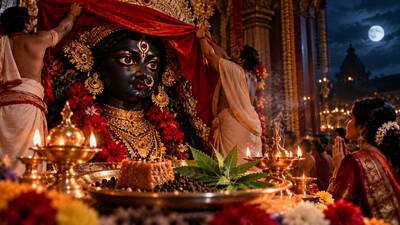
What the opening of the eyes means on saptamiThe first six days bring the Goddess in her gentler forms. On Saptami, Maa Kaalratri appears terrifying and fierce, and the mood shifts. Gentleness has its place, but some situations no longer yield to it. This is where her fierce form is honoured.
The covering of the Goddess’s eyes is a Durga Puja custom, so its meaning should be understood as part of tradition rather than as a scriptural rule. The opening of her eyes signifies attention, awareness, and a refusal to look away. The world’s chaos is seen clearly, and she does not remain indifferent to it.
Saptami is not about fear for its own sake. It acknowledges that chaos exists and that a watchful, powerful presence is needed to confront what refuses to settle.
Jaggery, black pepper, and the sugar to avoidOne of the offerings associated with her worship is jaggery, the unrefined sweetener made from sugarcane juice. Powdered black pepper mixed with it is said to invite her blessings. Keep the offering simple: jaggery alone, or jaggery with pepper, if you wish.
Some traditions favour unrefined jaggery over refined sugar. Kaalratri is associated with the forces of nature and natural laws, making jaggery a fitting offering within this interpretation. Bitter items, including neem leaves, may also be offered by devotees seeking her grace.
Why the night matters more in her worshipWith the earlier forms of the Goddess, day and night worship may follow similar patterns. With Kaalratri, however, night worship is considered especially significant in certain traditions. The reason given is her nature: the dark Mother who confronts difficulty in the darkness.
There is an important distinction in timing here. In Tantra, the esoteric ritual tradition, the tithi (lunar day) active during sadhana, or spiritual practice, may matter more than the calendar date.
Saptami continues into Sunday morning, while Ashtami begins later on 18 October. Consequently, the night of 18 October is associated with Ashtami Tantra Puja for practitioners of specific Tantric traditions. These night-time practices are not intended for every household. If you do not have a guru or the relevant initiation, keep your worship simple: light a lamp, make an offering, and chant her name.
Handing your obstacles to herDedicate your obstacles to Maa Kaalratri. Offer her your worries and difficulties, seeking her strength to confront chaos and bring greater clarity to your life. You can do this at night:
What the opening of the eyes means on saptamiThe first six days bring the Goddess in her gentler forms. On Saptami, Maa Kaalratri appears terrifying and fierce, and the mood shifts. Gentleness has its place, but some situations no longer yield to it. This is where her fierce form is honoured.
The covering of the Goddess’s eyes is a Durga Puja custom, so its meaning should be understood as part of tradition rather than as a scriptural rule. The opening of her eyes signifies attention, awareness, and a refusal to look away. The world’s chaos is seen clearly, and she does not remain indifferent to it.
Saptami is not about fear for its own sake. It acknowledges that chaos exists and that a watchful, powerful presence is needed to confront what refuses to settle.
Jaggery, black pepper, and the sugar to avoidOne of the offerings associated with her worship is jaggery, the unrefined sweetener made from sugarcane juice. Powdered black pepper mixed with it is said to invite her blessings. Keep the offering simple: jaggery alone, or jaggery with pepper, if you wish.
Some traditions favour unrefined jaggery over refined sugar. Kaalratri is associated with the forces of nature and natural laws, making jaggery a fitting offering within this interpretation. Bitter items, including neem leaves, may also be offered by devotees seeking her grace.
Why the night matters more in her worshipWith the earlier forms of the Goddess, day and night worship may follow similar patterns. With Kaalratri, however, night worship is considered especially significant in certain traditions. The reason given is her nature: the dark Mother who confronts difficulty in the darkness.
There is an important distinction in timing here. In Tantra, the esoteric ritual tradition, the tithi (lunar day) active during sadhana, or spiritual practice, may matter more than the calendar date.
Saptami continues into Sunday morning, while Ashtami begins later on 18 October. Consequently, the night of 18 October is associated with Ashtami Tantra Puja for practitioners of specific Tantric traditions. These night-time practices are not intended for every household. If you do not have a guru or the relevant initiation, keep your worship simple: light a lamp, make an offering, and chant her name.
Handing your obstacles to herDedicate your obstacles to Maa Kaalratri. Offer her your worries and difficulties, seeking her strength to confront chaos and bring greater clarity to your life. You can do this at night:
- Offer jaggery.
- Add black pepper, if you wish.
- Follow your family’s or tradition’s guidance on refined sugar.
- Place neem leaves beside the offering plate, if customary.
Next Story