
Shardiya navratri shashthi: What to do on Katyayani's day, and the gopis' fast behind it


A lamp, a picture of the Goddess, and a quiet hour: that is nearly all Katyayani’s day asks of you. Perform her puja, pray with devotion, and remain steadfast. This year, Shashthi tithi, the sixth lunar day, falls on Friday, 16 October 2026. In South India, the same date marks Saraswati Avahan, the invocation of Saraswati, making it a day associated with two goddesses in different regions. Shashthi timings vary by city, so check your local panchang, the Hindu almanac.
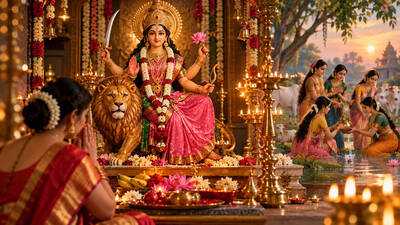
A Day Dedicated to One GoddessElsewhere during Navratri, attention moves quickly from one form of the Mother Goddess to the next. On this day, however, the focus remains on a single goddess, and the day’s meaning rests on that devotion.
Three Ancient Texts That Remember HerKatyayani is one of the most widely discussed forms of the Mother Goddess. Scholars and devotees commonly point to the Taittiriya Aranyaka of the Yajurveda, Patanjali’s Mahabhashya, and the Puranas as textual sources that mention her. The extent of their references varies, and they do not all describe the same figure in the same way. It is therefore best to understand them as a range of references rather than as evidence of one unbroken lineage.
Still, that range matters. She is not confined to a single corner of Hindu tradition.
Why the Gopis Keep Coming UpFasting practices vary from household to household, and no single observance is compulsory for everyone. What many families share, however, is a traditional precedent. The best-known account of a Katyayani vrata , or religious vow, is that of the gopis, the cowherd women of Vrindavan, in the Bhagavata Purana. Their story offers a useful reference point precisely because of its simplicity.
A Strict Fast in MargashirshaDuring Margashirsha, a winter month that falls several weeks after Sharad Navratri, the gopis observed a strict fast. They worshipped Katyayani and prayed with deep devotion for her blessings. Their vrata took place in Margashirsha, not Ashvin, so the observance of Katyayani during Sharad Navratri draws on the spirit of their devotion rather than following the same calendar.
The belief behind the practice is a modest one: sincere worship and steadfast devotion to Mother Katyayani are believed to invite blessings and a sense of her presence into one’s life. In some households, the day also emphasises her role as a protector of dharma, the right order of things, and the quieter understanding that courage can be expressed through restraint as much as through force.
Before deciding how strictly to observe the fast, ask a family elder or priest what your kulachar, or household tradition, requires. Then choose an observance you can comfortably maintain until evening, light a lamp before her picture at your chosen hour, and keep the rest of the day simple.
A Day Dedicated to One GoddessElsewhere during Navratri, attention moves quickly from one form of the Mother Goddess to the next. On this day, however, the focus remains on a single goddess, and the day’s meaning rests on that devotion.
Three Ancient Texts That Remember HerKatyayani is one of the most widely discussed forms of the Mother Goddess. Scholars and devotees commonly point to the Taittiriya Aranyaka of the Yajurveda, Patanjali’s Mahabhashya, and the Puranas as textual sources that mention her. The extent of their references varies, and they do not all describe the same figure in the same way. It is therefore best to understand them as a range of references rather than as evidence of one unbroken lineage.
Still, that range matters. She is not confined to a single corner of Hindu tradition.
Why the Gopis Keep Coming UpFasting practices vary from household to household, and no single observance is compulsory for everyone. What many families share, however, is a traditional precedent. The best-known account of a Katyayani vrata , or religious vow, is that of the gopis, the cowherd women of Vrindavan, in the Bhagavata Purana. Their story offers a useful reference point precisely because of its simplicity.
A Strict Fast in MargashirshaDuring Margashirsha, a winter month that falls several weeks after Sharad Navratri, the gopis observed a strict fast. They worshipped Katyayani and prayed with deep devotion for her blessings. Their vrata took place in Margashirsha, not Ashvin, so the observance of Katyayani during Sharad Navratri draws on the spirit of their devotion rather than following the same calendar.
The belief behind the practice is a modest one: sincere worship and steadfast devotion to Mother Katyayani are believed to invite blessings and a sense of her presence into one’s life. In some households, the day also emphasises her role as a protector of dharma, the right order of things, and the quieter understanding that courage can be expressed through restraint as much as through force.
Before deciding how strictly to observe the fast, ask a family elder or priest what your kulachar, or household tradition, requires. Then choose an observance you can comfortably maintain until evening, light a lamp before her picture at your chosen hour, and keep the rest of the day simple.
Next Story